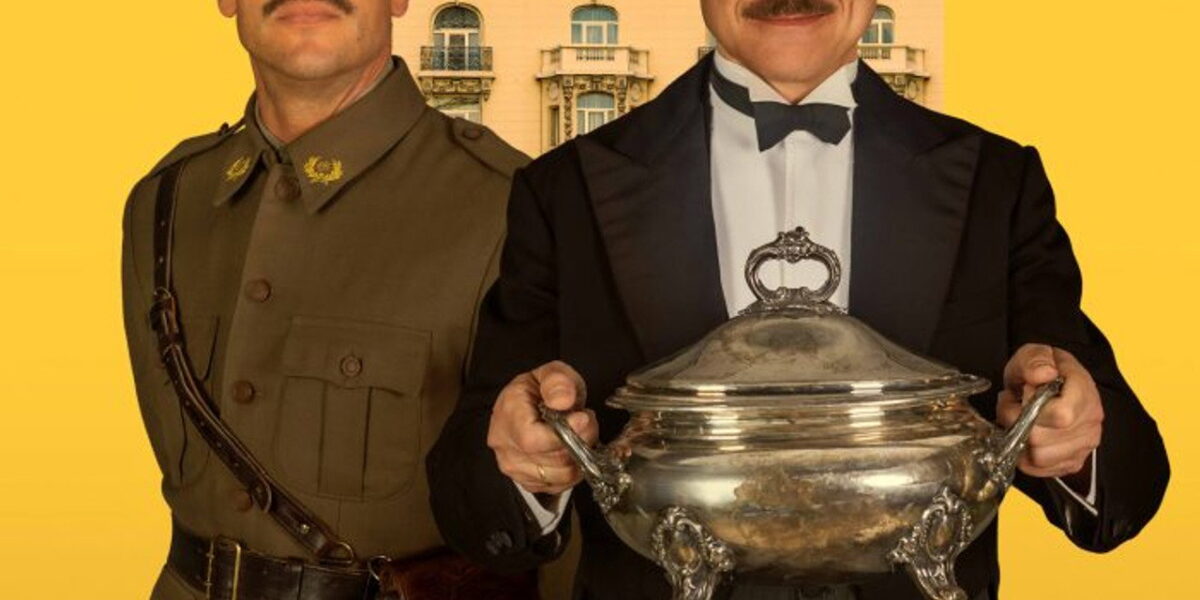
The Dinner: Honest Review — Is It Worth Watching? | 6.8/10
The Dinner is a wickedly intelligent Spanish historical comedy that uses a single evening with Franco and his generals as a pressure cooker for exposing the grotesque absurdity of fascism dressed in evening wear. It’s not flawless, but it swings for the fences with genuine wit and arrives at moments of genuine darkness that linger long after the credits roll.
| Director | Manuel Gómez Pereira |
| Cast | Mario Casas, Alberto San Juan, Asier Etxeandia, Nora Hernández, Óscar Lasarte |
| Runtime | 106 min |
| Genre | Comedy, History, Drama |
| Year | 2025 |
The Dinner: The plot (no spoilers)
The Dinner takes place on April 15, 1939, the day Franco celebrates his victory in the Spanish Civil War at Madrid’s Palace Hotel with his inner circle of generals and military brass. What sounds like straightforward historical documentation quickly becomes a darkly comic dissection of power, ego, paranoia, and the particular madness that blooms when tyrants gather to congratulate themselves in an opulent dining room. The film doesn’t shy away from showing these men as both laughably petty and genuinely terrifying.
The tone here is deliberately unsettling—it walks the razor’s edge between satire and genuine discomfort, never letting you settle comfortably into either camp. Gómez Pereira’s movie treats the dinner like a theatrical piece, where conversation becomes weaponized and every toast conceals a threat or an insult. You’re waiting for the evening to implode, and the film knows you’re waiting, which is exactly where its psychological bite comes from.
Acting & direction
Mario Casas carries the film with a performance that’s controlled and subtly unhinged, playing a man trying to maintain dominance while surrounded by rivals who’d stab him in the back before dessert arrives. Alberto San Juan and Asier Etxeandia provide brilliant counterweights—San Juan’s sweaty desperation and Etxeandia’s veiled contempt create a chamber piece of masculine toxicity that crackles with tension. Every actor understands the assignment: play it real, play it petty, play it dangerous.
Gómez Pereira directs this like a stage play that’s been carefully opened up for cinema without losing its claustrophobic intensity. The cinematography keeps things elegant but suffocating—all deep shadows and oppressive framing that makes the Palace Hotel feel less like a celebration venue and more like a gilded cage. The score is restrained, almost absent, which forces you to listen to the ugliness of what these men are actually saying beneath their polite veneer.
The strengths
- The script is genuinely clever—it finds humor in the absurdity of fascist posturing without ever letting that humor soften what fascism actually means.
- The ensemble cast creates a suffocating atmosphere of paranoia and ego that builds with every course, making the dinner feel genuinely dangerous rather than merely comedic.
- Gómez Pereira refuses easy answers or comfortable moralizing, instead letting the audience sit in the grotesqueness of these men’s self-satisfied mediocrity.
The weaknesses
- At 106 minutes, the film occasionally bogs down in repetitive conversation patterns where you feel the point being made rather than discovering it naturally alongside the characters.
- The balance between dark comedy and historical drama doesn’t always land cleanly—sometimes the film seems uncertain whether it wants to make you laugh or horrify you, leaving scenes stranded in between.
Who should watch it
If you’re drawn to dark comedies like Miloš Forman’s Amadeus or Yorgos Lanthimos’s work, or if you appreciate European historical cinema that refuses to be didactic, this is absolutely your lane. You should watch this if you have the stomach for watching despicable people congratulate themselves and the patience to let that discomfort be the entire point. The film rewards careful attention and viewers who understand that sometimes the point of art is to make you deeply uncomfortable.
Final verdict
The Dinner is a smartly executed period piece that understands fascism as a gathering of petty, narcissistic men who stumbled into power and now mistake their own mediocrity for destiny. It’s not perfect—the runtime sags slightly and the tonal balance wobbles—but it’s ambitious enough and sharp enough to stick with you long after the credits end. This is cinema that trusts its audience to sit with ugliness and find truth in discomfort, which is exactly what we need more of right now. 7.1/10—recommended for anyone who likes their history served with a side of genuine menace.
FAQ
Is The Dinner a comedy or a drama?
It’s both—specifically a dark comedy that uses humor as a scalpel rather than a shield. The comedy emerges from the absurdity of the situation and the men’s grotesque egos, but the film never lets you forget the horrific context of fascism.
What is The Dinner about?
Franco gathers his military elite for a victory dinner on April 15, 1939. Over the course of the evening, egos clash, paranoia surfaces, and the film dissects the banality and pettiness of authoritarian power through conversation, tension, and carefully choreographed social warfare.
Is The Dinner historically accurate?
The film uses the dinner as a fictional frame to explore historical and psychological truths about fascism rather than documenting a specific event. Historical accuracy matters less than emotional and thematic authenticity here.
Who plays Franco in The Dinner?
Mario Casas plays the lead character in Gómez Pereira’s film, anchoring the entire ensemble with a controlled, subtly menacing performance that captures the paranoia of absolute power.
How long is The Dinner?
The film runs 106 minutes, which occasionally feels long for its single-location premise, though the length serves the claustrophobic tension Gómez Pereira is cultivating throughout.