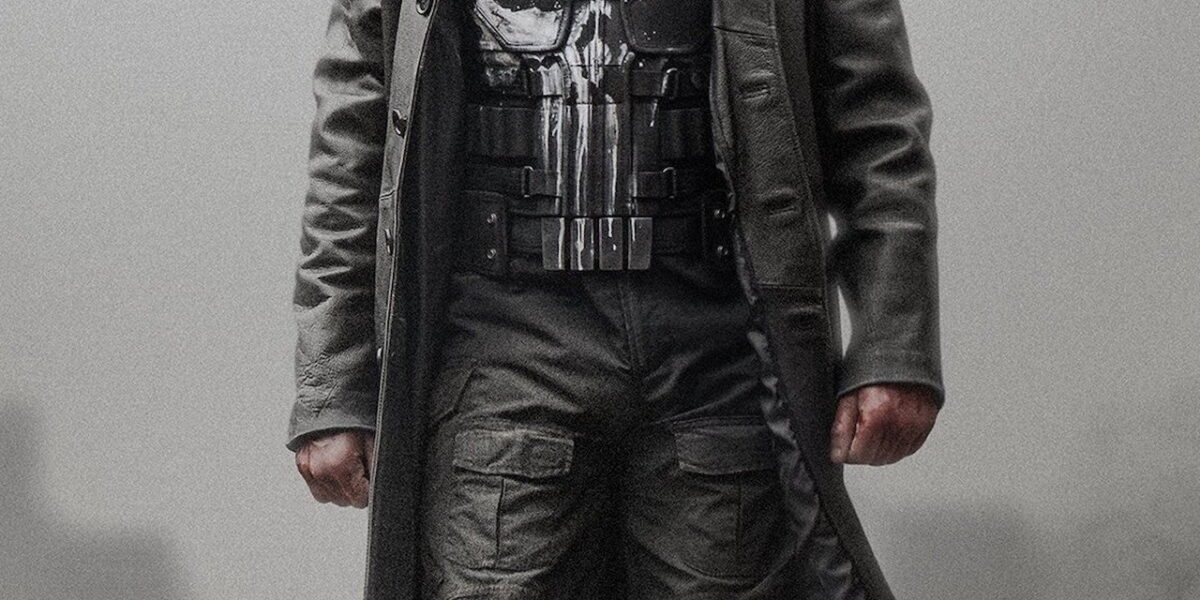
A Marvel Television Special Presentation – The Punisher: One Last Kill: Ending Explained — Ultimate Breakdown
Few characters in the Marvel universe carry the weight of Frank Castle — a man built from grief, forged in violence, and perpetually haunted by the question of whether redemption is even possible for someone like him. A Marvel Television Special Presentation – The Punisher: One Last Kill arrives in 2026 as a lean, 51-minute gut punch directed by Reinaldo Marcus Green, daring to ask what happens when the skull-wearing soldier of vengeance tries to lay down his weapons — and the world refuses to let him.
A Marvel Television Special Presentation – The Punisher: One Last Kill: What happens at the end
The film’s closing act finds Frank Castle at a crossroads he has never genuinely faced before — not the crossroads of kill or be killed, but of stay or disappear forever. After dismantling the criminal network that dragged him back into action, Frank stands alone in a rain-soaked alley, his enemies neutralized, his body battered. The city breathes around him like an indifferent organism. He reaches into his jacket, and for a breathless moment, the audience cannot tell whether he is reaching for a weapon or something far more human.
What he retrieves is a photograph — worn, creased, familiar. It is the same image of his slain family that has anchored his entire mythology. But this time, he sets it down deliberately on a fire escape railing rather than clutching it like a wound. Karen Page, portrayed with devastating restraint by Deborah Ann Woll, appears at the alley’s entrance — the tagline “Hey Frank” finally given its full emotional weight. The film ends not with a gunshot but with a silence between two people who understand each other’s damage completely, leaving Frank‘s next step magnificently unresolved.
The deeper meaning
The photograph’s deliberate placement — left behind rather than destroyed or kept — functions as the film’s central metaphor. Frank Castle does not erase his past, nor does he remain enslaved to it. Reinaldo Marcus Green is articulating something radical for this character: grief can be honored without being weaponized. The skull on Frank‘s chest has always represented death, but this ending quietly suggests it might finally represent something closer to a memorial — a monument rather than a battle standard.
Green‘s directorial intention feels unmistakably shaped by his work on King Richard — he understands how quiet domestic gestures can carry tectonic emotional force. By stripping away spectacle in these final moments, the film insists that Frank Castle‘s most courageous act was never pulling a trigger. It was choosing to remain present in a world that had taken everything from him, and allowing another human being — Karen — to witness that impossible vulnerability without flinching or running away from it.
Hidden details & easter eggs
Attentive viewers will notice that the alley where the film concludes is visually identical — same crumbling brick, same overhead fire escape geometry — to the location glimpsed in a brief flashback during the film’s second act, when Frank recalls meeting his wife for the first time in New York. Green plants this detail without fanfare, trusting the audience to feel its resonance. The location has traveled from the origin of love to the possibility of its continuation, a breathtaking piece of visual foreshadowing that rewards rewatching with genuine emotional discovery and cinematic precision.
Connections to the rest of the film
The film establishes its thematic architecture early through Curtis Hoyle, played with grounded warmth by Jason R. Moore, who tells Frank in the first act that “the mission ends when you decide it ends — not when the last body drops.” This line operates as pure foreshadowing, preparing the audience for an ending where external conflict resolves before internal conflict does. The antagonist introduced through Judith Light‘s chilling performance — a power broker who weaponizes grief as leverage — mirrors Frank‘s own psychology, making her defeat feel like exorcism rather than mere violence.
Fan theories
One compelling theory circulating among audiences argues that Karen Page‘s appearance in the final scene is not literal but a manifestation of Frank‘s psychological breaking point — that she represents the part of himself capable of connection, summoned at the exact moment he chooses life over mission. Evidence for this reading includes the fact that no other character acknowledges her presence. Against it stands Kelli Barrett‘s character arc, which tracks Karen’s physical journey toward Frank throughout the runtime, making a literal reunion narratively coherent and emotionally earned beyond any ambiguity.
A second theory proposes that the photograph left on the railing is a deliberate signal — that someone specifically placed that location to draw Frank there, meaning the entire final confrontation was orchestrated by an unseen party connected to his family’s murder. This reading transforms the ending from closure into a new beginning of conspiracy. While the film provides no definitive evidence confirming this interpretation, Green frames several shots in the third act with a surveillance aesthetic that lends the theory genuine visual credibility and makes a potential sequel both narratively plausible and dramatically irresistible. You can explore more details about the production on IMDB.
FAQ
Does Frank Castle survive the ending of One Last Kill?
Yes, Frank Castle survives. The film concludes with him physically intact in the alley, making an emotional choice to acknowledge Karen Page rather than disappear — his survival is both literal and, more importantly, psychological.
What does Karen Page’s appearance at the end mean?
Karen‘s arrival represents the return of Frank‘s capacity for human connection. Whether interpreted literally or symbolically, her presence signals that he is no longer choosing isolation as his only identity.
Why does Frank leave the photograph behind?
Leaving the photograph is an act of conscious release — not forgetting his family, but refusing to let grief remain the sole engine of his existence. It is the film’s most quietly revolutionary dramatic gesture.
Who is the villain in One Last Kill and what happens to them?
The antagonist, portrayed by Judith Light, is a powerful broker who exploits Frank‘s psychology as leverage. She is neutralized before the final scene, her defeat functioning thematically as Frank conquering an externalized version of his own destructive grief.
Does One Last Kill set up a sequel or continuation?
The ending is deliberately open — Frank‘s next step remains unshown, and at least one fan theory suggests a larger conspiracy remains active. Green‘s film reads as both a complete story and a confident foundation for further exploration of this reimagined Punisher mythology.