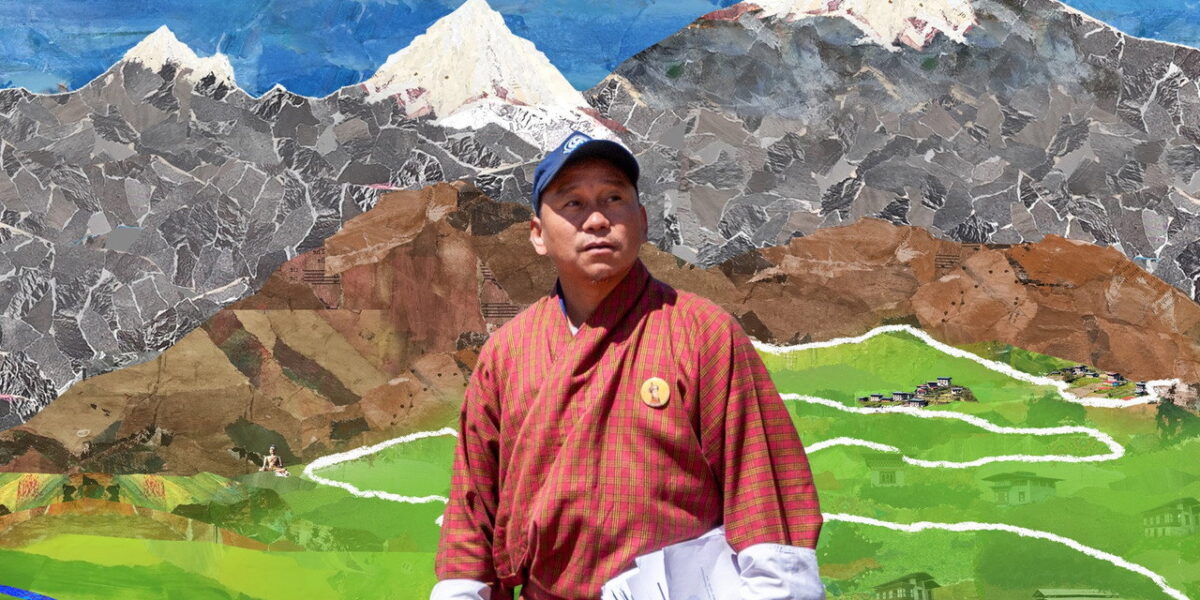
Agent of Happiness: Honest Review — Is It Worth Watching? | 7.5/10
Agent of Happiness is a deceptively simple documentary that sneaks up on you with philosophical weight, following two middle-aged happiness surveyors through remote Himalayan villages and asking questions Western cinema forgot to ask. Director Dorottya Zurbó doesn’t lecture you about Bhutan’s Gross National Happiness index—she just shows you two men doing their job, and somehow that becomes a mirror for everything broken in our own lives.
| Director | Dorottya Zurbó |
| Cast | Amber Kumar Gurung, Guna Raj Kuikel |
| Runtime | 93 min |
| Genre | Documentary |
| Year | 2024 |
Agent of Happiness: The plot (no spoilers)
Agent of Happiness follows Amber Kumar Gurung and Guna Raj Kuikel, two government happiness surveyors who traverse Bhutanese mountain villages twice yearly with clipboards and questionnaires. Their mission sounds absurd until you realize it’s the opposite of absurd—they’re collecting data on what actually makes people content, not what corporations want them to want. The film transforms a bureaucratic exercise into something almost spiritual.
The movie doesn’t rush or manipulate you with dramatic music or manufactured conflict. Instead, Zurbó’s work creates space for observation, letting you watch conversations unfold in kitchens and fields where happiness isn’t a hashtag but a lived condition. You’ll meet villagers with genuinely different values from yours, and the film trusts you to sit with that discomfort rather than explain it away.
Acting & direction
Amber Kumar Gurung and Guna Raj Kuikel aren’t performing—they’re living their routine in front of the camera, which is far more compelling than any actor could manufacture. Gurung carries a gentle melancholy, while Kuikel radiates quiet competence, and together they form a partnership that reveals itself through glances and habit rather than dialogue. Their authenticity grounds everything; you believe them because they’re not trying to convince you of anything.
Zurbó’s direction is restrained to the point of invisibility, which is exactly what this film demands. The cinematography captures Himalayan light without prettifying it—these mountains are beautiful but also ordinary to the people living under them. The pacing mirrors the surveyors’ rhythms: patient, methodical, occasionally interrupted by unexpected moments of human connection that feel earned rather than engineered.
The strengths
- The film resists the Western urge to fetishize or pity Bhutan, instead presenting villagers as fully realized people with their own contradictions and desires.
- Zurbó’s commitment to long takes and minimal score creates genuine intimacy—you’re not watching a story about happiness, you’re inhabiting the mundane reality of measuring it.
- The central question—can happiness be quantified?—lingers with you long after the credits, forcing you to examine what you actually value versus what you’ve been told to value.
The weaknesses
- Some viewers will find the lack of narrative momentum exhausting; this is contemplative cinema masquerading as documentary, and if you need plot propulsion, you’ll struggle here.
- The film occasionally risks becoming too precious about rural simplicity, bordering on the same romanticization it’s trying to avoid, particularly in scenes emphasizing spiritual contentment over material hardship.
Who should watch it
This is cinema for people who loved documentaries like The Social Dilemma but found them too didactic, or who appreciate slow cinema and anthropological observation. You need patience and genuine curiosity about how other cultures approach fundamental questions. If you’re burned out on algorithm-driven existence and crave something that moves at human speed, Agent of Happiness will feel like a gift.
Final verdict
Agent of Happiness is the rare documentary that functions as both social critique and meditation, asking whether we’ve outsourced our capacity for contentment to apps and acquisitions while actual humans in actual villages answer questionnaires about their actual lives. It’s not flashy or urgent, but it’s necessary—a quiet argument for slowness, presence, and the radical act of measuring what matters. A solid 7.5 because it occasionally drifts into sentimentality, but absolutely worth 93 minutes of your finite time on Earth.
FAQ
What is Agent of Happiness about?
The documentary follows two Bhutanese government agents who conduct door-to-door surveys measuring happiness across remote mountain villages, exploring whether well-being can actually be quantified and challenging Western assumptions about prosperity.
Is Agent of Happiness a slow film?
Yes—it’s deliberately paced and observational, prioritizing intimate moments over narrative momentum. It’s meditative cinema designed to make you sit with discomfort and reflection rather than entertain you conventionally.
Who are the main subjects of the film?
Amber Kumar Gurung and Guna Raj Kuikel are the two happiness surveyors whose daily routines and encounters with villagers form the film’s emotional core.
What is Gross National Happiness?
Bhutan’s development philosophy prioritizing collective well-being and environmental preservation over economic growth metrics, implemented since the 1970s as an alternative to GDP-focused measurements.
Where can I watch Agent of Happiness?
Check festival circuits and international documentary platforms; the film is recent enough that availability varies by region—your local arthouse cinema or streaming service for global docs is your best bet.