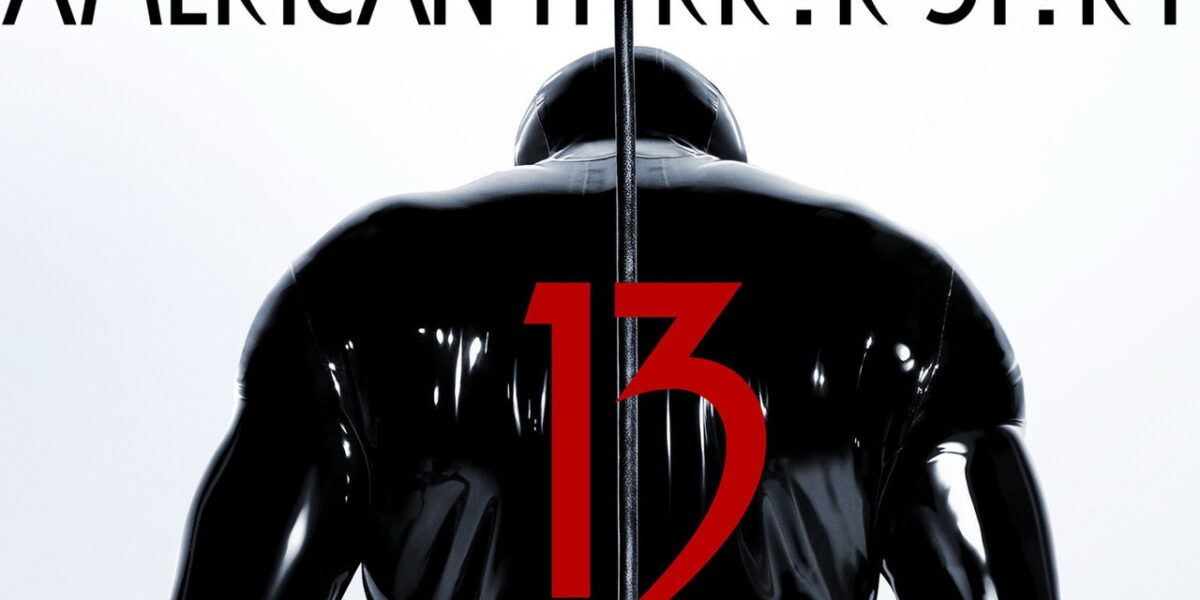
American Horror Story: Ending Explained — Ultimate Breakdown
American Horror Story is one of the most audacious experiments in modern television horror — a shape-shifting anthology that reinvents itself season after season, demanding audiences surrender their expectations at the door. Created by Ryan Murphy and Brad Falchuk, each chapter closes with deliberate, layered finales that reward attentive viewers. This analysis peels back the curtain on the deeper machinery humming beneath the scares, the symbolism, and the shocking conclusions that define this landmark series.
American Horror Story: What happens at the end
Across its thirteen seasons, American Horror Story consistently engineers finales built around the devastating consequences of obsession, trauma, and moral compromise. In Murder House, the Harmon family — trapped as ghosts within the walls that destroyed them — achieve a bittersweet domesticity in death, protecting future inhabitants from the very horrors they once fell victim to. The house claims them permanently, yet their love endures, transforming victimhood into something achingly close to redemption, frozen forever within those cursed, beautiful walls.
In Asylum, Lana Winters — portrayed with ferocious brilliance by Sarah Paulson — survives Briarcliff’s horrors only to become morally compromised herself, mirroring the very institutions she sought to expose. In Coven, a new Supreme ascends, ensuring the witches’ lineage continues. Each finale returns obsessively to the same devastating truth: survival always carries an unbearable price, and victory and corruption are frequently indistinguishable from one another.
The deeper meaning
At its core, the anthology functions as a grand metaphor for America itself — a nation haunted by its own history, unable to escape the sins embedded in its foundations. The Murder House is the American Dream rotting from within. Asylum interrogates institutional power and who gets to define sanity. Cult dissects political manipulation with surgical precision. Each location becomes a symbol of collective national anxiety, dressed in the seductive costume of genre horror to make the medicine go down easier.
Murphy and Falchuk have consistently argued that horror is the most honest genre for confronting societal wounds. Their intention is nakedly ambitious: use the vocabulary of nightmare — monsters, possession, apocalypse — to articulate truths that realist drama cannot touch. The grotesque becomes revelatory. The most monstrous characters are never supernatural creatures but ordinary humans corrupted by fear, desire, and the intoxicating lure of power over other people.
Hidden details & easter eggs
Sharp-eyed viewers have long noted that Murphy plants connective tissue between seasons with obsessive care. The Addiction Demon in Hotel mirrors imagery from Murder House‘s rubber-suited figure, suggesting a shared cosmological horror underlying each story. Evan Peters and Sarah Paulson appear across seasons in roles that echo and invert each other — a deliberate casting choice that creates an almost mythological continuity. Certain numbers, color palettes, and architectural details recur like recurring nightmares, rewarding viewers who treat the anthology as a single, vast, interconnected text worth studying frame by frame.
Connections to the rest of the series
The anthology’s genius lies in its foreshadowing across seasons rather than within individual episodes alone. Apocalypse explicitly weaves together characters from Murder House and Coven, retroactively transforming those earlier seasons’ endings into chapters of a larger eschatological narrative. Michael Langdon, born in the Murder House finale, becomes the Antichrist whose destiny Coven‘s witches must confront. This cross-season foreshadowing recontextualizes every prior ending, proving that Murphy‘s universe operates on a scale most anthology storytelling never dares to attempt.
Fan theories
One compelling theory argues that every season shares a single purgatorial universe — that all characters exist in overlapping states of damnation, explaining the recurring cast and thematic rhymes. Evidence includes the cosmological linkages in Apocalypse. Against this: several seasons resist meaningful connection. A second theory posits that Lana Winters is the true spine of the entire anthology — her survivor’s arc the moral compass every subsequent season measures itself against. A third, darker reading suggests the series itself is the monster, complicit in the very exploitation it critiques by aestheticizing suffering so lavishly and seductively.
FAQ
Are all seasons of American Horror Story connected?
Not all seasons are directly connected, but several share characters and mythology. Apocalypse officially crossovers Murder House and Coven, and recurring cast members create thematic threads, though most seasons function as standalone stories.
What is the overall message of American Horror Story?
The series argues that true horror is human in origin — rooted in trauma, institutional corruption, and moral compromise. The supernatural elements serve as amplified reflections of real societal fears rather than ends in themselves.
Why does the same cast appear in different seasons?
Murphy deliberately reuses actors like Sarah Paulson and Evan Peters to create mythological continuity across the anthology, allowing audiences to track thematic variations through familiar faces inhabiting radically different moral landscapes.
Which season has the most impactful ending?
Asylum‘s finale is widely considered the most emotionally devastating, with Lana Winters‘s ambiguous moral transformation delivering a conclusion that lingers far beyond its runtime. You can explore cast details further on IMDB.
Is American Horror Story worth watching from the beginning?
Absolutely — while each season stands alone, watching chronologically enriches the experience considerably, allowing viewers to appreciate the cross-season foreshadowing, thematic evolution, and the full scope of Murphy and Falchuk‘s ambitious, decade-spanning vision.