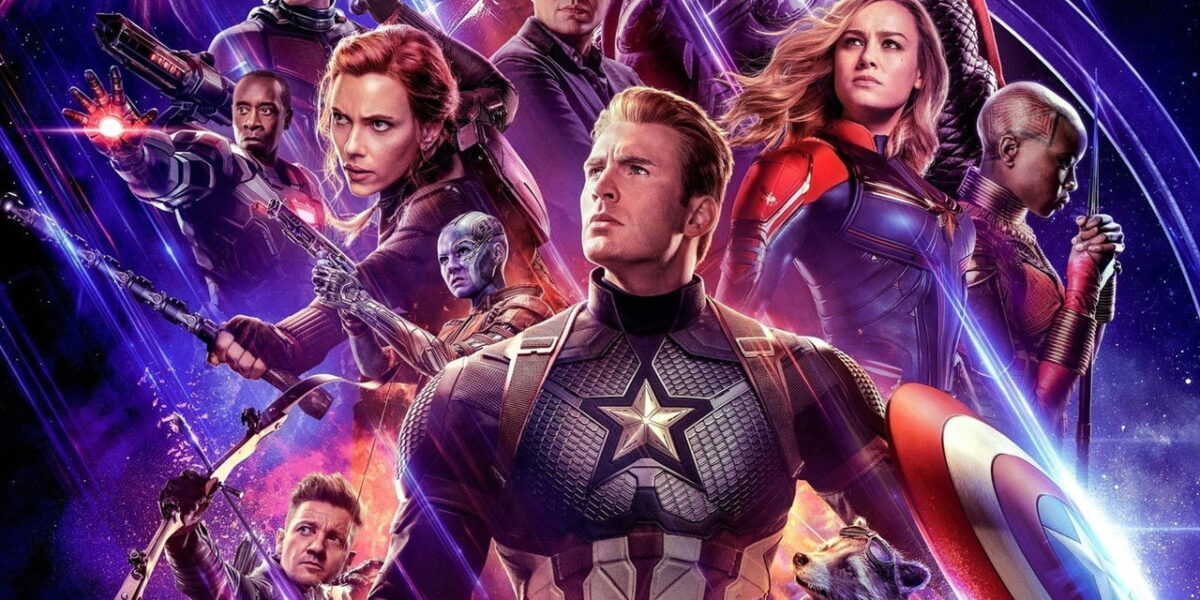
Avengers: Endgame: Ending Explained — Ultimate Breakdown
Few cinematic finales have carried the emotional and narrative weight of Avengers: Endgame. Directed by Anthony Russo alongside Joe Russo, this 2019 colossus doesn’t merely conclude a story — it delivers a reckoning. What does it truly mean when a universe is saved at the cost of its greatest hero? This analysis dives beneath the surface spectacle to reveal the deeper architecture of sacrifice, legacy, and time that makes this ending so devastating and so precise.
Avengers: Endgame: What happens at the end
The climax unfolds in a three-act cascade. The Avengers, having retrieved the Infinity Stones through a time heist, face a catastrophic ambush when Thanos from 2014 arrives with his full army. Tony Stark, Steve Rogers, and Thor stand alone against an overwhelming force until, through the restored portals, every fallen hero returns. The battlefield becomes a convergence of the entire MCU — a single, earned image of collective resistance that the previous eleven years of storytelling quietly promised.
Tony Stark ultimately steals the Stones from Thanos and, with a whispered “I am Iron Man,” snaps his fingers. The act destroys him. His death is immediate, intimate, and surrounded by those who loved him. Meanwhile, Steve Rogers travels back in time to return the Stones and chooses to remain in the past, living a full life with Peggy Carter — arriving as an old man to pass his shield to Sam Wilson. Two arcs, two different definitions of heroism, resolved simultaneously.
The deeper meaning
The ending articulates a profound thematic argument: that true heroism is inseparable from personal cost. Tony‘s snap is not just a plot solution — it is the culmination of a character defined by ego learning to place everything on the altar of others. The film frames his death as a sacrifice rather than a defeat, a distinction the narrative has been building since the very first Iron Man. His last words echo his first act of defiance, closing a loop that spans a decade of cinema with startling elegance.
Anthony Russo‘s directorial intention is equally readable in Steve Rogers‘ farewell. Where Tony burns out, Steve chooses to rest — and the film treats both choices with equal reverence. This duality refuses to rank sacrifice above survival. The passing of the shield is not a retirement announcement; it is a meditation on what legacy actually requires — not endless suffering, but the conscious decision to trust the next generation. Russo frames this transfer with stillness, a deliberate contrast to the chaos that preceded it.
Hidden details & easter eggs
Among the most rewarding hidden layers: when Tony performs the snap, the Stones are arranged on a makeshift gauntlet built from his nano-tech armor. This mirrors Thanos‘ own gauntlet in a visual rhyme that reframes their entire conflict as two engineers solving the same problem with opposite moral compasses. Additionally, the child standing at Tony‘s funeral — seen alone at the back — is Harley Keener from Iron Man 3, a quiet acknowledgment of every person Stark ever mentored without fanfare or recognition.
Connections to the rest of the film
The ending’s power is inseparable from its foreshadowing. Early in the film, Tony tells Steve “I lost the kid” — referring to Peter Parker — a line that plants grief as his central wound. His determination to reverse the snap is therefore not heroism in the abstract but intensely personal grief transformed into action. Similarly, the ancient line “Whatever it takes,” repeated ritualistically throughout the film, functions as a narrative contract with the audience — a promise that the cost, when it arrives, will be absolute and real.
Fan theories
One persistent theory holds that Steve Rogers always existed in the past — that the old man seen at the end is the same figure who shaped certain events throughout history, making his “choice” actually inevitable. The evidence is alluring but ultimately collapses under the film’s own logic of branching timelines. A second theory suggests Tony‘s daughter Morgan will eventually carry on his legacy, supported by the emotional weight given to her scenes. A third argues that Natasha‘s death on Vormir was always the universe’s design — that the Soul Stone specifically required her. All three remain beautifully unresolved.
FAQ
Why does Tony Stark die at the end of Avengers: Endgame?
Tony Stark dies because a human body cannot survive the energy released by all six Infinity Stones simultaneously. He chooses to snap anyway, fully aware of the consequence, sacrificing himself to destroy Thanos and his army once and for all.
Does Steve Rogers create a paradox by staying in the past?
The film implies he lives in a branching alternate timeline rather than altering the main one, which explains why his return as an old man is possible without erasing the events the audience witnessed. The exact mechanics are intentionally left open to interpretation.
Who inherits Captain America’s shield after Endgame?
Old Steve Rogers passes the shield to Sam Wilson, endorsing him as the new Captain America — a choice later explored directly in the Disney+ series The Falcon and the Winter Soldier.
What happened to Gamora at the end of the film?
The 2014 version of Gamora, who traveled to the present with Thanos, survives the final battle. Her fate remains unresolved at the film’s close, setting up her storyline in Guardians of the Galaxy Vol. 3.
Is the snap in Endgame different from Thanos’ snap?
Yes. Thanos‘ snap in Infinity War eliminated half of all life. Tony‘s snap in this film targets only Thanos and his army specifically, suggesting the Stones respond — at least in part — to the will and intent of the user. You can explore more about the film on IMDB.