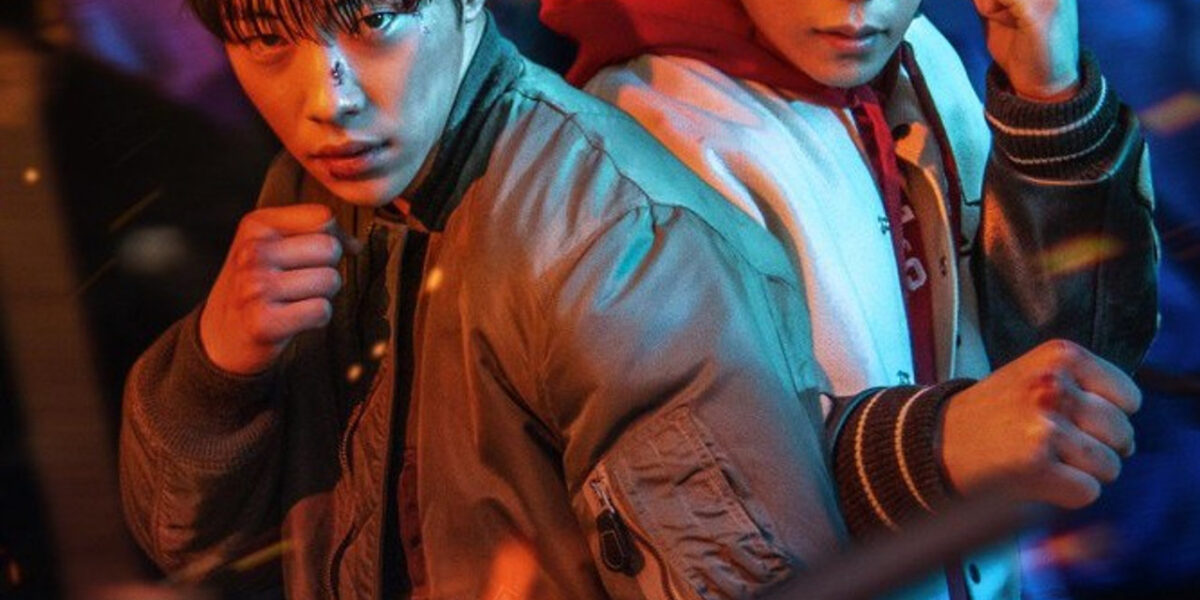
Bloodhounds: Ending Explained — Ultimate Breakdown
Bloodhounds is one of those rare Korean crime dramas that refuses to settle for surface-level thrills. Beneath the brutal fight choreography and high-stakes loan shark warfare lies a story about economic desperation, moral loyalty, and what it truly costs to survive a rigged system. In this analysis, we tear apart the ending of Jason Kim’s gripping series, exposing every layer of meaning that casual viewers may have missed entirely.
Bloodhounds: What happens at the end
In the climactic final stretch, Gun-woo and Woo-jin — two young boxers thrust into a world far more savage than any ring — finally confront Smile, the monstrous loan shark who has been systematically destroying vulnerable lives throughout the series. The confrontation is physical, brutal, and deeply personal. Every punch thrown carries the weight of every victim Smile exploited, transforming what could have been a standard action finale into something almost cathartic in its violence.
The decisive blow is not simply a victory — it is a reckoning. Choi Woong, the benevolent moneylender played with magnetic complexity by Rain, orchestrates the final takedown with surgical precision. The system that enabled Smile‘s predatory empire begins to crumble, but the series is careful not to offer a clean, consequence-free resolution. Wounds — financial, emotional, and physical — remain open, refusing the audience any comfortable sense of total closure.
The deeper meaning
The ending functions as a devastating metaphor for South Korea’s real economic anxieties. Smile was never just a villain — he was a symptom, a grotesque personification of predatory capitalism that preys specifically on those already crushed by debt. When Gun-woo and Woo-jin defeat him, the series suggests that individual resistance is possible, but the structural conditions that created him remain disturbingly intact. Victory feels simultaneously triumphant and hollow, which is precisely the point.
Jason Kim’s intention appears to be a deliberate refusal of easy heroism. By anchoring the moral universe around Choi Woong — himself a moneylender, technically part of the same industry — the director forces us to interrogate our own definitions of good and evil within financial systems. The ending validates Choi Woong‘s methods not by making him saintly, but by contrasting his human empathy against Smile‘s absolute absence of it. Ethics, the series argues, exist on a spectrum measured by how you treat the desperate.
Hidden details & easter eggs
Pay close attention to the visual language surrounding Smile throughout the series — he is almost always framed from below, a deliberate cinematographic choice that initially codes him as powerful and untouchable. In the final confrontation, this camera angle inverts entirely. The shift is subtle but electrifying, a visual declaration that power structures can be overturned. Additionally, the color palette in the closing scenes shifts from the series’ dominant cold blues and grays toward warmer amber tones, signaling an emotional thaw that the narrative refuses to make explicit through dialogue.
Connections to the rest of the film
The ending rewards attentive viewers through meticulous foreshadowing seeded from the very first episode. Gun-woo‘s reluctance to fight outside sanctioned boxing matches is established early as a core character trait, making his final unleashed violence feel earned rather than gratuitous. Similarly, the bond between the two boxers — tested repeatedly through betrayal, fear, and impossible choices — pays off structurally, as their synchronized fighting style in the climax mirrors their emotional unity. The series builds its resolution like a boxer builds a combination: each earlier episode is a jab setting up the devastating final hook.
Fan theories
Several compelling theories have emerged around the ending. The most popular suggests that Choi Woong deliberately engineered the entire situation from the beginning, recruiting Gun-woo and Woo-jin specifically because he foresaw this confrontation — evidence being his suspiciously deep intelligence network. A second theory argues that Smile survives, pointing to the deliberate ambiguity of his final scene. A third, darker reading proposes that Gun-woo and Woo-jin have effectively become enforcers within a new financial power structure, making them mirrors of what they destroyed. You can explore cast details further on IMDB.
FAQ
Does Smile die at the end of Bloodhounds?
The series deliberately leaves Smile‘s fate slightly ambiguous, but the narrative framing strongly implies his defeat is total and irreversible. His criminal empire collapses, and his personal power is definitively broken by the final confrontation with Gun-woo and Woo-jin.
What does Choi Woong’s role at the end actually mean?
Choi Woong represents a morally complicated form of justice — he operates within the same financial world as the villains but uses his position to protect rather than exploit. His role at the end validates empathy as the true dividing line between predator and protector.
Why do Gun-woo and Woo-jin matter beyond just being fighters?
They function as symbols of ordinary young Koreans crushed by economic precarity. Their physical strength is the only leverage they possess in a world stacked against them, making their victory a pointed commentary on class and agency in contemporary society.
Is there a second season that continues the ending’s story?
The series was structured to tell a complete story, and its ending operates as a satisfying narrative conclusion. Any continuation would need to address the intentionally unresolved structural critique the finale raises about financial systems and the cycles of exploitation they generate.
What is the real meaning behind the tagline “Their biggest fight is not in the ring”?
The tagline encapsulates the series’ central metaphor — boxing represents controlled, rule-bound conflict, while the economic and criminal world the characters inhabit has no rules, no referee, and no guaranteed fair outcome. The ring is safer than real life.