Case 137: Honest Review — Is It Worth Watching? | 7.0/10
Case 137 is a competent but frustratingly middling French crime procedural that builds moral tension before losing its nerve in the third act. Dominik Moll delivers a technically accomplished film about institutional guilt and hometown loyalty, yet it never quite commits to the uncomfortable places it opens up.
| Director | Dominik Moll |
| Cast | Léa Drucker, Jonathan Turnbull, Mathilde Riu, Guslagie Malanda, Stanislas Merhar |
| Runtime | 115 min |
| Genre | Crime, Drama |
| Year | 2025 |
Case 137: The plot (no spoilers)
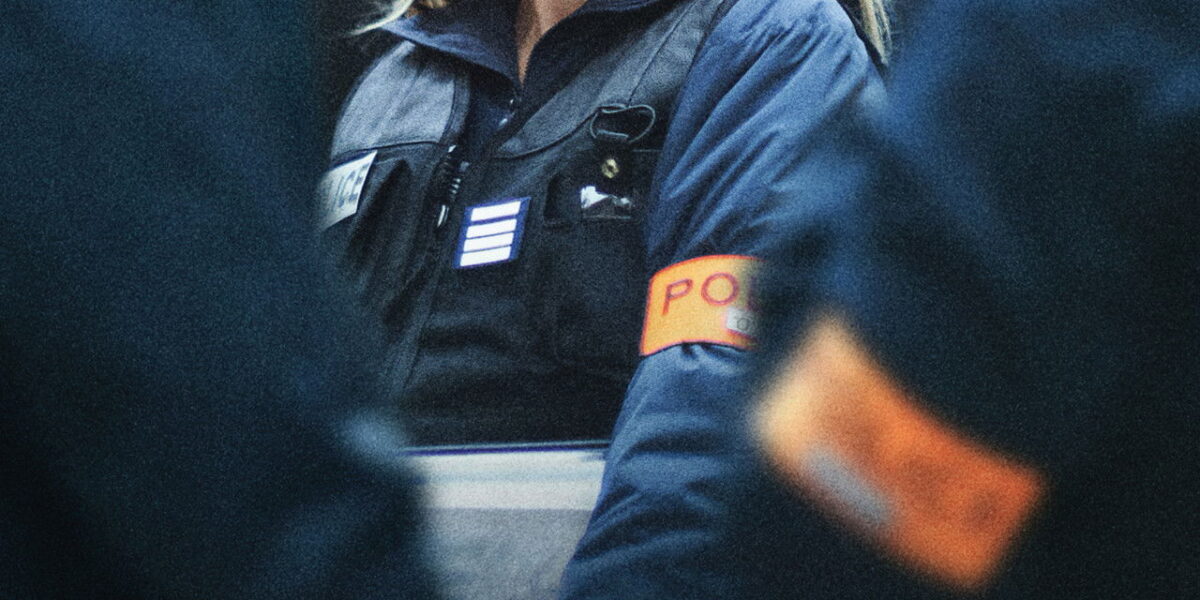
Case 137 follows Stéphanie, an Internal Affairs cop tasked with investigating a young man brutalized during a Paris demonstration, to determine if police overstepped. The investigation seems routine, even exonerating, until she learns the victim hails from her own hometown—triggering a collision between professional duty and personal obligation that threatens to unravel her carefully maintained neutrality.
The film positions itself as a **psychological thriller** wrapped in procedural clothing, set against the grey concrete and tense politics of modern French policing. Moll constructs the narrative like a slow-burning investigation, layering ambiguity and moral quicksand under every conversation, though the pacing occasionally stumbles when it should accelerate most.
Acting & direction
Léa Drucker carries the entire weight of this film on her shoulders, and she’s a powerhouse—her face a landscape of barely suppressed conflict, calculating every word to her superiors while wrestling with conscience. Stanislas Merhar provides an unsettling foil as her commanding officer, all bureaucratic charm masking institutional self-preservation that makes your skin crawl with recognition.
Moll’s direction favors long, tense dialogue sequences in fluorescent-lit offices and sterile interview rooms, which works against the film’s energy but serves its themes of systemic coldness perfectly. The cinematography is deliberately muted—no stylistic flourishes to distract from the uncomfortable questions being asked—though this restraint occasionally tips into visual monotony that tests patience.
The strengths
- Drucker’s performance is the real deal—every micro-expression communicates internal warfare without melodrama, making Stéphanie’s moral deterioration feel inevitable rather than engineered.
- The film’s central premise taps into genuine institutional horror about how systems protect themselves even when their members act badly, refusing easy villains or cheap redemption.
- Moll orchestrates tension through dialogue and implication rather than cheap tricks, letting viewers sit with discomfort instead of being manipulated toward conclusions.
The weaknesses
- The third act abandons the nuance that made the first two acts compelling, pivoting toward a conventional thriller ending that contradicts everything the film had argued about institutional inertia.
- Several secondary characters feel like cardboard stand-ins rather than fully realized people, particularly the victim’s family members who exist mostly to apply emotional pressure rather than possess interiority.
Who should watch it
If you gravitate toward **French crime dramas** with moral complexity and appreciate the slow-burn approach of films like Un Prophète or The Night of the 12th, this lands in your territory—though it doesn’t quite reach their heights. This is for viewers who want procedural rigor married to existential uncertainty, not for those seeking traditional crime narrative satisfaction or action-driven spectacle.
Final verdict
The movie deserves credit for asking difficult questions about loyalty, institutional loyalty versus personal loyalty, and how proximity to injustice corrodes your ability to remain neutral. Yet Case 137 ultimately loses nerve when it matters most, retreating into conventional thriller territory instead of sitting with its own moral vertigo. A solid rental that won’t haunt you the way it threatens to early on—competent, watchable, and somewhat forgettable once the credits roll.
FAQ
Is Case 137 based on a true story?
No, it’s an original screenplay by Dominik Moll, though it draws thematic inspiration from real tensions around police accountability in France and broader institutional corruption dynamics.
Does Case 137 have subtitles if I watch it in English?
The film is in French with English subtitles available on most streaming platforms—there’s no English-language version, so prepare to read or understand French.
How does Case 137 compare to Dominik Moll’s other films?
It’s more grounded procedural than his earlier Enquête sur un scandale, lacking the visual inventiveness of his psychological thrillers but matching their interest in institutional dysfunction and moral compromise.
Is Case 137 appropriate for casual viewers or just crime drama fans?
It’s deliberately slow-paced and dialogue-heavy with minimal action, so casual viewers seeking entertainment will likely find it tedious—this is designed for people who enjoy methodical investigations and moral ambiguity.
What’s the ending of Case 137 like without spoilers?
The ending pivots toward thriller conventions that feel unearned after the film’s careful moral uncertainty; it resolves plot mechanics but sidesteps the emotional and ethical questions the first half raised, which is its fundamental failure.
Find Case 137 on IMDB for showtimes and user reviews.