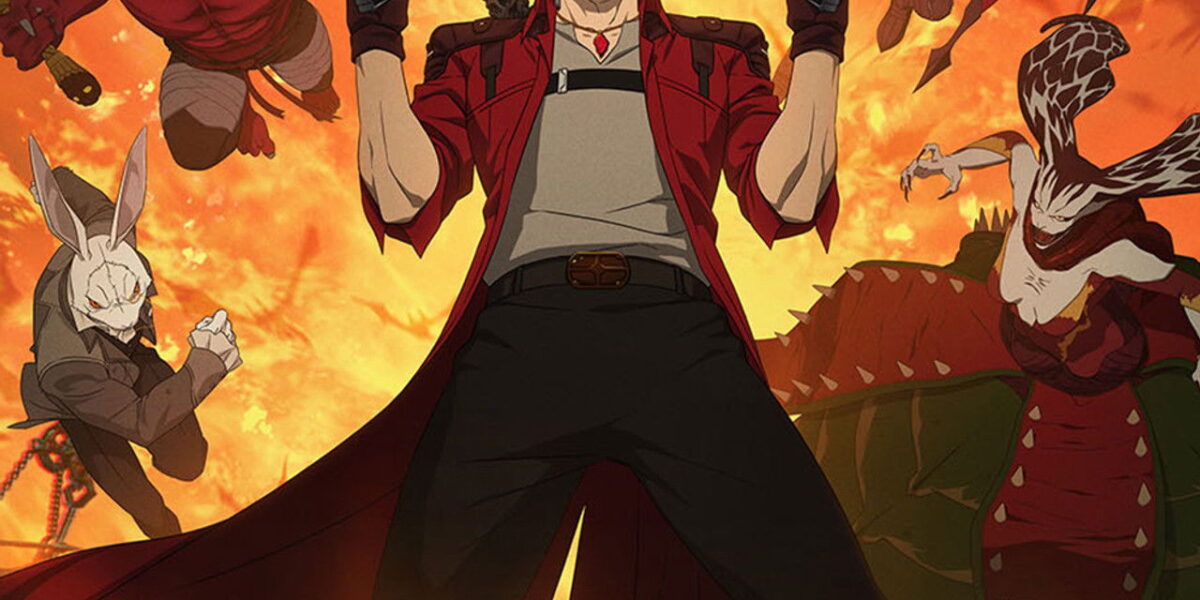
Devil May Cry: Ending Explained — Ultimate Breakdown
Devil May Cry, Adi Shankar’s audacious 2025 animated series, doesn’t just adapt a beloved video game — it weaponizes its mythology against our most comfortable moral assumptions. By the time the season reaches its climax, we are no longer watching a simple tale of a demon hunter for hire. We are witnessing a meditation on identity, inheritance, and whether salvation is even possible for a soul forged from the very darkness it hunts.
Devil May Cry: What happens at the end
The closing moments of the season build toward a confrontation that feels both inevitable and devastating. Dante, the half-demon, half-human mercenary at the heart of the story, faces an enemy whose power mirrors his own — a dark reflection that forces him to fully embrace the demonic heritage he has spent his entire existence resisting. The battle strips away every layer of ironic detachment he wears like armor, leaving raw, unresolved anguish at the surface.
The final twist arrives not through violence, but through revelation. The forces orchestrating the demonic incursions are revealed to be connected to Dante‘s own bloodline in ways that implicate his past choices. The world is not saved cleanly — it is preserved at a cost, with the boundary between human and demon world left deliberately, disturbingly porous, suggesting that the real conflict has only just begun its next chapter.
The deeper meaning
At its symbolic core, the ending is a powerful metaphor for the impossibility of neutrality. Dante cannot remain the detached, wisecracking mercenary forever, because the world refuses to let him. The blurring of the line between good and evil — flagged in the show’s own tagline — is not a stylistic flourish but the series’ central philosophical argument: moral ambiguity is not a comfortable grey zone, it is an active, violent state that demands constant renegotiation.
Adi Shankar, whose work on Castlevania proved his mastery of Gothic moral complexity, constructs the ending as a refusal of easy catharsis. The demon world bleeding into the human world is not a failure — it is the show’s thesis made literal. Salvation, Shankar argues, is not a destination but a perpetual, exhausting, beautiful act of defiance against one’s own darkest nature.
Hidden details & easter eggs
Attentive viewers will notice that the color palette in the final sequence inverts the show’s established visual language — crimson, the color previously reserved for demonic energy, begins bleeding into the environments surrounding Dante precisely when he chooses mercy over annihilation. This is no accident. It is a subtle, devastating visual admission: choosing compassion in a demonic world stains you just as surely as choosing cruelty. The animation team encodes the show’s entire moral argument into a single chromatic shift that rewards rewatching enormously.
Connections to the rest of the series
The ending pays off an act of foreshadowing planted with remarkable patience in the earliest episodes, where Dante‘s flippant dismissal of consequences is shown to be a coping mechanism rather than a personality trait. Every self-deprecating joke, every shrug in the face of apocalyptic stakes, reads retroactively as a man building walls against grief. The narrative consistency here is precise and earned — Shankar’s writers never allow a character beat to exist without structural purpose, making the emotional collapse of the finale feel genuinely inevitable.
Fan theories
One compelling theory holds that the final antagonist is not truly defeated but intentionally allowed to escape by Dante, who recognizes in the enemy a version of himself he cannot bring himself to destroy. Evidence supporting this reading includes a lingering close-up on Dante‘s eyes that breaks his established fighting rhythm. Against this theory sits the straightforward choreography of the battle’s conclusion. A second theory suggests the porous boundary left at the ending is Dante‘s deliberate doing — creating a world that will always need him, because without purpose, he would cease to exist. You can find more community analysis on IMDB.
FAQ
Does Dante defeat the final villain at the end of Devil May Cry?
The final confrontation ends with the immediate threat neutralized, but the villain’s defeat is ambiguous — the demonic incursion is stopped without the root cause being fully eliminated, leaving the door open for season two.
Why does the boundary between the human and demon world remain open?
The open boundary is a deliberate narrative choice reflecting the show’s core thesis: evil cannot be permanently sealed away, only continuously resisted. It also serves as a direct setup for future conflict in the series.
What does the color red symbolize in the final scene?
The crimson hues bleeding into Dante‘s environment during the finale visually represent the unavoidable contamination that comes with fighting darkness — even mercy and compassion leave a mark when exercised in a demonic world.
Is the ending of the series faithful to the original video game?
Shankar’s adaptation takes significant creative liberties with the source material’s lore, using the game’s iconography as a launching pad for original thematic territory rather than as a strict narrative blueprint to follow.
Will there be a season 3 of Devil May Cry on Netflix?
As of 2025, the series has two confirmed seasons. The deliberately unresolved ending strongly implies further story is planned, though an official season three announcement had not been confirmed at the time of this writing.