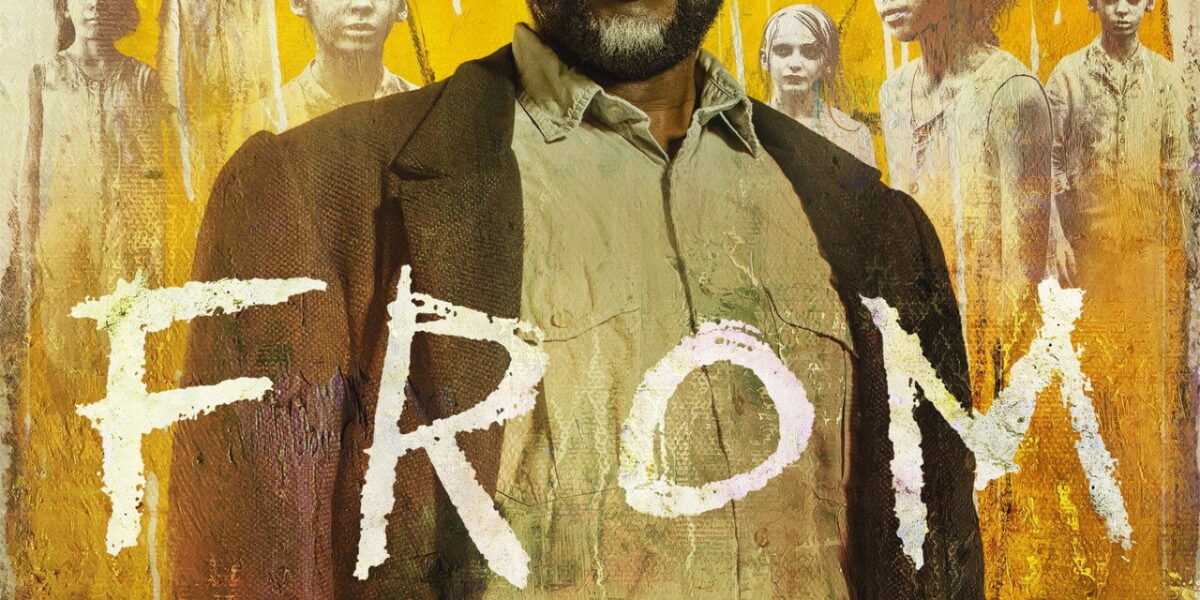
FROM: Ending Explained — Ultimate Breakdown
Few modern horror-mystery series have committed so ferociously to their own mythology as FROM. Created by John Griffin, this relentless puzzle box of a show traps its characters — and its audience — inside a town with no exit and no mercy. What appears to be a supernatural horror exercise slowly reveals itself as something far more philosophically ambitious: a meditation on trauma, purgatory, and the terrifying possibility that some prisons are built from the inside out.
FROM: What happens at the end
As the series progresses across its seasons, the town’s grip on its inhabitants tightens with each revelation. Boyd Stevens, played with extraordinary weight by Harold Perrineau, pushes deeper into the town’s supernatural infrastructure, confronting forces that defy rational explanation. The creatures of the night — elegant, monstrous, wearing human faces — continue their ritualistic slaughter, while the survivors cling to fragile routines. The final sequences escalate toward a confrontation with the town’s apparent sentient will, suggesting the location itself is not merely a setting but an active, breathing antagonist.
The most devastating twist lies in the emerging evidence that the town selects its victims deliberately, and that certain individuals — particularly Jade, played by Eion Bailey, and Tabitha, portrayed by Catalina Sandino Moreno — may have been summoned rather than accidentally trapped. The symbols carved throughout the environment, the visions experienced by multiple characters independently, and the children’s eerie knowledge all converge into a single, chilling conclusion: escape may require not solving the mystery, but surviving a specific, terrible purpose the town has assigned to each soul inside it.
The deeper meaning
At its symbolic core, the town in FROM functions as an externalized purgatory — not in the theological sense, but in the psychological one. Each character arrives carrying unresolved grief, guilt, or fractured identity. The town does not simply trap bodies; it excavates wounds. The metaphor is almost brutally elegant: the forest surrounding the community represents the unconscious mind, and the creatures that emerge at night are, symbolically, the repressed fears and traumas that civilization teaches us to lock away until darkness gives them permission to hunt us.
John Griffin‘s creative intention appears rooted in questioning whether humans truly want to escape the systems that imprison them. The town provides food, shelter, and community — a grotesque parody of suburban safety. The horror is not only the monsters but the complicity that comfort breeds. Characters who have lived longest in the town display the most ambivalence about leaving, mirroring how prolonged trauma can reshape a person’s definition of home until captivity and safety become indistinguishable from one another.
Hidden details & easter eggs
Attentive viewers will notice that the talismans distributed to protect residents bear geometric patterns that reappear in the children’s drawings long before any adult character acknowledges their significance — a masterful piece of foreshadowing embedded in plain sight. The music boxes scattered throughout the town play fragments of the same melody, which, when analyzed across episodes, spell out a rhythmic pattern mirroring the creatures’ attack cycles. The phone booth that occasionally rings with impossible calls visually echoes classic Twilight Zone imagery, a deliberate homage that signals the show’s intellectual lineage without ever reducing itself to mere nostalgia. Check the full cast and episode details on IMDB.
Connections to the rest of the film
The series plants its most important seeds extraordinarily early. Boyd‘s first conversation about the town’s rules in the pilot episode contains phrasing that only reveals its full, devastating meaning once the nature of the creatures is better understood — a textbook example of layered foreshadowing that rewards rewatching. Similarly, Sara’s visions, initially dismissed as mental illness, retrospectively reframe every scene she inhabits as a series of encrypted messages from the town itself, suggesting the show’s writers constructed the entire narrative architecture before a single frame was filmed.
Fan theories
Three dominant theories have crystallized in the fan community. The first proposes that the town exists inside a collective dream shared by trauma survivors, with the creatures representing dissociated fragments of a shared psychic wound — supported by the synchronized visions multiple unacquainted characters experience. The second theory argues the town is a literal liminal space between life and death, a waiting room for souls with unfinished psychological business. The third, and perhaps most disturbing, suggests the town is entirely real and operated by an intelligence that feeds on human suffering, making escape not just difficult but fundamentally against the ecosystem’s survival instinct.
FAQ
What is the town in FROM, and why can’t anyone leave?
The town appears to be a supernatural location — possibly interdimensional or psychic in nature — that actively prevents escape by looping roads back on themselves. Its true mechanism is still being revealed across seasons, but evidence strongly suggests the town operates with deliberate, malevolent intelligence rather than passive geographic anomaly.
Who are the creatures that attack at night in FROM?
The creatures wear human faces and display unsettling emotional intelligence, suggesting they are not simple monsters but entities with a specific role in the town’s ecosystem. Current evidence points toward them being either corrupted human souls or manifestations of the town’s own predatory will, designed to maintain the population through terror.
Does Boyd Stevens find a way to escape the town?
Boyd Stevens comes closer than any other character to understanding the town’s architecture, but his journey is defined more by survival and leadership than clean resolution. His arc suggests that escape requires a spiritual or psychological transformation, not merely a physical route — making his search as much internal as geographical.
What do the symbols and visions mean in FROM?
The recurring symbols function as a hidden language embedded throughout the town’s environment, appearing in talismans, children’s art, and natural formations. Multiple characters receive visions containing these symbols independently, strongly implying the town communicates with specific individuals it has selected for a particular, undisclosed purpose central to the overarching mystery.
Is FROM connected to other Stephen King-style universes?
While FROM draws obvious tonal and thematic inspiration from Stephen King‘s work — particularly the trapped-community horror of works like The Mist — it exists as a fully original intellectual property with no confirmed canonical crossover connections, though its mythology is rich enough to sustain those comparisons with genuine creative authority.