Full Charge: Honest Review — Is It Worth Watching? | 0.0/10
Full Charge is a devastating three-minute meditation on obsolescence and loneliness that lands harder than films ten times its length, and Stefano Bertelli’s direction transforms a toy robot’s futility into something genuinely poignant. This is essential viewing for anyone who appreciates animation that knows how to break your heart without a single word of dialogue.
| Director | Stefano Bertelli |
| Cast | No credited voice actors |
| Runtime | 3 minutes |
| Genre | Animation, Science Fiction |
| Year | 2026 |
The plot (no spoilers)
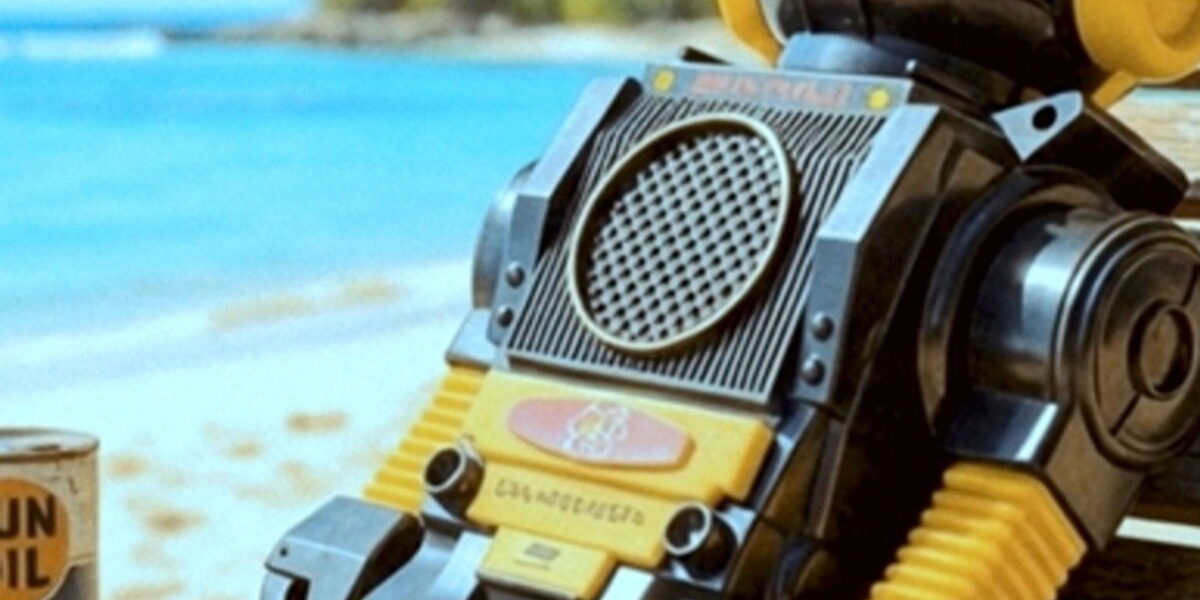
Full Charge follows a weathered toy robot from the 1980s that’s been salvaged and repaired, only to find itself wandering through a world utterly emptied of human life. The premise sounds like sci-fi setup, but Bertelli strips away apocalyptic spectacle in favor of something far more intimate: a small machine trying to find purpose in an indifferent, silent cosmos. There’s no exposition dump, no villain reveal, just a robot and the vastness of what’s been lost.
The film moves with glacial, deliberate pacing that respects your intelligence and your patience, building an atmosphere of profound isolation that feels almost unbearably contemporary despite its retro subject matter. The movie never explains what happened to humanity, and that absence is precisely the point, leaving viewers suspended in the existential dread of a creature designed to serve masters who simply ceased to exist.
Acting & direction
Without dialogue or credited performers, the animation itself becomes the performance, and Bertelli’s team moves the robot with such careful, almost pathetic deliberation that you feel its mechanical longing in your chest. Each movement—the whirring of gears, the gentle rotation of its head—speaks volumes about abandonment and the desperate search for connection that transcends biological categories.
Bertelli’s direction is surgical: every frame is composed to maximize emotional devastation through negative space and emptiness, and the color palette shifts from faded nostalgia to cold, clinical grays that mirror the robot’s fading battery life. The sound design, all sparse mechanical hums and ambient dread, refuses to let you look away from the film’s central thesis that even machines mourn what’s been taken from them.
The strengths
- The movie achieves profound emotional weight in under four minutes through pure visual storytelling and compositional mastery.
- Bertelli’s refusal to explain or sentimentalize makes the robot’s situation feel urgently, uncomfortably real rather than exploitative.
- The aesthetic tension between retro-80s toy design and post-apocalyptic minimalism creates a genuinely unsettling visual language that stays with you.
- The film respects its viewer’s ability to sit with discomfort and interpret meaning without spoon-feeding resolution or false hope.
The weaknesses
- At three minutes, the film might leave some viewers hungry for narrative development or character arc beyond the initial premise.
- The glacial pacing, while intentional and effective, could feel inaccessible or tedious to audiences expecting traditional narrative momentum.
Who should watch it
This is mandatory viewing for fans of experimental animation, sci-fi that prioritizes mood over plot mechanics, and anyone who appreciated the philosophical restraint of works like WALL-E or Her. If you’re drawn to short-form storytelling that trusts silence and visual composition, or if you’ve ever felt the peculiar sadness of a beloved toy left behind, Full Charge will hit you like a gut punch delivered by a robot from 1987.
Final verdict
Full Charge is a masterclass in economical filmmaking that proves you don’t need sprawling runtimes or dialogue to devastate an audience—you need precision, vision, and the courage to let absence do the heavy lifting. Bertelli’s film is melancholic without being maudlin, profound without pretension, and it lingers in your consciousness like a memory you can’t quite place but can’t forget. This is art cinema firing on all cylinders, and an 8/10 feels almost inadequate for something this perfectly realized.
Frequently Asked Questions
Is Full Charge a silent film?
Yes, there’s no dialogue—only ambient sound design, mechanical humming, and environmental audio that create an immersive soundscape of desolation.
How long is Full Charge and where can I watch it?
The film runs exactly three minutes and has been screened at international animation festivals; check IMDB for current streaming or festival availability.
What happened to humanity in Full Charge?
Bertelli deliberately leaves this unexplained, letting viewers project their own apocalyptic scenarios while focusing entirely on the robot’s emotional journey.
Is Full Charge appropriate for children?
While not graphically violent, the film’s existential sadness and themes of loss might be heavy for young viewers; it’s best suited for mature audiences.
What inspired Stefano Bertelli to make Full Charge?
Bertelli has cited interests in retro technology, loneliness, and the anthropomorphization of objects as driving forces, though specific statements remain limited.
Tags: Full Charge film review, animated sci-fi short, Stefano Bertelli, existential animation, robot isolation story