INVINCIBLE: Ending Explained — Ultimate Breakdown
Invincible is not simply another superhero story dressed in animated clothes — it is a brutal, emotionally devastating deconstruction of legacy, identity, and the terrifying weight of inherited violence. From its very first season, the series dares to ask what happens when the symbol of hope turns out to be the greatest threat of all, and its endings — across multiple seasons — consistently refuse to offer easy comfort to anyone watching.
Invincible: What happens at the end
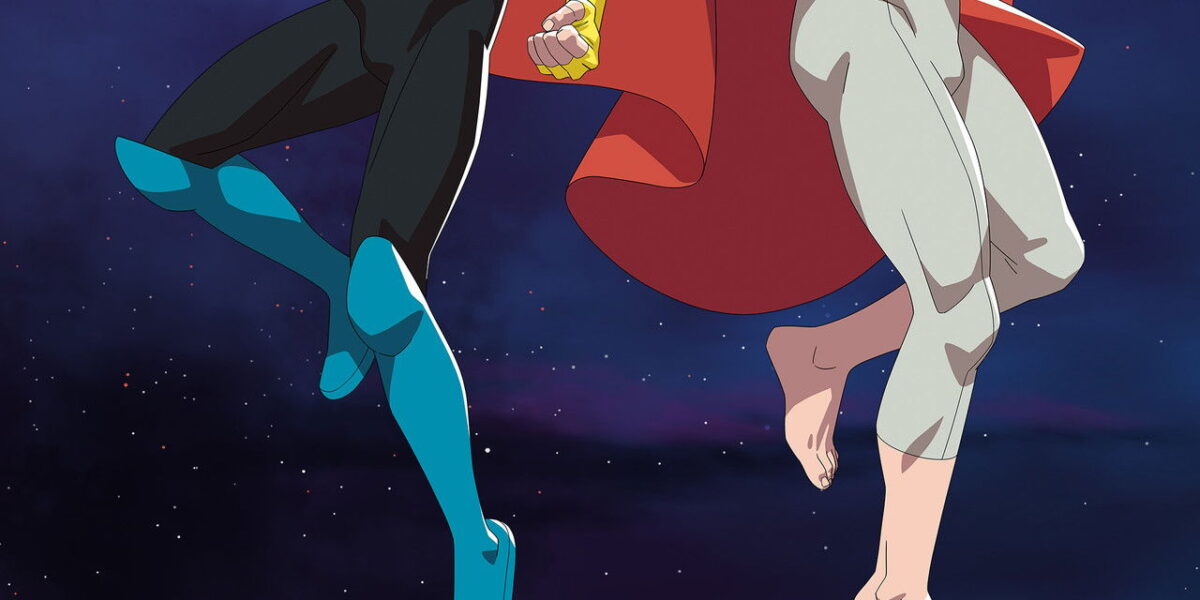
The most seismic ending in the series arrives at the conclusion of Season One, when Mark Grayson — battered, bloodied, and emotionally shattered — stands against his father Nolan Grayson, also known as Omni-Man, in a fight that is less a battle and more a public execution of innocence. Nolan beats his own son across continents, through cities, through the very concept of a safe world, demanding submission to the Viltrumite agenda of conquest and control.
At the moment when Nolan holds Mark‘s broken body and prepares to deliver a killing blow, he hesitates — undone not by force but by memory, by the flash of Mark‘s entire childhood playing across his mind. He releases his son, ascends into the sky, and abandons Earth entirely, leaving Mark broken in every sense of the word. The haunting final image is one of absence: a father choosing empire over family, and a son left to rebuild from the wreckage of everything he believed.
The deeper meaning
The ending operates as a devastating metaphor for inherited trauma and the mythology of the perfect father. Mark has spent his entire life worshipping Nolan, and the series systematically dismantles that idol with surgical precision. The violence here is not spectacular entertainment — it is the visual language of disillusionment, each punch a revelation, each wound a truth Mark can no longer avoid. The show insists that growing up often means surviving the collapse of the stories we told ourselves about love.
The creators craft this ending to expose the seduction of power and the cost of complicity. Nolan‘s hesitation is not redemption — it is the crack in a monster’s armor, a reminder that evil is rarely born without tenderness somewhere beneath it. This ambiguity is intentional and crucial: the series refuses to let audiences hate Nolan cleanly, forcing a more uncomfortable reckoning with how we love people who harm us, and why that love is so extraordinarily difficult to simply discard.
Hidden details & easter eggs
Attentive viewers will notice that throughout the final confrontation, the color palette shifts from warm amber tones — associated with Mark‘s domestic life and happiness — to cold, bruised purples and grays that mirror the Viltrumite aesthetic of domination. This is not accidental visual design but deliberate foreshadowing of the world Nolan is trying to impose. Additionally, the specific memories Nolan recalls — Mark learning to ride a bike, their earliest games of catch — are the very scenes the series used to establish normalcy in its opening episode, creating a devastating full circle.
Connections to the rest of the film
The foreshadowing embedded throughout Season One rewards retrospective viewing with almost painful clarity. Nolan‘s early lessons to Mark about heroism, delivered with apparent warmth, now read as grooming for conquest. The seemingly throwaway detail of Viltrumite lifespans — meaning Nolan views humans as mayflies — recontextualizes every interaction he has ever had with Debbie, played with heartbreaking precision by Sandra Oh. Every tender family moment becomes retroactively sinister, a narrative trap the series springs with extraordinary confidence and cruelty. You can find the series listed on IMDB alongside its full cast details.
Fan theories
Several compelling theories surround Nolan‘s true motivation for stopping. One camp argues his hesitation was always latent genuine love breaking through conditioning, supported by his emotional collapse later in Season Two. A counterargument holds that Nolan stopped purely strategically — killing Mark publicly would have made Earth’s resistance more unified. A third, darker reading suggests Nolan needed Mark alive to eventually become the Viltrumite heir he was always meant to be, making the mercy not love at all, but long-term imperial calculation wearing the mask of paternal feeling.
FAQ
Why does Omni-Man stop beating Mark at the end of Season One?
Nolan is overwhelmed by a flood of memories of Mark‘s childhood, suggesting that his human emotional bonds — though suppressed — are powerful enough to override his Viltrumite conditioning, at least temporarily, causing him to abandon the fight rather than kill his own son.
Does Nolan ever return to Earth after leaving?
Yes. Nolan returns in later seasons, and his arc evolves significantly as he confronts the consequences of abandoning both his son and his adopted planet, eventually shifting toward a more complex and contested form of redemption.
What does the tagline “Almost there” mean in context of the ending?
The tagline captures Mark‘s perpetual state of near-arrival — almost strong enough, almost free of his father’s shadow, almost the hero he wants to be — making it a poignant summary of the entire series’ central tension rather than a simple promotional phrase.
How does Debbie’s storyline connect to the Season One ending?
Debbie, portrayed by Sandra Oh, discovers the full truth of Nolan‘s nature simultaneously with the public confrontation, meaning she loses her husband, her marriage, and her entire understanding of her life in a single devastating narrative moment.
Is Invincible faithful to the original comic book ending?
The animated series follows the broad emotional and narrative beats of Robert Kirkman‘s source material faithfully, though it deepens certain character moments and expands the emotional texture of key scenes, particularly in how it frames Nolan‘s psychological break during the final fight.