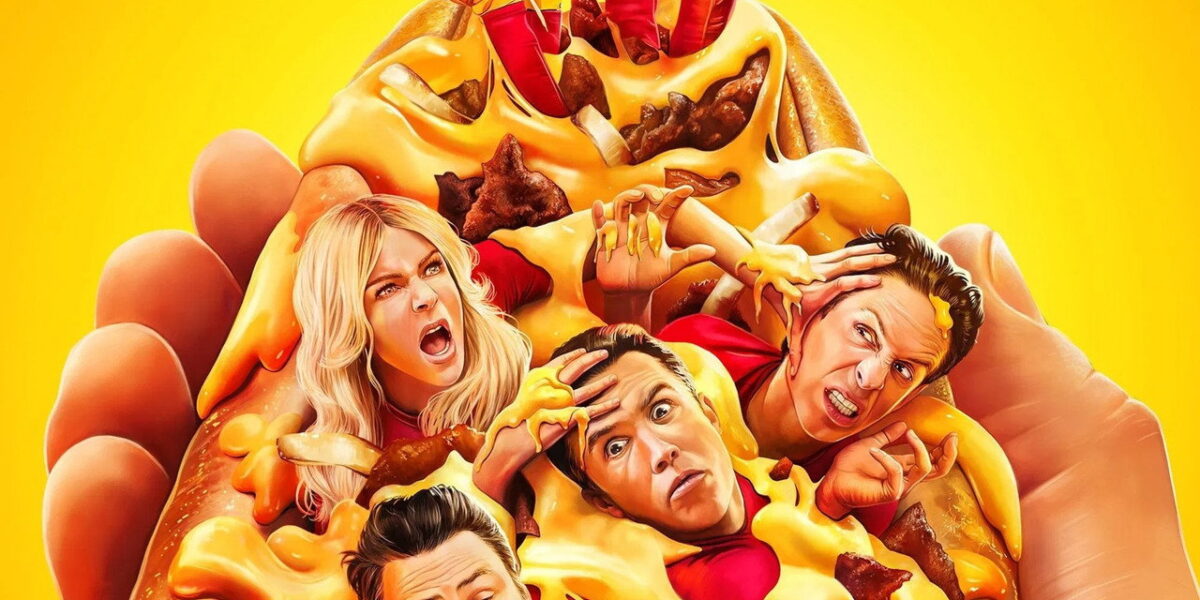
It’s Always Sunny in Philadelphia: Ending Explained — Ultimate Breakdown
It’s Always Sunny in Philadelphia is one of television’s most audacious social experiments disguised as a sitcom. After eighteen seasons, the show has built something rare and ferocious: a comedic universe where moral decay is the punchline and the audience is always complicit. To understand what this series truly means — what it has been building toward across two decades of gleeful wrongdoing — we must look at how it refuses to let its characters, or us, off the hook.
It’s Always Sunny in Philadelphia: What happens at the end
Across its eighteenth season, the Gang — Charlie Kelly, Dennis Reynolds, Mac McDonald, Dee Reynolds, and Frank Reynolds — continues its cyclical ritual of scheming, failing, and returning to Paddy’s Pub utterly unchanged. The show’s structural genius is that each season finale functions as a reset, a cosmic joke on narrative progress. The Gang hatches elaborate plans, each one collapsing under the weight of their own spectacular incompetence and breathtaking selfishness, and yet Paddy’s doors always reopen the next morning.
The crucial twist embedded in the series’ long game is that there is no redemption arc, and that absence is entirely intentional. Every scheme that nearly succeeds is sabotaged from within — by ego, by stupidity, by the Gang’s bottomless capacity for self-destruction. The ending of any given season is not a conclusion but a confirmation: these people are trapped in amber, perfectly preserved in their awfulness, and the world of Philadelphia quietly absorbs their chaos without consequence or correction.
The deeper meaning
The show operates as a savage satire of American individualism and the mythology of self-improvement. The Gang believes, with terrifying sincerity, that they are the protagonists of their own heroic stories. This delusion — the gap between their self-perception and reality — is the engine of every joke and every tragedy. The pub itself functions as a metaphor for stagnation: a physical space where ambition arrives and dies, where every grand plan circles back to the same sticky barstools and the same broken people.
Creator Rob McElhenney‘s intention was never to redeem these characters but to hold a mirror up to a specific strain of human nature — the one that prioritizes winning over decency, narrative over truth. The show argues that some people are simply unwilling to grow, and it has the courage — rare in American comedy — to frame that refusal not as quirky charm but as genuine, ongoing catastrophe for everyone around them.
Hidden details & easter eggs
Attentive viewers will notice that Paddy’s Pub is perpetually empty of real customers, a visual metaphor hiding in plain sight across all eighteen seasons. The Gang serves no one but themselves — the pub is not a business but a fortress of narcissism. Additionally, Charlie‘s illiteracy, played for laughs in early seasons, accumulates into something genuinely heartbreaking: a symbol of a man locked out of the world’s systems, whose pain has been aestheticized into comedy by the very people who claim to be his friends. You can find the full cast history on IMDB.
Connections to the rest of the series
The show employs foreshadowing through repetition rather than traditional narrative planting — each callback to a previous scheme reveals not growth but the terrifying circularity of the Gang’s existence. Dennis Reynolds‘s escalating hints at a deeply sinister inner life, threaded across seasons with chilling consistency, recontextualize early episodes as something far darker than broad comedy. Frank Reynolds‘s deliberate regression from successful businessman to feral creature mirrors the show’s thesis: given freedom from consequence, people do not rise — they descend, joyfully.
Fan theories
One compelling theory holds that Charlie is the show’s secret moral center — the only member of the Gang capable of genuine emotion, whose suffering is the true dramatic spine of the series. Evidence abounds in his tender, doomed pursuit of The Waitress. A darker theory suggests Dennis is a functioning sociopath, with years of subtle clues supporting a chilling reading of his behavior. A third interpretation frames the entire series as Charlie‘s unreliable narration — a fantasy constructed by the most damaged member of the group to make his life bearable.
FAQ
Does the Gang ever change or grow by the end of It’s Always Sunny in Philadelphia?
No — and that refusal is the point. The show deliberately denies its characters any redemption arc, using their stagnation as a sustained critique of self-delusion and moral avoidance across all eighteen seasons.
What does Paddy’s Pub symbolize in the series?
Paddy’s Pub functions as a symbol of arrested development — a closed ecosystem where the Gang’s worst impulses are protected from real-world consequences, keeping them perpetually juvenile and unaccountable.
Is Dennis Reynolds actually a dangerous person, or is it played purely for laughs?
The show deliberately blurs that line. Dennis‘s behavior is written with enough genuine menace that many viewers and critics read him as a portrait of a functioning sociopath hiding behind comedy’s protective shield.
Why does the show work as social satire after so many seasons?
Because American culture keeps supplying the Gang with fresh targets. The show’s premise — that selfish, deluded people face no structural consequences — remains as relevant in season eighteen as it was in 2005.
What is Charlie Kelly’s role in the show’s larger meaning?
Charlie is the series’ emotional core — the character whose genuine vulnerability and suppressed pain give the comedy its unexpected dramatic weight, making him simultaneously its funniest and most quietly devastating figure.
“`