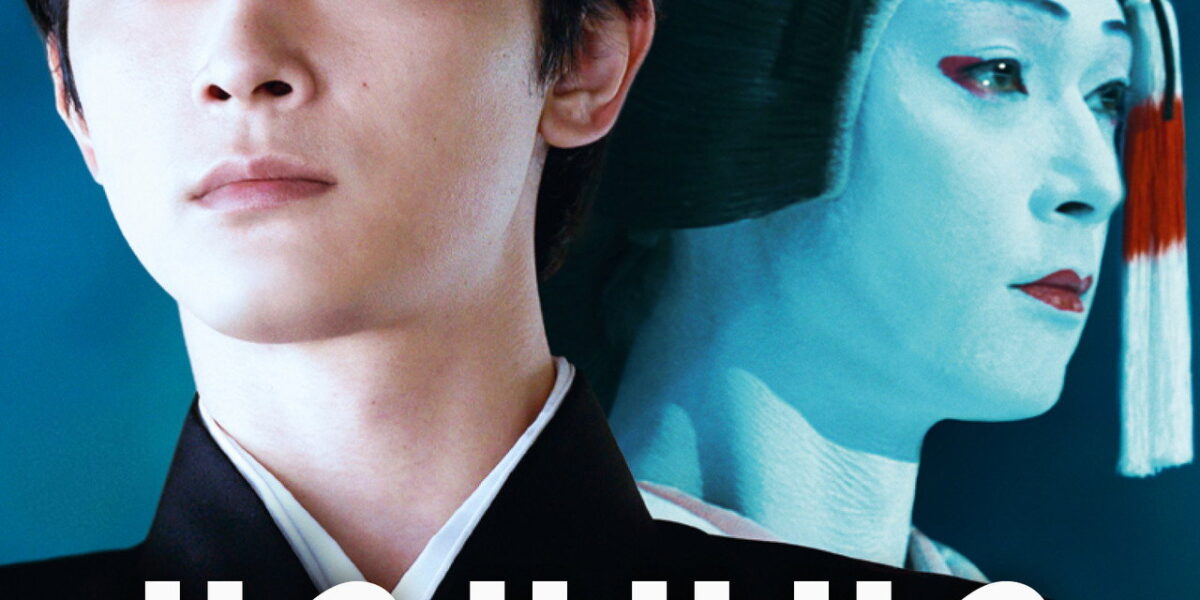
Kokuho: Honest Review — Is It Worth Watching? | 7.9/10
Kokuho is a patient, gorgeous meditation on artistic obsession that demands nearly three hours of your life and absolutely deserves them. Director Sang-il Lee has crafted something rare: a film about mastery that doesn’t feel like a biopic, but like watching time itself reshape two souls through the discipline of kabuki theatre.
| Director | Sang-il Lee |
| Cast | Ryo Yoshizawa, Ryusei Yokohama, Mitsuki Takahata, Shinobu Terajima, Soya Kurokawa |
| Runtime | 174 minutes |
| Genre | Drama |
| Year | 2025 |
Kokuho: The plot (no spoilers)
Kokuho opens in 1964 Nagasaki with Kikuo, a fifteen-year-old orphaned by his yakuza father’s death, stepping into the world of kabuki theatre under the mentorship of a celebrated actor. Alongside Shunsuke, the actor’s son, Kikuo embarks on a decades-long journey toward perfecting one of Japan’s most demanding art forms, watching as their competitive friendship evolves into something more complex and beautiful than either could have imagined.
The film spans multiple decades with a deliberate, unhurried pace that mirrors the grinding dedication required to master kabuki, never rushing to emotional payoffs or dramatic climaxes where a lesser director would have planted them. This is a story about patience, sacrifice, and the quiet devastation of choosing art over everything else, told through the prism of two men whose lives become inseparable from the theatre itself.
Acting & direction
Ryo Yoshizawa carries the film with a performance of extraordinary restraint, allowing you to read entire emotional narratives in the subtle shifts of his posture and eyes as he moves through the kabuki forms with increasing grace. Ryusei Yokohama is equally magnetic as Shunsuke, creating a palpable tension between rivalry and brotherhood that never quite tips into melodrama, while Shinobu Terajima brings quiet dignity to the female roles that could have been written as mere supporting scaffolding.
Lee’s direction is methodical to the point of austerity—he lingers on kabuki performances with no cutaways or music beds, forcing you to truly see the movement and artistry rather than having it manipulated for you. The cinematography treats the theatre as a living character, all shadows and gilded wood, while the score knows when to vanish entirely, letting silence become more powerful than any orchestral swell could manage.
The strengths
- The film respects kabuki itself rather than treating it as exotic window dressing, staging full performances that allow the beauty of the art form to speak directly to your understanding of why these men have devoted their lives to it.
- The dual timeline structure, aging up the cast through makeup and wardrobe, avoids the gimmickry of casting multiple actors and instead emphasizes the physical toll of artistic pursuit across a lifetime.
- Lee refuses easy sentiment—there’s no triumphant final performance, no reconciliation scene that wraps everything in a neat emotional bow, which makes the quiet gravity of the ending absolutely devastating in the best way.
- The ensemble supporting cast, particularly Mitsuki Takahata, creates a world where kabuki isn’t just a background profession but a complete social ecosystem with its own hierarchies and unspoken rules.
The weaknesses
- At nearly three hours, the film’s deliberate pacing will lose viewers who need narrative momentum or dramatic confrontation to feel engaged, and that’s not a small sacrifice when there are plenty of other things competing for your time.
- The dialogue occasionally feels mannered in ways that suggest the translation might be smoothing over nuances, and some of the mid-section emotional beats rely too heavily on glances and sighs that don’t always land with full force.
Who should watch it
This film lives in the realm of contemplative character studies and arts cinema, destined for audiences who loved Masaki Kobayashi‘s work or who have the patience for slow-burn narratives about obsession like “The Master” or “There Will Be Blood.” If you’re someone who finds meditative beauty in watching people perform repetitive actions toward perfection, or if you’ve ever wondered what it costs to become truly great at something, Kokuho is absolutely your film—everyone else should approach with realistic expectations about runtime and pacing.
Final verdict
This is a film about time and art and the brutal erosion of the human body in service of beauty, and it never once cheats or looks away from any of those uncomfortable truths. Kokuho won’t make you cry with a manipulative final scene, but it will haunt you with the knowledge that these men built something permanent inside themselves that no audience could ever fully appreciate. It’s genuinely great cinema for people willing to sit still and watch mastery unfold across a lifetime, and honestly, that’s exactly the kind of film we need right now—a 7.9/10 that feels like a gift to anyone patient enough to unwrap it.
FAQ
Is Kokuho worth watching if I don’t know anything about kabuki?
Absolutely—the film teaches you what you need to know through immersion rather than exposition, and your lack of expertise becomes part of the experience as you gradually understand why these characters have sacrificed everything for it.
How long is Kokuho and is the runtime justified?
It’s 174 minutes, and yes, every minute earns its place—this isn’t padding but genuine meditation on mastery that can’t be rushed without losing its soul.
Does Kokuho have English subtitles?
It’s a Japanese-language film, so yes, English subtitles are standard for international distribution, though check your specific region’s release details.
Who directed Kokuho?
South Korean director Sang-il Lee helmed this 2025 drama, bringing an outsider’s perspective to Japanese theatrical tradition that proves both respectful and revelatory.
What’s the age rating for Kokuho?
There’s minimal violence or explicit content—it’s a character-driven drama suitable for mature teens and up, though the pacing will test younger viewers’ patience more than any rating would suggest.