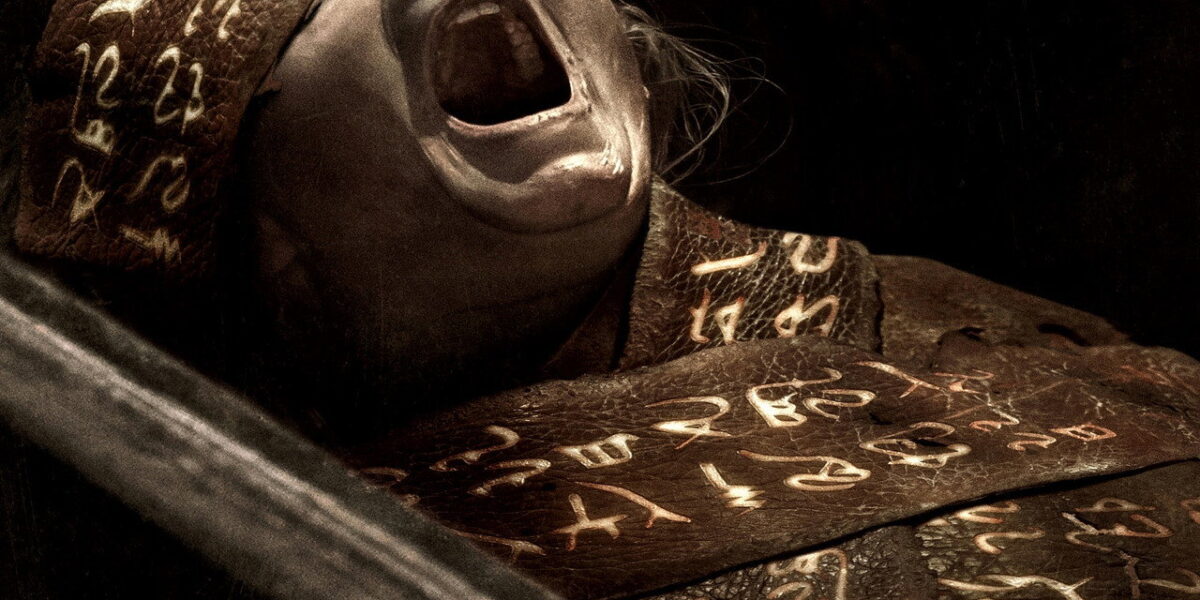
Lee Cronin’s The Mummy: Honest Review — Is It Worth Watching? | 8.6/10
Lee Cronin’s The Mummy is a genuinely disturbing piece of work that abandons the adventure fantasy template entirely in favor of something far more psychologically corrosive and real. If you want a horror film that actually gets under your skin instead of relying on jump scares, this is the rare beast worth your time and your dread.
| Director | Lee Cronin |
| Cast | Jack Reynor, Laia Costa, May Calamawy, Natalie Grace, Shylo Molina |
| Runtime | 134 minutes |
| Genre | Horror, Mystery |
| Year | 2026 |
The plot (no spoilers)
Lee Cronin’s The Mummy concerns itself with a journalist’s daughter who vanishes into the desert eight years ago without a trace, only to reappear in her family’s life as something fundamentally wrong, fundamentally other. The tagline “What happened to Katie?” drives the entire machinery of the film, and Cronin refuses to give you easy answers or comfortable resolution for this kind of violation. What you get instead is a slow-burn excavation of trauma that treats the supernatural as merely a symptom of deeper, more human horrors.
The film operates in a space somewhere between family drama and existential dread, where the question isn’t whether something supernatural occurred in that desert, but rather what it means when the person you loved no longer exists inside the body wearing her face. Cronin’s pacing is deliberate and often suffocating, building unease through absence and implication rather than spectacle, and the atmosphere becomes increasingly claustrophobic even in wide-open spaces.
Acting & direction
Jack Reynor delivers one of his finest performances as a man watching his family disintegrate from the inside, his face a map of denial and creeping acceptance that the daughter returned to them is not the daughter he lost. Laia Costa carries the emotional weight of maternal grief with such fractured precision that you feel her sanity cracking in real time, and Natalie Grace—playing Katie after her return—moves through scenes with an unnerving otherness that’s never quite explained or explained away.
Cronin’s direction here is remarkably restrained, which is exactly why the film works as effectively as it does. He favors static shots that let dread accumulate naturally, avoids manipulative music cues, and trusts his actors to find horror in silence and stillness rather than in gore or jump scares. The cinematography bathes interiors in sickly naturalistic light, making suburban normality feel like a stage set for something unspeakable, and the editing rhythm never allows you to settle into comfort.
The strengths
- The central performance from Natalie Grace is genuinely unsettling—she creates something that’s neither quite human nor quite monstrous, but something far more disturbing than either category could contain.
- Cronin refuses to explain away the mystery with convenient exposition, instead letting the ambiguity itself become the source of the film’s psychological torment and lingering wrongness.
- The movie understands that family trauma is infinitely scarier than any supernatural threat because you cannot escape it and you cannot kill it, and this understanding permeates every frame of the story.
- The 134-minute runtime works entirely in the film’s favor, allowing dread to calcify and relationships to fully deteriorate before your eyes in real time.
The weaknesses
- The deliberate pacing will absolutely alienate audiences craving traditional horror momentum or clear narrative payoffs, and some viewers will mistake restraint for slowness or ambiguity for poor writing.
- There are moments where the film’s commitment to dread over action tilts into indulgence, stretching scenes slightly beyond their dramatic breaking point in ways that test even devoted viewers’ patience.
Who should watch it
This is essential viewing for devotees of psychological horror who appreciate filmmakers like Ari Aster or Karyn Kusama—people who understand that the scariest stories happen in the spaces between revelation and denial. If you loved the family breakdown dynamics of Hereditary or the ambient dread of The Babadook, the film will speak directly to you in the language of your nightmares. Avoid it if you need plot momentum or tidy resolutions, because Cronin’s work offers neither.
Final verdict
Lee Cronin’s The Mummy is the kind of horror film that lingers in your bones for weeks, not because of what it shows you, but because of what it makes you fear in the people closest to you. It’s a deliberate, ambitious rejection of easy scares in favor of the much harder work of psychological devastation, and it executes that vision with almost surgical precision. The 8.6 rating on TMDB feels entirely earned—this is mature, unsettling filmmaking that respects its audience’s intelligence and rewards patient, thoughtful viewers with something genuinely haunting. Essential.
FAQ
Is Lee Cronin’s The Mummy a remake of the classic Universal monster films?
No. Cronin’s film abandons the adventure fantasy template entirely and reimagines the premise as a contemporary psychological horror about a family confronting something fundamentally wrong that wears their daughter’s face, anchored in real trauma rather than monster-movie tropes.
Does the movie explain what happened to Katie in the desert?
Not directly. The film maintains ambiguity about the supernatural circumstances, instead focusing on the psychological devastation of the family’s reunion and the wrongness of Katie’s return—the mystery remains deliberately unresolved.
How does this film compare to other recent horror releases?
It operates in the space of elevated horror alongside films like Hereditary and The Babadook, prioritizing atmospheric dread and psychological unease over spectacle or jump scares, making it significantly different from mainstream horror cinema.
Is there graphic violence or gore in the film?
The film relies primarily on psychological horror and suggestion rather than explicit gore, though there are moments of violence that serve the story’s emotional devastation—intensity comes from implication rather than graphic depiction.
Will I be satisfied with the ending of this film?
If you expect traditional narrative closure and explanation, you’ll likely find the ending frustrating. If you embrace ambiguity and dread, the ending becomes the film’s most powerful statement about family, loss, and things that cannot be fixed or understood.
Find more: Lee Cronin’s The Mummy on IMDB