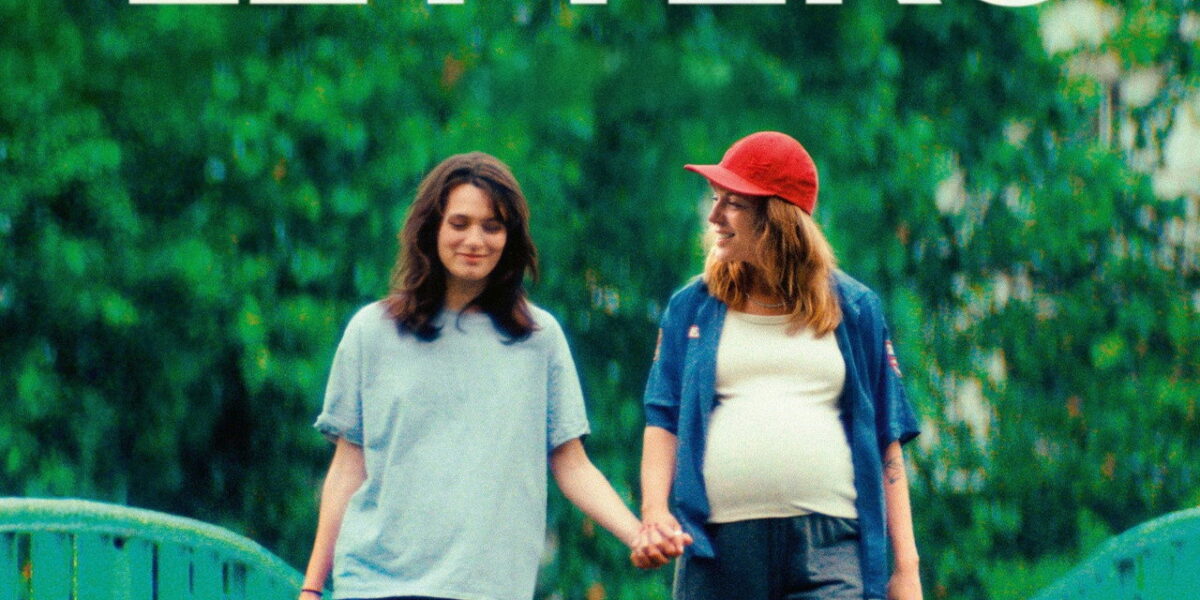
Love Letters: Honest Review — Is It Worth Watching? | 7.8/10
Love Letters is a quietly confident French film that takes the oldest romantic setup in cinema and flips it on its head with real tenderness and surprisingly sharp comedic timing. If you’re tired of heteronormative pregnancy narratives and want something that feels genuinely lived-in, this one’s worth ninety-seven minutes of your life.
| Director | Alice Douard |
| Cast | Ella Rumpf, Monia Chokri, Noémie Lvovsky, Emy Juretzko, Julien Gaspar-Oliveri |
| Runtime | 97 min |
| Genre | Drama, Comedy |
| Year | 2025 |
Love Letters: The plot (no spoilers)
Love Letters centers on Céline, a thirty-two-year-old woman wrestling with the fact that she desperately wants to be pregnant—but it’s her wife Nadia who’s carrying their child instead. It’s that delicious premise that sounds like a sketch but becomes something far more human: a meditation on desire, identity, and what it means to be left behind when your partner gets to experience something you thought would define you both equally.
The film moves at a deceptively gentle pace, letting these characters breathe in cramped Parisian apartments and awkward family dinners, where the tension between wanting and having already gotten what you asked for becomes unbearable in the best possible way. Director Alice Douard refuses to turn this into melodrama, instead finding comedy in the small moments where Céline’s expectations collide with reality in ways both heartbreaking and absurdly funny.
Acting & direction
Ella Rumpf carries the entire film on her narrow shoulders with an understated brilliance that makes you feel Céline’s jealousy without ever winking at the camera, while Monia Chokri as Nadia provides the perfect counterweight—radiant but also confused, trying to understand why her wife is grieving something that hasn’t even happened yet. The supporting cast, particularly Noémie Lvovsky, adds texture to what could’ve been a two-hander, grounding the story in a wider world of messy, complicated women.
Douard’s direction is almost anti-cinematic in the best sense: there are no dramatic crescendos, no manipulative close-ups, just the quiet observation of people learning to live with each other’s disappointments. The cinematography favors natural light and cluttered domestic spaces, making you feel like you’re watching a documentary of someone’s actual life spiraling slightly. The score stays out of the way almost entirely, letting silence do the heavy lifting.
The strengths
- Ella Rumpf’s performance is a masterclass in playing someone who knows they’re being unreasonable but can’t stop anyway, and you end up rooting for her even when she’s being insufferable.
- The film refuses to punish Céline for her feelings or moralize about parental responsibility, instead treating her emotional complexity as completely legitimate and worth exploring without judgment.
- There’s a real subversive joy in watching a queer relationship struggle with the exact same anxieties and power imbalances that plague straight couples, which shouldn’t feel radical but somehow does.
- The dialogue crackles with the kind of specificity that only comes from a writer-director who’s actually lived in these spaces and listened to how people actually talk to each other.
The weaknesses
- The film’s refusal to provide easy emotional catharsis might feel like stalling to viewers who want their conflicts neatly resolved, and there are stretches where the lack of plot momentum becomes genuinely testing.
- Some of the family dynamics feel slightly underdeveloped, particularly around Nadia’s mother, who appears just often enough to register as a plot device rather than a fully realized character with her own stakes in the situation.
- The third act doesn’t quite stick the landing it’s been building toward—the resolution feels slightly too tidy given how much the film has earned by refusing easy answers up until that point.
Who should watch it
This is essential viewing for anyone exhausted by mainstream depictions of motherhood and pregnancy who wants something that actually interrogates desire rather than celebrating it blindly. If you’ve responded to drama-comedies like Portrait of a Lady on Fire or The Last Conversation in Prague, if you’re drawn to character-driven narratives over plot mechanics, if you speak fluent French cinema, then this is absolutely your film. It’s also perfect for couples at major life inflection points who need to sit with the uncomfortable truth that sometimes what you wanted and what you got are two entirely different things.
Final verdict
Love Letters is a small, intelligent, achingly humane film that trusts its audience to sit with emotional ambiguity and find something meaningful there. It’s not perfect—the ending softens what came before it in ways that feel slightly dishonest—but it’s the kind of movie that stays with you precisely because it refuses to resolve everything, because it understands that some versions of yourself will always grieve the lives you didn’t get to live. Douard’s debut feature is a genuine discovery for anyone still believing that cinema can be an intimate conversation rather than a spectacle, and Rumpf’s performance alone makes it worth your time. Solidly recommended at 7.8/10.
FAQ
Is Love Letters a French film?
Yes, it’s a 2025 French drama-comedy directed by Alice Douard with the original title Des preuves d’amour and an entirely francophone cast led by Ella Rumpf.
What is Love Letters about?
The film follows Céline, a 32-year-old woman who struggles with the fact that her wife Nadia is pregnant with their child, forcing her to confront her own feelings about parenthood and identity within their relationship.
Is Love Letters appropriate for all ages?
It contains mature themes around sexuality, infidelity, and relationship conflict, so it’s best suited for adult audiences who can engage with subtle emotional complexity.
How long is Love Letters?
The film runs exactly 97 minutes, making it a tight, focused character study that doesn’t overstay its welcome.
Where can I watch Love Letters?
Check IMDb for current streaming availability in your region, as distribution varies by country and changes frequently.