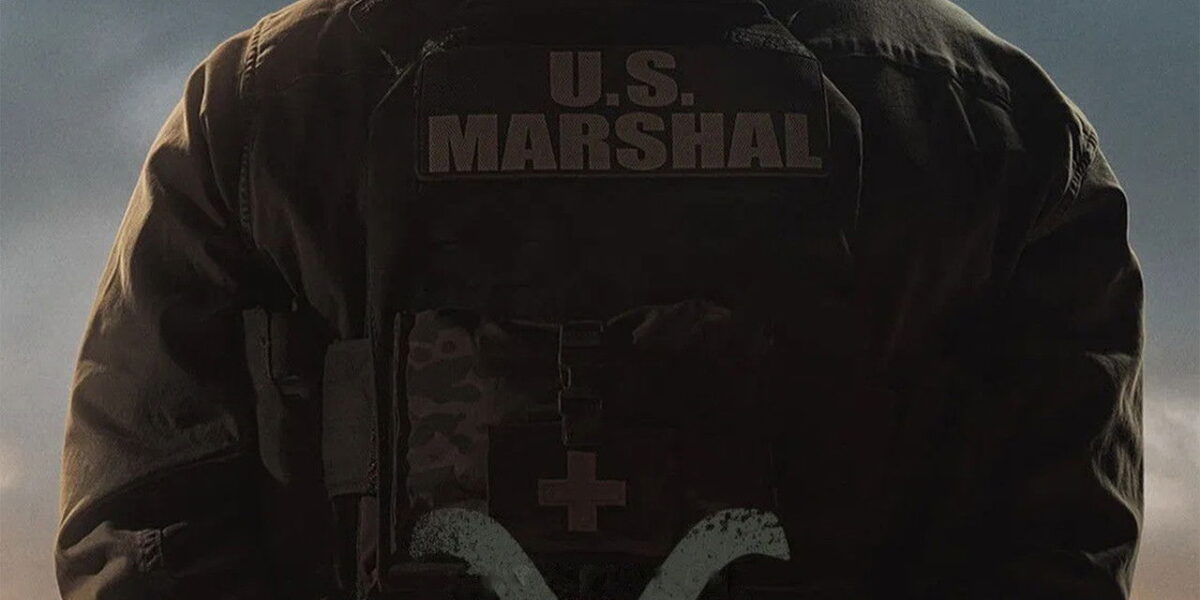
Marshals: Ending Explained — Ultimate Breakdown
Marshals, the 2026 crime drama series created by Spencer Hudnut, arrives as one of the most psychologically ambitious offshoots of the Yellowstone universe. With Luke Grimes stepping fully into the spotlight as Kayce Dutton, the show dares to ask a devastating question: what happens to a warrior when the ranch no longer defines him? This analysis dives deep into the finale’s emotional architecture and what it truly reveals about duty, identity, and the price of justice.
Marshals: What happens at the end
The season two finale of Marshals builds to a confrontation that feels less like a shootout and more like a reckoning. Kayce Dutton and his elite unit close in on a sprawling criminal network that has terrorized Montana’s borderlands for years. The final operation unfolds across two parallel timelines — the tactical raid in the present, and a haunting series of flashbacks to Kayce’s Navy SEAL deployments — forcing the viewer to hold both realities simultaneously and feel their devastating weight.
The critical twist arrives when Kayce must choose between capturing the operation’s kingpin and saving a fellow Marshal whose cover has been blown. He chooses the teammate. The kingpin escapes into the wilderness — a deliberate, agonizing narrative choice. Justice, the show insists, is never clean. The season closes not with triumph but with Kayce standing alone at the edge of a Montana ridgeline, badge in hand, staring into a horizon that offers no easy answers and no applause.
The deeper meaning
That final image — a solitary man at a geographic and moral precipice — is the show’s most powerful metaphor. The ridgeline is not a finish line; it is a threshold between the self that survives and the self that was sacrificed in the process of serving. Kayce Dutton is no longer a rancher, no longer purely a soldier. He exists in the liminal space between identities, and Hudnut frames this beautifully as not a tragedy but a raw, honest truth about the cost of vocation.
Hudnut’s intention across both seasons has been to dismantle the mythology of the lone Western hero. By letting the villain escape, the series refuses to grant its protagonist the catharsis the genre traditionally promises. Instead, it argues that real duty is cyclical, unglamorous, and spiritually expensive. Kayce‘s psychological wounds are not healed by the badge — they are deepened by it, and the show treats that reality with uncommon courage and seriousness.
Hidden details & easter eggs
Sharp-eyed viewers will notice that the Montana ridgeline in the finale mirrors the exact geography of the opening shot of the pilot episode — a stunning piece of visual foreshadowing that reframes the entire series as a closed circle rather than a linear journey. Additionally, the badge Kayce holds in the final scene bears a barely visible scratch matching one seen in a season one episode involving his late mentor, a detail that rewards rewatching and quietly honors the show’s internal mythology. Find more cast and production details on IMDB.
Connections to the rest of the film
The decision to save a teammate over capturing the villain echoes a pivotal season one moment where Kayce explicitly tells his unit that no operation is worth a human life within their circle of loyalty. That line, easy to overlook in its original context, becomes the moral spine of the entire show in retrospect. Hudnut plants this foreshadowing with extraordinary subtlety, ensuring the finale feels not like a surprise but like an inevitability that was always written into the series’ DNA from its very first scenes.
Fan theories
One compelling theory argues that the kingpin who escapes is deliberately never named on screen because he functions as a metaphor for violence itself — an entity that cannot be finally defeated, only temporarily contained. Evidence supporting this includes the character’s near-supernatural ability to vanish and his lack of conventional backstory. A second theory suggests that Kayce‘s final stillness on the ridgeline signals his intent to resign from the Marshals, supported by the way he grips rather than holsters his badge. A third reading sees it as spiritual renewal — a man recalibrating rather than surrendering.
FAQ
Why does Kayce let the villain escape at the end of Marshals?
Kayce Dutton chooses to save a compromised teammate rather than pursue the kingpin, reflecting the show’s central thesis: loyalty to people outweighs institutional victory. The escape is intentional — it refuses the audience a clean moral resolution.
What does the ridgeline ending symbolize?
The ridgeline represents a liminal identity — Kayce stands between who he was and who this work has made him. It is a moment of raw, unresolved self-confrontation rather than triumph, and mirrors the pilot’s opening geography deliberately.
Will there be a season 3 of Marshals?
As of the show’s current two-season run, no official renewal has been confirmed. However, the deliberately open-ended finale strongly suggests the creative team designed the story to continue, leaving multiple narrative threads unresolved for potential future seasons.
What is the significance of the scratched badge in the finale?
The scratched badge connects Kayce to his deceased mentor introduced in season one, functioning as a quiet tribute and a reminder that the weight he carries is inherited, not just earned through his own experience alone.
How does Marshals connect to the Yellowstone universe?
The series is a direct spinoff centered on Kayce Dutton after he leaves the Yellowstone Ranch. It expands his character independently while retaining thematic continuity around land, identity, family tension, and the psychological cost of violence in the American West.