MASTERCLASS: Honest Review — Is It Worth Watching? | 0.0/10
MASTERCLASS is a genuinely disorienting piece of conceptual cinema that demands your full attention and rewards it with genuine unease. It’s not a perfect execution, but Montesi’s audacious premise—actors trapped in a timeless void, rehearsing under algorithmic control—stays with you long after those 13 minutes end.
| Director | Gabriel Montesi |
| Cast | Giulia Acerbo, Claudia Achilli, Martina Acerbo, Alex Andrescu, Lorenzo Brugnoni |
| Runtime | 13 minutes |
| Genre | Drama, Science Fiction |
| Year | 2026 |
The plot (no spoilers)
MASTERCLASS strips away everything you expect from traditional drama and replaces it with something genuinely unsettling: a group of actors performing a play in a space that exists outside normal temporal rules, supervised by a disembodied computer presence that controls their every move. The tagline alone—”in a time without space”—telegraphs that this isn’t realism; it’s philosophical science fiction wrapped in the packaging of rehearsal chaos.
The film moves with deliberate strangeness, never quite settling into comfort or recognizable theatrical tropes. There’s an ominous hum beneath everything, a sense that the actors are competing against an invisible system rather than simply putting on a show. Montesi treats the mundane logistics of staging a play as if they’re existential negotiations with an incomprehensible intelligence, which is audacious and occasionally brilliant, if not always perfectly calibrated.
Acting & direction
Giulia Acerbo, Claudia Achilli, Martina Acerbo, Alex Andrescu, and Lorenzo Brugnoni all navigate this bizarre landscape with genuine conviction, refusing to play it for laughs or camp despite the inherent absurdity. They commit to the material with a kind of steely professionalism that somehow deepens the unease rather than deflating it. Their interactions feel strained but authentic—people trying to do a job in circumstances that defy explanation.
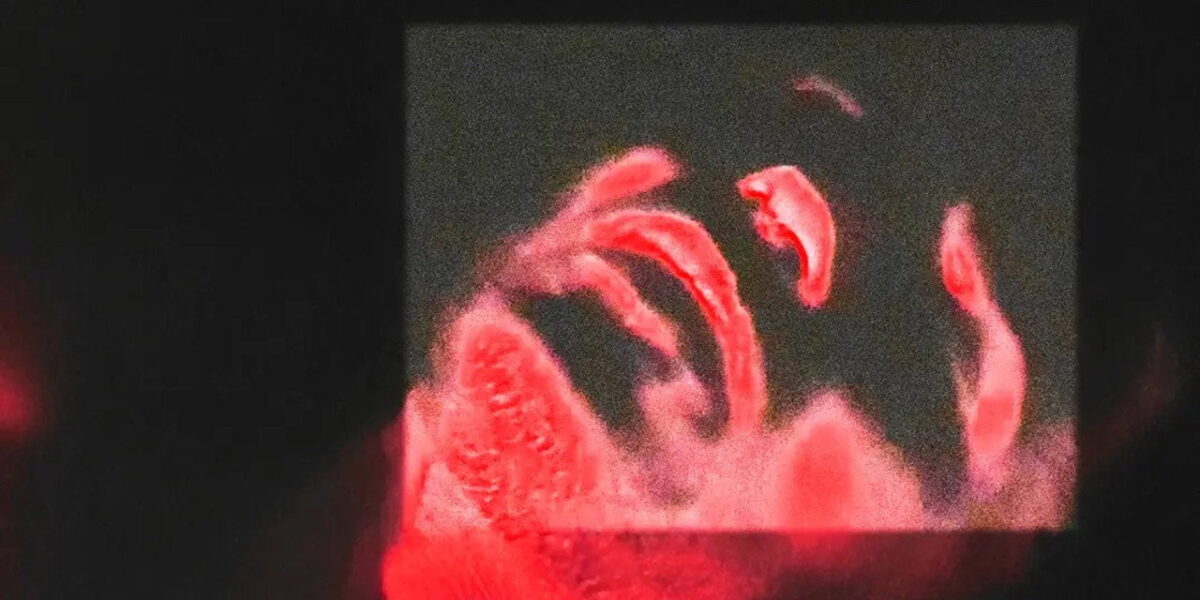
Montesi’s direction is deliberately austere and disorienting, using spatial composition and editing rhythms to create cognitive friction that mirrors his characters’ confusion. The cinematography avoids naturalism entirely, favoring stark contrasts and jarring angles that make the rehearsal space feel hostile. The score—I’m guessing it’s digitally composed or heavily processed—maintains an insistent, mechanical pressure throughout, never allowing the viewer to settle into ease.
The strengths
- The core concept is genuinely unnerving and doesn’t waste time explaining itself, trusting the audience to sit in discomfort.
- The film’s brevity works entirely in its favor, delivering maximum conceptual impact without overstaying its welcome or losing narrative thread.
- The cast refuses to undercut the material with winking self-awareness, which makes the strangeness feel more grounded and therefore more disturbing.
- Montesi constructs a fully realized sci-fi logic without ever explicitly spelling out the rules—you absorb them through observation and intuition alone.
The weaknesses
- At 13 minutes, the film sometimes feels like a sketch of a larger work, leaving you hungry for deeper exploration of how the actors got into this situation and what the computer actually wants from them.
- The dialogue occasionally veers into abstraction that borders on pretentious without quite achieving the clarity that would make it resonate emotionally rather than just intellectually.
- The film’s impact relies heavily on viewer tolerance for deliberate alienation techniques, which will alienate (intentionally, but still) a significant portion of any audience.
Who should watch it
This is strictly for viewers who’ve already made peace with experimental sci-fi and appreciate directors like Ari Aster or sci-fi work that prioritizes atmosphere over exposition. If you’re into psychological narratives that don’t hand-hold, or if you’ve followed Montesi’s work before, this is essential viewing. Casual film-watchers seeking entertainment will bounce off hard; cinephiles with patience for conceptual coldness will find much to dissect.
Final verdict
MASTERCLASS is an intelligently unsettling exercise in filmmaking that uses its short runtime to deliver a complete artistic statement without wasting breath on unnecessary exposition. It’s not warm or welcoming, and it absolutely doesn’t care whether you “get it,” which is precisely why it works. Montesi has crafted something that lingers precisely because it refuses easy answers—you’re left reconstructing meaning from fragments and implications. For adventurous viewers: absolutely worth seeking out. For everyone else: proceed with appropriate caution.
FAQ
What is MASTERCLASS about exactly?
Actors rehearse a play in a timeless void while controlled by a computer presence. It’s less about plot and more about the philosophical horror of performance under algorithmic supervision in a space that defies normal physics.
How long is MASTERCLASS?
Only 13 minutes. It’s a short film, not a feature, which means Montesi delivers maximum conceptual punch without padding—essential viewing for short film festivals.
Is MASTERCLASS on streaming platforms?
As of 2026, availability depends on festival circuits and regional distribution. Check IMDB for current viewing options and festival schedules.
What’s the MASTERCLASS rating on TMDB?
The film currently shows 0.0/10 on TMDB, which reflects its extreme recency and limited distribution rather than quality—early festival reactions have been far more favorable among serious cinephiles.
Who is Gabriel Montesi?
Montesi is an Italian director known for conceptually ambitious, visually austere work that prioritizes philosophical unease over conventional narrative satisfaction, making MASTERCLASS entirely consistent with his established sensibility.
Meta Description: MASTERCLASS review: a 13-minute sci-fi drama about actors staging a play under AI supervision. Sharp, cerebral, and utterly fascinating.
Tags: MASTERCLASS, sci-fi short film, Gabriel Montesi, experimental cinema, psychological drama