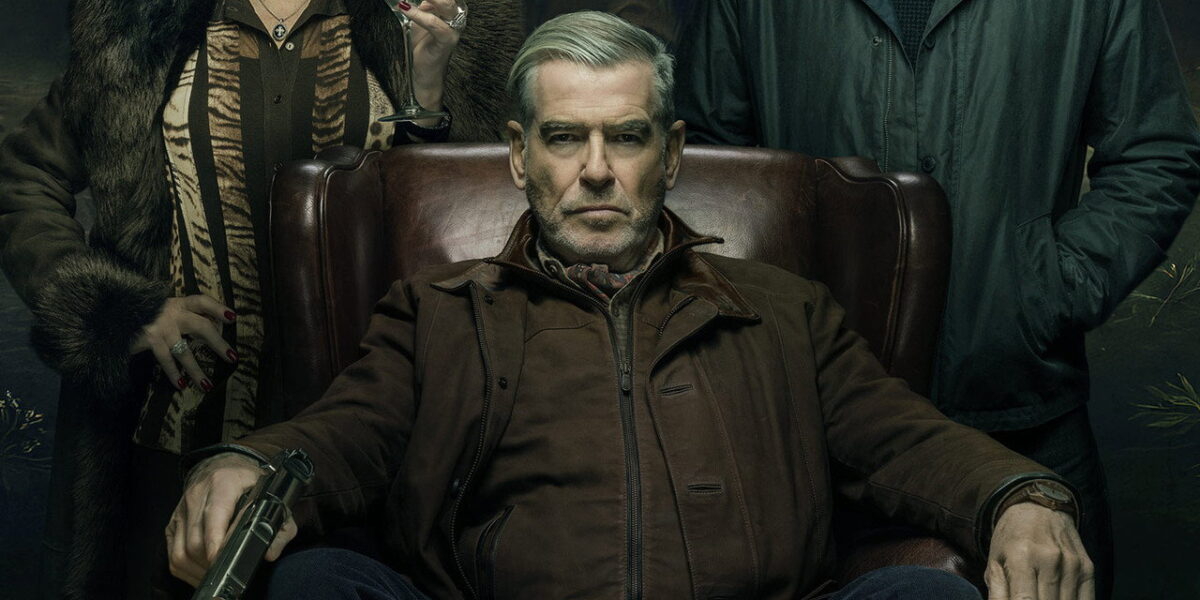
MobLand: Ending Explained — Ultimate Breakdown
MobLand arrives in 2025 as one of the most visceral and uncompromising crime dramas in recent memory, crafted by Ronan Bennett with an unflinching eye for the rot beneath power. When two mob families collide, what unfolds is not merely a war of territory — it is a reckoning with legacy, loyalty, and the terrible cost of empire. This analysis dives deep into the ending, peeling back every layer to reveal what Bennett‘s ambitious series is truly saying about violence and consequence.
MobLand: What happens at the end
The final act of MobLand detonates with the kind of controlled fury that Bennett has been building toward across every episode. The two ruling families — each convinced of their own righteousness — are drawn into a confrontation that neither can survive intact. Tom Hardy‘s character, the dangerous operative caught between worlds, is forced to make a choice that seals the fate of everyone around him. Alliances that seemed unbreakable shatter within minutes, and the promised war finally arrives in full.
What makes the conclusion devastating is not the body count but the silence that follows. Pierce Brosnan‘s patriarch, a man who has controlled the narrative for decades, finds himself stripped of that power in a single, irreversible moment. Paddy Considine‘s portrayal of collateral loyalty — a man who believed in a code that no longer exists — reaches its tragic endpoint here. The final image, deliberately ambiguous, refuses to offer resolution, leaving audiences to sit inside the wreckage of what these empires built and destroyed.
The deeper meaning
At its core, the ending of the series is a meditation on inheritance — not of wealth or territory, but of violence itself. Every character in MobLand is a product of cycles they did not choose but perpetuated willingly. Bennett uses the collapse of both families as a metaphor for the impossibility of clean hands in corrupt systems. No one escapes morally solvent. The chaos promised by the tagline is not external — it is the inevitable internal state of people who built their lives on domination.
Bennett‘s intention appears to be a refusal of genre catharsis. Traditional crime narratives reward the audience with either triumphant survival or poetic punishment. Here, the director deliberately denies both. Joanne Froggatt and Lara Pulver anchor the emotional intelligence of the final scenes, their characters representing the human cost that male power structures consistently ignore until it is far too late to matter.
Hidden details & easter eggs
Careful viewers will notice that the color palette of the final sequence mirrors the opening episode almost exactly — a visual full circle that underlines the series’ argument that nothing has truly changed. The positioning of characters in doorways throughout the climax is not accidental; doorways in MobLand consistently signal thresholds between old and new identities, and in the finale, no character successfully crosses one. There is also a recurring use of mirrors in the backgrounds of key scenes, quietly signaling that every act of destruction is ultimately self-directed.
Connections to the rest of the film
The groundwork for the ending is laid with remarkable precision from the earliest episodes. Bennett employs foreshadowing not through obvious telegraphing but through behavioral repetition — characters make the same emotional mistakes in different contexts, teaching the audience what to expect before the crisis arrives. The moment of betrayal in the finale echoes a throwaway scene from much earlier in which a handshake is filmed from an unusual angle, subtly suggesting that every agreement in this world contains its own hidden exit clause.
Fan theories
One compelling theory holds that Hardy‘s character was working as an independent agent throughout — loyal to no family but himself — which would reframe every apparent act of service as calculated positioning. The evidence is tantalizing but ultimately circumstantial. A second interpretation argues that the final ambiguous image confirms a specific character’s death through reflected light in a background window, a reading that passionate fans have mapped frame by frame online. A third, more philosophical reading suggests the ending is deliberately structured as a loop, implying the entire conflict will restart with new faces and identical stakes, making survival meaningless. You can explore cast and episode details further on IMDB.
FAQ
Does anyone survive the ending of MobLand?
Survival in the finale is deliberately left uncertain for key characters. Bennett prioritizes moral ambiguity over clean resolution, meaning physical survival and meaningful survival are presented as two very different things.
What does the final image in MobLand mean?
The final image functions as an open question rather than an answer — it suggests that the machinery of violence outlasts the individuals who operate it, with no clear victor and no promise of peace.
Who is the real villain of MobLand?
The series resists assigning villainy to a single figure. The structure itself — inherited power, enforced loyalty, and generational violence — is framed as the true antagonist throughout.
Is there a post-credits scene worth watching?
Any post-credits material in the finale rewards attentive viewers with context that recolors earlier scenes rather than setting up future storylines, functioning as a quiet epilogue to the central tragedy.
Will there be a second season following the events of the finale?
With two seasons already confirmed in the production data, the narrative groundwork laid in the ending strongly suggests that new power vacuums created by the finale’s events will drive the next chapter forward.