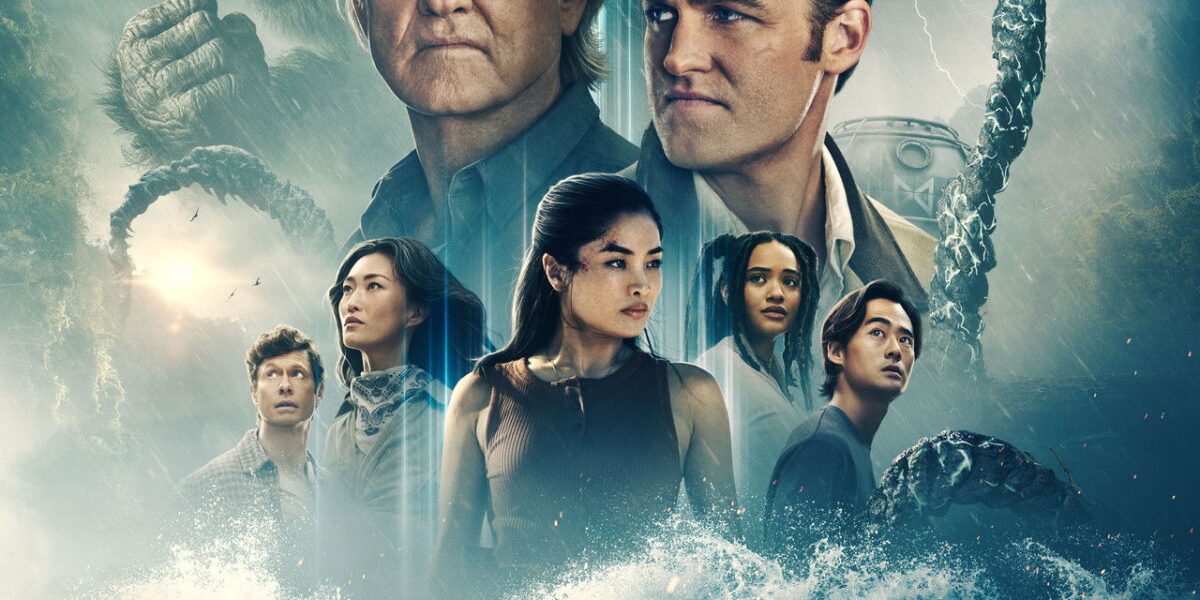
Monarch: Legacy of Monsters: Ending Explained — Ultimate Breakdown
Monarch: Legacy of Monsters arrives as one of the most ambitious expansions of the Monsterverse, weaving together decades of secrets, fractured families, and creatures that dwarf human ambition. But beneath the spectacle of Titans and global conspiracies lies something far more intimate — a story about what we inherit from those who came before us, and whether truth is worth the devastation it brings. This analysis digs into the finale’s final beats and what they truly reveal.
Monarch: Legacy of Monsters: What happens at the end
In the closing episodes of the first season, Cate Randa and her half-brother Kentaro converge on a revelation that reshapes everything they thought they knew about their father Hiroshi. The elusive figure who had been running parallel lives across continents is exposed not merely as a flawed man, but as someone deeply embedded in Monarch‘s most dangerous operations. The final confrontation does not end with heroic triumph — it ends with survival, grief, and the uncomfortable weight of incomplete answers.
Colonel Lee Shaw, portrayed across two timelines by Wyatt Russell and Kurt Russell, reaches the emotional apex of his arc. His choices — stretching back to the 1950s — are finally contextualized not as recklessness but as a desperate love for Keiko Miura and a belief that humanity could coexist with Titans. The season closes as he sacrifices his freedom, possibly his life, to open a vortex that expels a Titan from the human world — an act of atonement that resonates as loudly as any monster’s roar.
The deeper meaning
At its core, the ending of Monarch: Legacy of Monsters is a meditation on inherited trauma and the violence of secrets. Cate‘s journey is not simply about uncovering Monarch — it is about dismantling the metaphor of the Titan itself: the enormous, unstoppable force that fathers, institutions, and histories impose upon the children left behind. The monsters are never truly the antagonists. They are symptoms of human hubris, of men like Hiroshi who believed they could contain what was never meant to be contained.
Creators Matt Fraction and Chris Black construct a finale that resists the easy catharsis of destruction. Instead, they insist on ambiguity — the kind that mirrors real grief. Shaw‘s sacrifice is not triumphant in the classical sense; it is quiet, chosen, and deeply human. The intention is unmistakable: in a genre built on spectacle, the most devastating force in the series is not a Titan but a father’s lie, and the most heroic act is not defeating a monster but finally telling the truth.
Hidden details & easter eggs
Eagle-eyed viewers will notice that the coordinates referenced in Hiroshi‘s hidden documents echo locations tied to Titan emergence sites established in the original 2014 Godzilla film — a deliberate foreshadowing of how deeply Monarch‘s history predates the events audiences already know. The recurring motif of cracked photographs — images literally fractured — functions as a visual metaphor for the fractured family unit at the show’s center. Additionally, the vortex imagery in the finale mirrors artwork found in Keiko‘s journals, connecting her sacrifice to Shaw‘s decades later.
Connections to the rest of the film
The ending rewards patient viewers who tracked the dual-timeline structure from the very first episode. Shaw‘s seemingly impulsive early decisions — dismissed by colleagues as insubordination — are recontextualized as a man who always understood the Titans more intuitively than the institution surrounding him. The foreshadowing embedded in Keiko‘s fate directly mirrors Cate‘s near-disappearance, suggesting that the women in this story are perpetually sacrificed for men’s obsessions, a pattern the narrative finally names and refuses to romanticize in its closing moments.
Fan theories
One compelling theory posits that Hiroshi did not simply work for Monarch — he was actively attempting to sabotage its more dangerous programs from within, making his deceptions acts of protection rather than selfishness. Evidence lies in the encrypted files and his deliberate distancing of his families. Against this reading, the emotional damage inflicted on Cate and Kentaro suggests his methods were inexcusable regardless of intent. A second theory holds that Shaw‘s vortex sacrifice did not kill him but transported him — setting up a remarkable return in season two that the show has since begun to confirm. You can explore cast and episode details further on IMDB.
FAQ
Does Lee Shaw survive the ending of Monarch: Legacy of Monsters?
Shaw‘s fate is deliberately left ambiguous in the season one finale. He activates a vortex to expel a Titan, and his survival — or transportation to another dimension — becomes a central mystery that season two begins to address directly.
What was Hiroshi’s true role in Monarch?
Hiroshi Randa was far more than a field researcher — he was embedded in Monarch‘s most classified operations, actively concealing information about Titan vortexes and conducting research that he kept hidden from both his families and his superiors.
What does the vortex represent thematically?
The vortex functions as the series’ central metaphor for secrets — a force that consumes everything drawn too close to it. Shaw‘s choice to enter it willingly transforms it from a symbol of destruction into one of deliberate, chosen sacrifice.
How does the ending connect to the broader Monsterverse?
The finale plants coordinates and organizational decisions that directly preface the events of the 2014 Godzilla film, positioning Monarch‘s internal fractures as the reason the world was so catastrophically unprepared when Titans re-emerged publicly.
What is the meaning of the show’s title in light of the ending?
The word “legacy” proves to be the cruelest word in the title — what Monarch leaves behind is not glory but trauma, secrets, and broken families. The ending reframes legacy itself as something that must be actively dismantled rather than passively inherited.