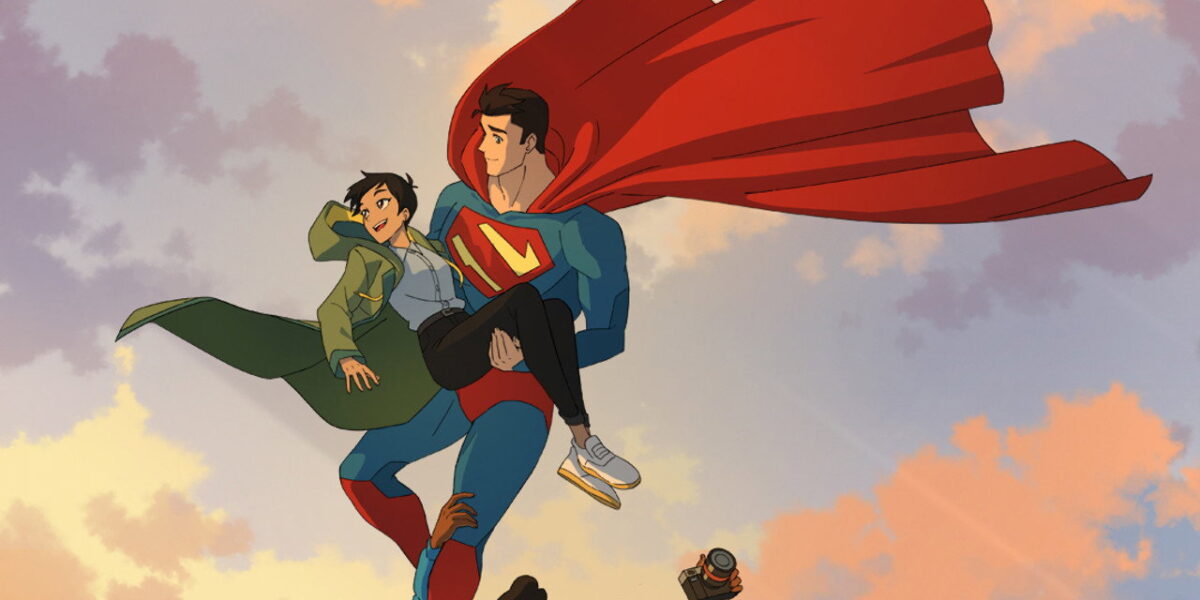
My Adventures with Superman: Ending Explained — Ultimate Breakdown
My Adventures with Superman is far more than a superhero origin story dressed in anime-inspired animation — it is a deeply human portrait of identity, trust, and the terrifying weight of becoming someone the world needs. Across three seasons, the series builds toward an emotional and mythological reckoning that demands careful unpacking. What does its ending truly reveal about Clark Kent, about heroism, and about the cost of love freely given?
My Adventures with Superman: What happens at the end
By the close of the third season, Clark Kent has been forced to confront the full truth of his Kryptonian heritage — not as a gift, but as a burden engineered by forces far colder than he imagined. The season finale places him at a crossroads: surrender to the legacy written in his DNA by Kryptonian militarism, or redefine what the symbol on his chest actually means. He chooses, without hesitation, to forge his own path.
The final sequences show Lois Lane and Clark no longer hiding their relationship or their secrets from each other — a resolution that feels earned across dozens of episodes of raw vulnerability. Jimmy Olsen stands alongside them, not as a sidekick but as a genuine equal. The threat is neutralized, but the show wisely refuses a clean victory, leaving emotional wounds visible and the world permanently changed by Superman’s public emergence.
The deeper meaning
At its core, the ending is a meditation on the metaphor of the Superman symbol itself — an inverted triangle that, in this continuity, originally signified Kryptonian military conquest. The series transforms that icon into something chosen rather than inherited. This is the show’s most radical and beautiful argument: heroism is not destiny, it is a daily decision made in full awareness of the alternatives. Clark does not become Superman because he must — he becomes Superman because he refuses to be anything less.
The creators use the relationship between Clark and Lois as the emotional architecture of this transformation. Lois does not merely witness his heroism — she actively shapes it through her moral clarity and her refusal to accept comfortable lies. Her journalism is framed as its own form of courage, equally essential to justice. The ending affirms that Superman is not singular: he is the product of genuine human connection, a truth quietly revolutionary in the superhero genre.
Hidden details & easter eggs
Attentive viewers will notice that the color palette of the finale deliberately mirrors the show’s pilot — warm, golden tones dominating the Daily Planet scenes, signaling a full emotional circle. The Kryptonian glyphs scattered across technology in the background shift in configuration between seasons, subtly tracking Clark‘s evolving understanding of his origins. One blink-and-miss-it visual places a destroyed Kryptonian vessel in the same composition as the Kent family truck, a quiet visual argument that both objects equally made Clark who he is.
Connections to the rest of the series
The ending’s power is inseparable from the foreshadowing threaded through the very first episode, where Clark instinctively shields strangers before he fully understands his own powers — a purely reflexive act of protection that predates any conscious heroism. Every season has methodically dismantled the possibility that Clark‘s goodness is Kryptonian programming, so that by the finale, his choice carries absolute moral weight. The series also callbacks to Jimmy‘s early distrust of Superman, making their final solidarity feel genuinely hard-won rather than convenient.
Fan theories
One prominent fan theory argues that the mysterious Kryptonian AI encountered mid-series is not destroyed but dormant within Clark‘s suit, waiting to resurface as a future antagonist — evidence includes ambiguous visual glitches in final scenes. A second theory posits that Lois has been subtly enhanced by Kryptonian technology exposure, explaining her implausibly accurate instincts. A third, more poetic reading suggests the entire series is Clark‘s own memory — a story he tells himself to understand why being human was always his greatest strength. Find more fan discussion on IMDB.
FAQ
Does Superman publicly reveal his identity at the end of the series?
Superman’s existence becomes publicly undeniable by the finale, but Clark Kent‘s dual identity remains protected — the show treats this separation as a necessary shield for the people he loves rather than a personal deception.
Do Lois and Clark end up together?
Yes — by the end of season three, Lois Lane and Clark Kent have fully acknowledged their relationship, built on mutual honesty about both his powers and their shared vulnerabilities, making theirs one of the most genuinely earned romances in animated television.
What is the significance of the Kryptonian symbol in the ending?
The symbol, originally a mark of military conquest in this continuity, is recontextualized as a chosen emblem of protection — Clark reclaims it deliberately, turning an instrument of fear into a promise of safety.
Is there a post-credits scene hinting at a future season?
The series includes closing visual cues that suggest unresolved threats lingering beyond the finale’s resolution, strongly implying that the creative team envisioned further storytelling — though no official continuation has been formally confirmed at time of publication.
What role does Jimmy Olsen play in the finale?
Jimmy Olsen, voiced by Ishmel Sahid, functions as the moral compass of the group in the finale — his unconditional loyalty to both Clark and Lois proves decisive, and the show rewards him with genuine agency rather than comic-relief status.