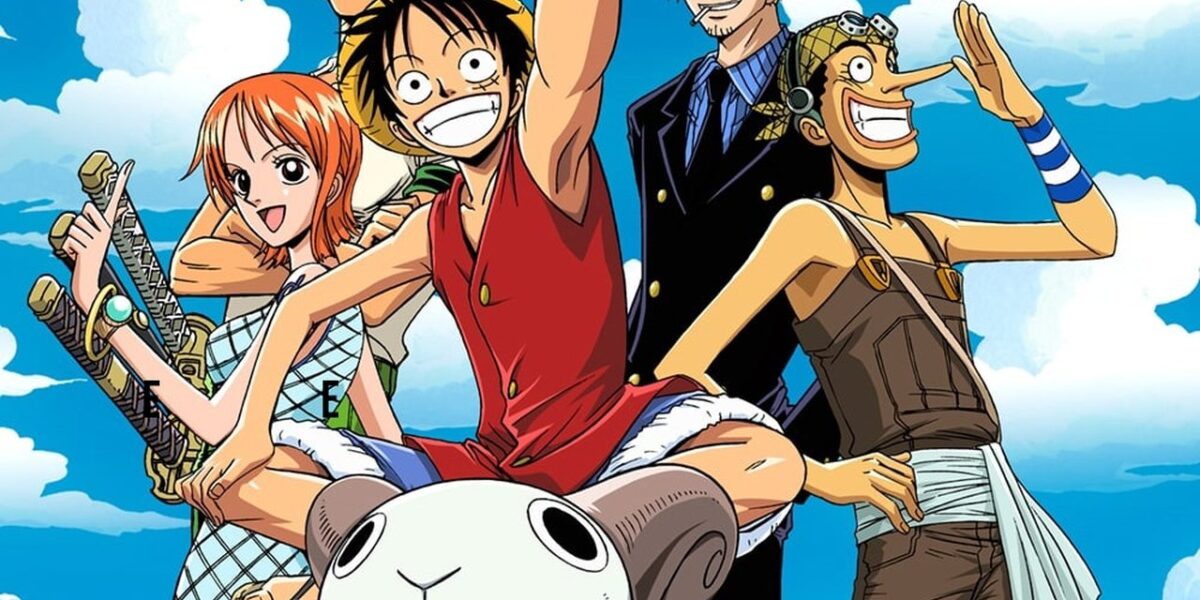
One Piece: Ending Explained — Ultimate Breakdown
One Piece, the monumental anime series that has captivated audiences since 1999, is far more than a swashbuckling adventure about pirates chasing treasure. With 23 seasons and counting, voiced by legends like Mayumi Tanaka and Kazuya Nakai, this is a saga about the very nature of freedom, dreams, and what it truly means to be alive. Here, we dive deep into its most transformative narrative revelations and what they mean on a human level.
One Piece: What happens at the end
As the Straw Hat Pirates push toward the final arcs of the Grand Line, the world itself begins to fracture under the weight of the Void Century’s secrets. Monkey D. Luffy, awakening his true Devil Fruit power as the mythical Nika — the Sun God — defeats Kaido in a battle that reshapes Wano and signals a new age of liberation. The victory is not merely personal; it sends a declaration across every ocean that the era of oppression is ending.
The deeper twist, however, is what the One Piece itself represents. Roger’s treasure is not gold or weapons — it is the accumulated history of the world, the truth that the World Government has spent centuries erasing. Luffy‘s journey has never been about becoming the most powerful pirate; it has always been about becoming the freest person alive, someone capable of carrying that truth forward without fear and without condition, laughing all the way.
The deeper meaning
The One Piece functions as one of anime’s most audacious metaphors: the idea that truth itself is the world’s greatest treasure, and that those in power will do anything to bury it. Luffy‘s rubber body — stretching endlessly without breaking — is a physical embodiment of resilience and adaptability. He bends but never shatters. This is not accidental character design; it is symbolism encoded into every frame, every punch, every impossible grin thrown at overwhelming odds.
Creator Eiichiro Oda‘s intention has always been to interrogate institutional power through the lens of joyful rebellion. The World Government, the Celestial Dragons, the corruption of the Marines — these are not fantasy constructs but reflections of how systems maintain control through fear and historical revision. Luffy doesn’t fight these systems with ideology; he fights them with an almost childlike insistence on protecting the people he loves, which turns out to be the most radical act of all.
Hidden details & easter eggs
Careful viewers have long noticed that the initial silhouette of Nika, the legendary warrior who made slaves laugh, mirrors Luffy‘s own carefree posture almost exactly — a visual promise planted years before the revelation. Additionally, the Will of D., the mysterious initial carried by Luffy, Roger, and others, appears in the backgrounds of ancient poneglyphs as a symbol that predates the World Government itself, suggesting these characters are destined inheritors of a forbidden legacy rather than random adventurers. You can explore the full cast history on IMDB.
Connections to the rest of the series
The foreshadowing woven into the earliest episodes of the series is staggering in retrospect. Shanks gifting Luffy his straw hat — a hat that once belonged to Roger himself — is not a sentimental gesture but a literal passing of the torch, a baton in a race spanning generations. Every crew member Luffy recruits carries a broken dream: Nami‘s stolen maps, Zoro‘s promised oath, Robin‘s desperate need to know history exists. The ending doesn’t resolve these arcs — it fulfills them.
Fan theories
One prevailing theory holds that Imu, the shadowy sovereign sitting above the Five Elders, is directly connected to the ancient kingdom destroyed during the Void Century, making the final confrontation a cosmic repetition of history. Evidence supporting this includes Imu’s apparent immortality and their obsession with erasing certain names. A counterargument suggests Imu is simply an institutional placeholder, a symbol of how power perpetuates itself rather than a singular ancient villain. A third theory proposes that Luffy will ultimately refuse the title of Pirate King, choosing freedom over any crown — which would be the most perfectly Luffy ending imaginable.
FAQ
What is the One Piece treasure actually revealed to be?
The One Piece is strongly implied to be the true history of the world — specifically, the records and legacy of the ancient kingdom erased by the World Government during the Void Century, making knowledge itself the ultimate treasure.
Why does Luffy’s Devil Fruit turn out to be the Nika model?
The World Government deliberately concealed the fruit’s true identity as the Mythical Zoan: Nika because its awakened power — boundless freedom and the ability to make others smile — represents an existential threat to any authoritarian system.
Who is Joy Boy and how does he connect to Luffy?
Joy Boy was an ancient figure who made a broken promise to the people of Fishman Island. Luffy is revealed to be the reincarnation — or spiritual successor — of Joy Boy, fulfilling that ancient promise through his liberation of oppressed peoples across the world.
Does the series end with Luffy becoming King of the Pirates?
The series is still ongoing as of its latest arcs, but narratively, Luffy becoming Pirate King appears inevitable — though many fans believe he will redefine what that title means rather than simply claim it in a traditional sense.
What does the Will of D. mean in the ending?
The Will of D. represents the inherited defiance of the ancient kingdom against tyranny. Those who carry the initial are, consciously or not, continuing a centuries-old resistance against the World Government’s rewriting of history and suppression of freedom.