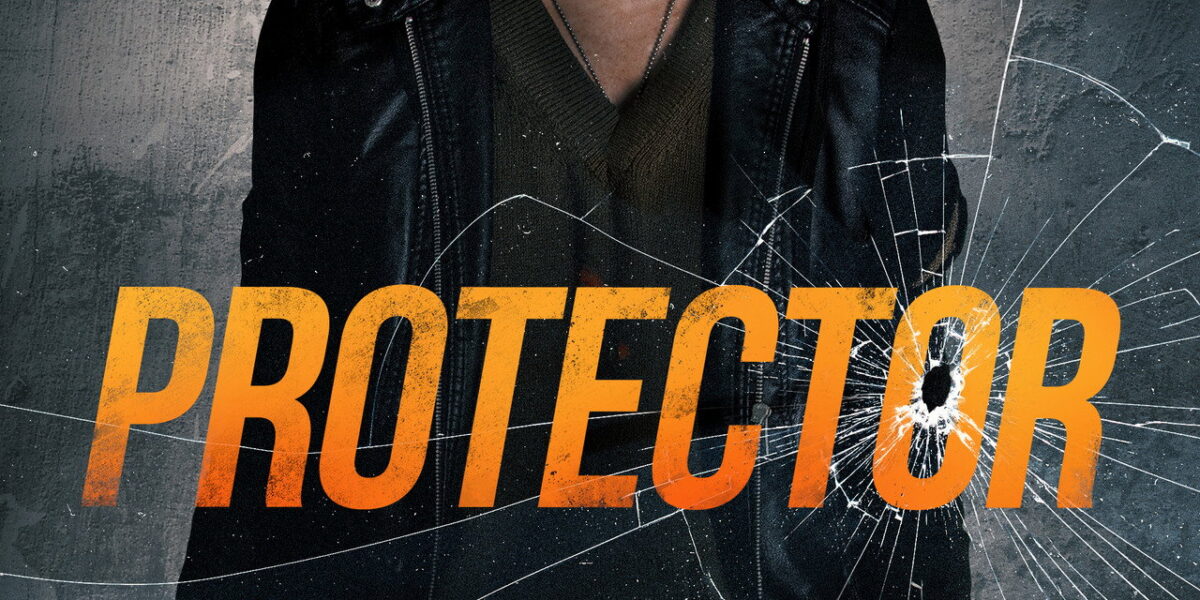
Protector: Ending Explained — Ultimate Breakdown
Protector, Adrian Grünberg’s ferocious 2026 action thriller, is far more than a visceral rescue mission — it is a reckoning with maternal love pushed to its most primal, dangerous edge. With Milla Jovovich delivering one of her most emotionally raw performances, the film constructs a labyrinth of crime, betrayal, and institutional corruption that demands careful unpacking. What does the ending truly reveal about Nikki‘s journey, and why does it linger so uncomfortably long after the credits roll? Let us find out.
Protector: What happens at the end
In the film’s climactic sequence, Nikki finally locates her kidnapped daughter deep within a fortified compound controlled by a ruthless trafficking network connected to figures of military authority. After a brutal, relentless assault through corridors soaked in shadow and violence, she reaches the child. The reunion is not triumphant in any conventional sense — it is desperate, trembling, almost unbearably quiet against the chaos Nikki has left behind her.
The final twist arrives when it is revealed that the operation orchestrating the kidnapping traces directly back to a government-sanctioned program, implicating the very officials — embodied by Matthew Modine‘s morally compromised figure — who were publicly hunting Nikki. She escapes with her daughter, but the ending leaves deliberately ambiguous whether justice is ever truly served, or whether the machinery of power simply resets itself without consequence.
The deeper meaning
The ending functions as a devastating metaphor for institutional betrayal. Nikki is hunted simultaneously by criminals and by the state, which the film argues are not opposites but partners in exploitation. Her survival is not a victory over the system — it is an escape from it. Grünberg refuses the catharsis of systemic justice, insisting that the most a mother can win is her child’s life, not the collapse of the corrupt structures that threatened it.
Adrian Grünberg’s directorial intention feels rooted in a profound disillusionment with authority. By casting Matthew Modine and D. B. Sweeney as figures whose institutional respectability masks complicity, the film weaponizes audience trust in familiar faces. The tagline — Never get between a mother and her child — is not a celebration of heroism but a warning aimed at systems of power that mistake vulnerability for weakness.
Hidden details & easter eggs
Throughout the movie, Nikki‘s clothing undergoes a precise visual deterioration — beginning clean and civilian, ending torn and blood-stained — functioning as a metaphor for the stripping away of her social identity until only the maternal instinct remains. Eagle-eyed viewers will notice that the compound’s layout mirrors the floor plan briefly glimpsed in a photograph in Nikki’s home during the opening scene, suggesting the threat was architecturally present in her life long before the kidnapping occurred.
Connections to the rest of the film
The ending’s emotional weight depends entirely on a piece of foreshadowing planted in the film’s second act, when Nikki tells her daughter that no door in the world could ever keep them apart. This line, played tenderly in the domestic warmth of an earlier scene, becomes a literal narrative promise fulfilled when Nikki tears through the compound’s reinforced doors. The movie rewards attentive viewers by transforming dialogue into action, making the climax feel earned rather than manufactured. You can explore the cast further on IMDB.
Fan theories
One compelling theory suggests that Nikki herself was formerly embedded within the same covert program, explaining her extraordinary combat capabilities — a reading supported by fleeting reaction shots from Don Harvey‘s antagonist, who seems to recognize her with something beyond mere operational knowledge. A second theory argues that the daughter’s kidnapping was designed specifically to reactivate Nikki as an asset, making the entire film a manipulation. The evidence is suggestive but the film, wisely, never fully confirms either reading, preserving its moral ambiguity as a deliberate artistic choice.
FAQ
Does Nikki successfully rescue her daughter at the end of Protector?
Yes, Nikki rescues her daughter in the film’s climax, but their escape is bittersweet — the corrupt network behind the kidnapping remains largely intact, denying the audience any clean sense of institutional justice.
Who is really behind the kidnapping in the movie?
The kidnapping is ultimately linked to a government-sanctioned covert operation, with Matthew Modine‘s character revealed as complicit — making the state itself the film’s true antagonist rather than any single criminal figure.
What does the ending ambiguity mean for Nikki’s future?
The open ending implies that Nikki and her daughter are safe for now, but permanently outside the protection of legitimate society — fugitives from both the criminal world and the institutions that were supposed to defend them.
Is there a post-credits scene in Protector?
The film concludes without a conventional post-credits scene, but the final image — held longer than dramatically necessary — functions as a visual epilogue suggesting that the cycle of institutional corruption will continue regardless of Nikki’s survival.
What does the tagline “Never get between a mother and her child” really mean?
Rather than a simple action-hero boast, the tagline serves as the film’s central thesis: maternal love is the one force that cannot be systematized, controlled, or extinguished by institutional power, no matter how vast or violent.