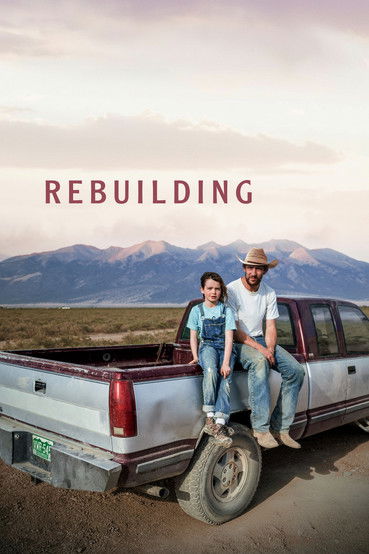
Rebuilding: Honest Review — Is It Worth Watching? | 6.6/10
Rebuilding is a sincere but fundamentally uneven attempt at mining emotional truth from disaster, held together mostly by Josh O’Connor’s grounded performance and genuine empathy for its characters. The film never quite transcends its modest scope, landing somewhere between indie conviction and network television restraint, which is neither damning nor inspiring.
| Director | Max Walker-Silverman |
| Cast | Josh O’Connor, Meghann Fahy, Lily LaTorre, Kali Reis, Amy Madigan |
| Runtime | 96 minutes |
| Genre | Drama |
| Year | 2025 |
Rebuilding: The plot (no spoilers)
Rebuilding follows Dusty, a rancher whose life literally goes up in smoke when wildfires demolish his property, forcing him into a FEMA camp where he unexpectedly reunites with his ex-wife and daughter. It’s a premise ripe with dramatic potential: man stripped of everything material, forced to confront his fractured family in the liminal space of collective trauma. Walker-Silverman clearly sees the poetry in that setup, and it’s hard not to appreciate the ambition.
The film trades in quiet realism rather than melodrama, which is admirable but also its biggest liability. The pacing feels deliberately slow, almost documentary-like, and the FEMA camp becomes both a physical setting and a metaphor for social fragmentation that the movie tries to knit back together through interpersonal bonds. Expect less catharsis than contemplation, less narrative momentum than character study—the story unfolds like watching someone sift through ashes, methodical and introspective.
Acting & direction
Josh O’Connor carries the film with understated competence, bringing a weathered weariness to Dusty without succumbing to maudlin self-pity. Meghann Fahy does solid work as the ex-wife, though her character suffers from underwriting that keeps her from feeling fully dimensional. Amy Madigan and Kali Reis add texture to the ensemble, but the script doesn’t give them nearly enough to work with, leaving their performances stranded between naturalism and afterthought.
Walker-Silverman’s direction is restrained to the point of passivity—he frames scenes competently but rarely finds visual or rhythmic choices that elevate the material beyond its television-movie DNA. The cinematography is functional, the score stays politely in the background, and the editing marches through beats without ever surprising you. There’s professionalism here but little evidence of a distinctive authorial voice pushing back against the material’s inherent sentimentality.
The strengths
- O’Connor’s performance anchors everything with an authenticity that reminds you why this actor matters, selling the emotional cost of loss without ever reaching for easy tears.
- The film’s refusal to exploit disaster as pure spectacle shows real restraint, treating the FEMA camp as a genuine place where people live rather than a set piece for melodrama.
- There’s genuine warmth in how the film depicts strangers forming bonds through shared hardship, even if the execution remains underdeveloped and schematic.
The weaknesses
- The script is undernourished across the board, with supporting characters feeling sketched rather than realized, leaving talented actors like Kali Reis stranded with nothing substantial to anchor their scenes.
- Walker-Silverman mistakes deliberate pacing for depth, creating a film that feels more like it’s killing time than actually interrogating its central conflicts about family, masculinity, and starting over.
- The reconciliation arc between Dusty and his family lands with all the emotional weight of a Hallmark card, offering resolution that feels earned neither dramatically nor thematically by the preceding ninety minutes.
Who should watch it
You should watch Rebuilding if you’re drawn to character-driven dramas about ordinary people in extraordinary circumstances and have patience for deliberate filmmaking that prioritizes mood over momentum. It occupies similar territory to films like Nomadland or The Farewell, though without their stylistic conviction or emotional precision—if those films resonate with you, this might scratch a similar itch, even if it never quite reaches their power.
Final verdict
Rebuilding is a well-intentioned failure that mistakes sincerity for artistry and patience for profundity—it’s not bad enough to actively harm you, but it’s not quite good enough to stick with you either. Josh O’Connor deserves better material, Walker-Silverman needs to develop a bolder directorial vision, and the script needed another pass to give its ensemble cast something worth playing beyond surface-level empathy. It’s a film that wants you to feel, and you might, but you’ll also spend much of its runtime wishing it had earned those feelings more convincingly, rating it a middle-of-the-road 6.6/10.
FAQ
Is Rebuilding worth watching in 2025?
Only if you specifically crave understated character work and are willing to forgive underdeveloped supporting roles and a slow-burn narrative that doesn’t quite justify its runtime—otherwise, there are stronger dramas demanding your attention this year.
What is Rebuilding about?
A rancher named Dusty loses everything in wildfires and ends up in a FEMA camp where he reconnects with his ex-wife and daughter while forming bonds with other displaced people navigating collective trauma and rebuilding their lives.
Does Josh O’Connor deliver a good performance?
Yes—O’Connor is the film’s anchor, bringing authenticity and quiet emotional depth to his role as a man dealing with loss, even if the script around him doesn’t provide enough material for a truly transcendent turn.
How does Rebuilding compare to other disaster dramas?
It aims for the humanistic approach of Nomadland but lacks that film’s visual poetry and thematic sophistication, landing instead somewhere between indie sincerity and network television competence.
Should I watch Rebuilding or skip it?
Skip it unless character studies about interpersonal reconciliation and community are your exact preference—the 6.6/10 rating reflects a film that’s watchable but forgettable, neither a must-see nor actively problematic.
Scopri di più su IMDB.