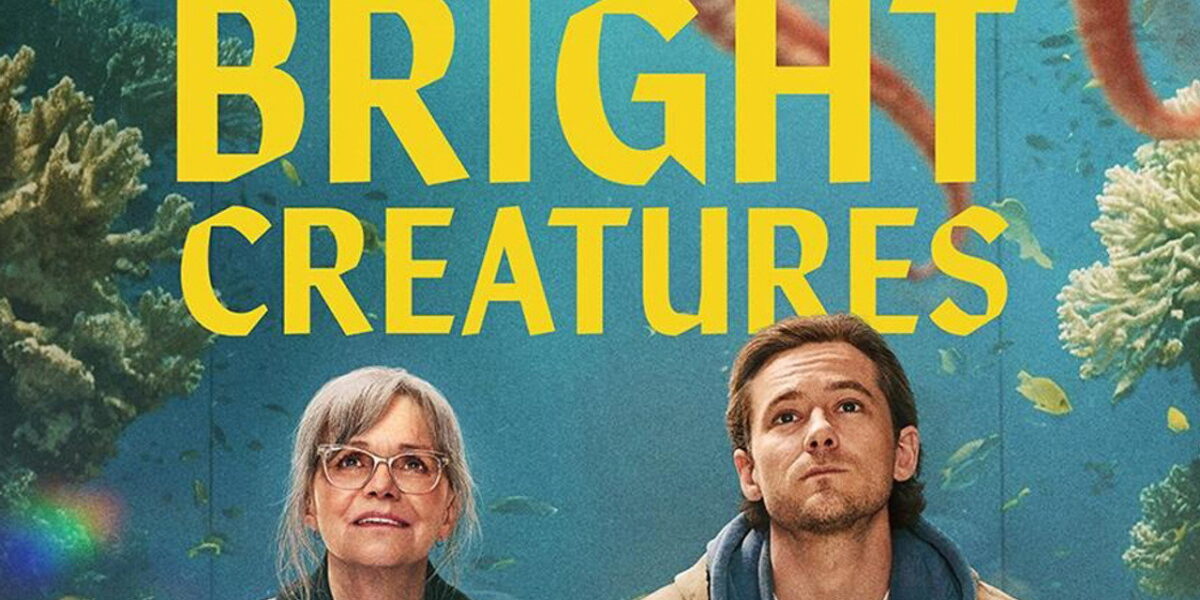
Remarkably Bright Creatures: Ending Explained — Ultimate Breakdown
Remarkably Bright Creatures, directed by Olivia Newman and released in 2026, is one of those rare films that disguises its emotional devastation inside the language of quiet wonder. Anchored by a luminous performance from Sally Field, the story operates on two frequencies simultaneously: a mystery about loss and identity, and a meditation on the unexpected connections that restore us to ourselves. This article dissects the film’s ending and what it truly reveals about grief, belonging, and the courage to begin again.
Remarkably Bright Creatures: What happens at the end
Tova, the elderly widow played by Sally Field, finally receives confirmation of what she has long feared and, simultaneously, desperately hoped: the young man Cameron, played with raw vulnerability by Lewis Pullman, is indeed the biological son of her late daughter. The aquarium’s night-shift routines — those liminal, half-lit hours between closing and dawn — have quietly woven their lives together, and the revelation arrives not with dramatic fanfare but with the hush of a tide returning to shore.
The final sequence shows Tova and Cameron standing together outside the aquarium, the Pacific coast fog wrapping around them like a held breath finally released. She extends her hand — a small, aching gesture that carries the weight of years of unanswered grief over her son Erik’s disappearance. Cameron takes it. The camera lingers on the glass tanks still glowing behind them, the octopus Marcellus visible in his illuminated world, silently witnessing what he helped make possible.
The deeper meaning
The ending crystallizes the film’s central metaphor: the aquarium is not merely a setting but a liminal space — a place between the living world and something older, deeper, and more patient. Water, throughout Olivia Newman‘s work here, signifies memory that refuses to dissolve. Tova‘s grief has kept her submerged for decades, and it is only by descending further — into the aquarium’s night-shift darkness — that she finds the oxygen she didn’t know she was missing: connection, continuity, and the stubborn persistence of love.
Newman frames the final exchange between Tova and Cameron not as resolution but as threshold. The film refuses the comfort of full closure, insisting instead on something more honest — the possibility of continuation. The tagline “Brighter together” earns its meaning here. It is not optimism imposed from outside, but light generated by proximity, the way bioluminescent creatures glow only in each other’s presence, in the dark, beneath the surface of things most people never stop to examine.
Hidden details & easter eggs
Attentive viewers will notice that the octopus Marcellus — voiced implicitly through the film’s visual language rather than dialogue — changes the color of his skin in every scene that precedes a major emotional revelation. Octopuses communicate through chromatophores, and Newman uses this biological fact as a precise foreshadowing device. In the penultimate scene, Marcellus pulses deep amber just before Cameron discovers the photograph that confirms his parentage — amber being the color associated throughout the film with Tova‘s lost daughter.
Connections to the rest of the film
The film’s opening shot — Tova pressing her palm flat against the aquarium glass while Marcellus mirrors her from the other side — is not decorative. It is the film’s thesis statement delivered as pure image. That act of contact across a transparent barrier rhymes precisely with the final handshake between Tova and Cameron. The foreshadowing is structural: the entire narrative is the distance between those two touches, and understanding that symmetry reframes every scene of quiet, stubborn searching in between.
Fan theories
One compelling fan theory proposes that Marcellus functions as a metaphor for Tova‘s deceased son Erik — a soul trapped in a liminal world, intelligent and aware but unable to speak directly. Evidence includes the octopus’s apparent emotional response specifically to Tova and his behavior intensifying whenever Erik is discussed. Against this reading, the film carefully grounds Marcellus in biological reality, suggesting Newman prefers resonance over allegory. A second theory holds that Cameron‘s arrival in the coastal town was not coincidental but unconsciously driven — that grief creates its own gravity, pulling the living toward unfinished business without their awareness.
Scopri di più su IMDB.
FAQ
Is Cameron really Tova’s biological grandson in the ending?
Yes. The film confirms that Cameron is the biological son of Tova‘s late daughter, making him her grandson. The discovery reframes their entire aquarium-forged friendship as something fated beneath the surface.
What does the octopus Marcellus symbolize?
Marcellus represents the intelligence of grief — the idea that loss observes us, remembers what we forget, and intervenes in ways we cannot fully rationalize or explain away.
Why does the film end outside the aquarium instead of inside?
Stepping outside signals that Tova has moved from the liminal, in-between world of night shifts and grief into the living daylight of genuine connection and future possibility.
What role does Colm Meaney’s character play in the ending?
Colm Meaney‘s character serves as a grounding counterweight — a man who chose rootedness over mystery — whose presence throws Tova‘s courageous openness to the unknown into sharp, meaningful relief.
Does the movie explain how Erik died?
The film reveals that Erik drowned years before the story begins, and the coastal aquarium setting is Newman’s deliberate choice to surround Tova with the very element that took her son — forcing a confrontation with water as both wound and world.