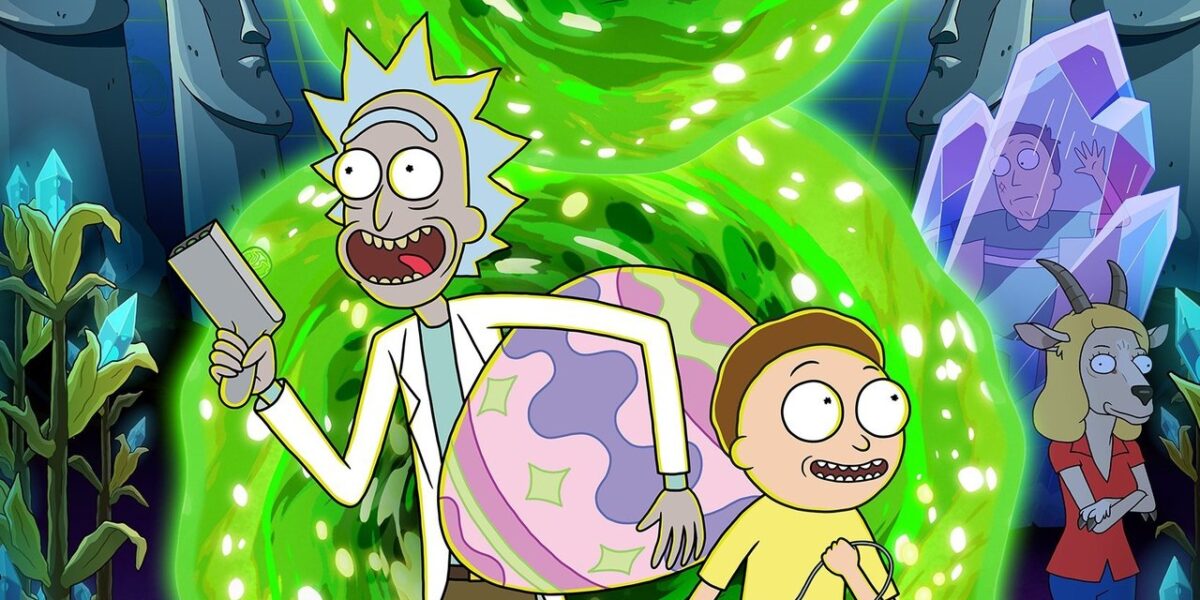
Rick and Morty: Ending Explained — Ultimate Breakdown
Rick and Morty is not simply a cartoon about interdimensional chaos — it is a brutally honest portrait of genius, loneliness, and the terrifying cost of loving someone smarter than the universe itself. Dan Harmon and Justin Roiland built something deceptively profound beneath the belching and the sci-fi absurdity. This analysis digs into the emotional architecture of the series’ most defining conclusions, exploring what the show’s endings truly reveal about its characters and its soul.
Rick and Morty: What happens at the end
Across nine seasons, the show’s most structurally significant conclusion arrives in the Season 6 finale and deepens through Season 7 — a period reshaped by real-world cast changes, with Ian Cardoni and Harry Belden stepping into the iconic roles. Rick faces the culmination of his vendetta against Rick Prime, the alternate-universe version of himself responsible for murdering his original wife and daughter. The chase that defined his entire existence finally ends — not in triumph, but in devastating emotional collapse.
When Rick finally kills Rick Prime, the moment carries none of the catharsis he — or the audience — expected. The villain dies as a hollow shell, a man who deleted his own capacity for love so thoroughly that destroying him resolves nothing. Rick is left holding a victory that feels indistinguishable from defeat. The show refuses to reward vengeance with peace, and that refusal is its most daring narrative statement across the entire run.
The deeper meaning
The killing of Rick Prime functions as a mirror — Rick C-137 stares into the face of what he could have become had he fully surrendered to nihilism. Rick Prime is not a villain imposed from outside; he is a philosophical endpoint, the logical conclusion of choosing intelligence over connection. The show argues, with quiet devastation, that the only thing separating our Rick from a monster is Morty — and the unwillingness to stop caring entirely.
Harmon’s signature thematic obsession — the idea that community and connection are simultaneously painful and salvific — permeates every season finale. The emptiness Rick feels after his revenge is not a narrative flaw; it is the show’s moral thesis delivered without flinching. Revenge is a story we tell ourselves to avoid grieving. When the story ends, grief is still waiting. The series earns its emotional weight precisely because it never lets its genius protagonist escape that truth.
Hidden details & easter eggs
Sharp-eyed viewers will notice that Rick Prime‘s laboratory contains subtle visual echoes of Rick C-137‘s own workspace — a deliberate production design choice underscoring their shared origin. The green color palette associated with portal technology shifts to a colder blue in the moments surrounding the confrontation, a chromatic signal of emotional detachment overriding adventure. Additionally, background details in Season 7 episodes quietly reference photographs and objects from Rick‘s pre-tragedy life, rewarding attentive viewers with a silent, continuous eulogy for the family he lost.
Connections to the rest of the series
The emotional payoff of the Rick Prime arc is inseparable from the foreshadowing embedded as early as the Season 3 premiere, where Rick‘s origin is first revealed through a fractured, unreliable memory. That episode plants the metaphor of constructed grief — the idea that Rick may have mythologized his own trauma. Season 5’s multiverse chaos and the Evil Morty storyline further establish that identity and self-destruction are the show’s true recurring antagonists, making the Prime arc feel like an inevitable, earned destination rather than a sudden pivot.
Fan theories
One compelling theory holds that Rick C-137 unconsciously prolonged his hunt for Rick Prime because catching him meant confronting grief with no enemy left to blame — a reading strongly supported by his post-kill breakdown. A second theory suggests Evil Morty and Rick Prime are two sides of the same philosophical coin, each representing escape from the Rick and Morty dynamic rather than its corruption. A third, more speculative interpretation argues that the Citadel’s destruction in Season 3 set the metaphysical conditions that made Rick Prime‘s defeat possible — though the show never explicitly confirms this chain of causality. You can explore cast and episode details further on IMDB.
FAQ
Why does Rick feel empty after killing Rick Prime?
Because his vendetta was never truly about justice — it was a mechanism for avoiding grief. With the enemy gone, there is nothing left to protect him from mourning the family he lost, and that void is more painful than the hunt ever was.
Is Rick Prime really dead at the end?
Yes, Rick Prime is definitively killed in Season 7, with the show treating the death as narratively final. Unlike many sci-fi series, no resurrection loophole is offered, and the permanence of that death is precisely what makes its emotional aftermath so powerful.
What does Evil Morty represent in the larger story?
Evil Morty represents the endpoint of a Morty who refused to remain subordinate — a version who chose self-determination over the toxic dependency of the Rick and Morty dynamic, making him a mirror of liberation rather than simple villainy.
Why were the voice actors replaced in Season 7?
Justin Roiland was replaced following legal and professional controversies, with Ian Cardoni and Harry Belden taking over as Rick and Morty respectively. The creative team confirmed the show’s narrative direction and tone remain entirely consistent with the original vision established by Harmon and Roiland.
What is the central theme of Rick and Morty as a whole?
At its core, the series argues that intelligence without emotional connection is indistinguishable from self-destruction. Every season reinforces the idea that Rick‘s greatest vulnerability — his love for his family — is also the only thing that makes his existence meaningful rather than monstrous.