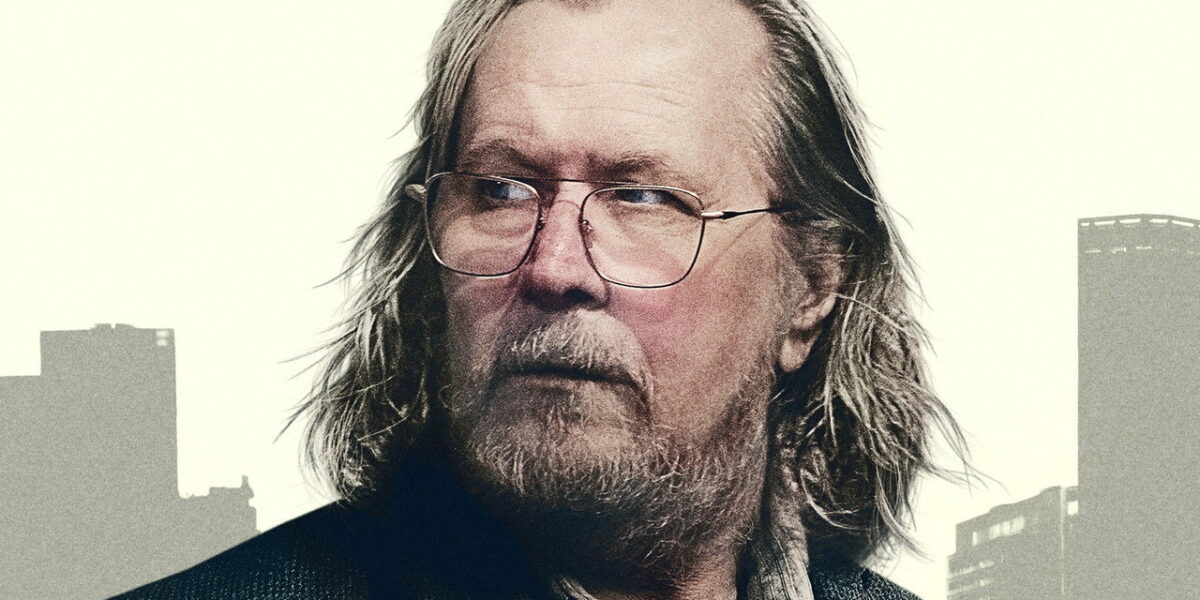
Slow Horses: Ending Explained — Ultimate Breakdown
Slow Horses is one of the most relentlessly intelligent espionage dramas to emerge in years, a series that weaponizes bureaucratic decay and moral compromise into something genuinely thrilling. At its core, this is a show about people deemed failures who keep proving the institution wrong — and its endings, season after season, crystallize that tension into moments of devastating, quiet power. Here, we dissect what the finale truly means beneath the tradecraft and the grime.
Slow Horses: What happens at the end
Across its seasons, the series consistently closes on a note of pyrrhic survival. The agents of Slough House — MI5’s dumping ground for disgraced operatives — manage to neutralize the immediate threat, whether that involves rogue nationalist plots, internal MI5 conspiracies, or foreign intelligence operations. Jackson Lamb, slovenly and apparently indifferent, orchestrates the resolution from the shadows, his grotesque exterior concealing a mind that outmaneuvers everyone. The danger is averted, but the victory is never clean, never celebrated, never rewarded.
Crucially, the institutional machinery of Regent’s Park — represented with icy precision by Diana Taverner, played by Kristin Scott Thomas — absorbs the credit while Slough House absorbs the damage. The slow horses survive, but they remain exactly where they started: marginalized, officially invisible, permanently punished. The final beats emphasize this cruel stasis with deliberate restraint, refusing catharsis, insisting instead on the grinding, unglamorous truth of intelligence work’s human cost.
The deeper meaning
The ending functions as a metaphor for institutional betrayal — the state consuming its most dedicated servants and discarding them when convenient. Slough House is not merely an office; it is a symbol of institutional memory, a place where the system hides its mistakes rather than confronting them. That these broken agents keep saving the country that humiliated them speaks to something profound about duty stripped of reward, loyalty that has outlived its rationale, and identity defined by vocation rather than recognition.
The creative vision behind the series insists on refusing the conventional espionage fantasy. Where James Bond triumphs in a tuxedo, Jackson Lamb triumphs in a stained coat, flatulent and furious. This is a deliberate, almost polemical inversion — a declaration that the real architecture of national security is built by people the system has already written off. The ending’s emotional restraint is itself a political statement, denying the audience the triumphalism that would make the establishment feel justified.
Hidden details & easter eggs
Attentive viewers will notice the recurring visual motif of closed doors throughout the series — Slough House’s peeling corridors contrasted with Regent’s Park’s pristine, glass-walled authority. In the closing sequences, Lamb is consistently filmed in confined, low-ceilinged spaces, a compositional choice that reinforces his deliberate self-marginalization. There are also subtle textual echoes of John le Carré’s universe — not imitation but homage — particularly in how institutional dialogue is written to sound reasonable while encoding something deeply cynical beneath its surface grammar.
Connections to the rest of the story
The foreshadowing woven through earlier episodes pays off with uncommon precision. Small character moments — a throwaway line from River Cartwright, played by Jack Lowden, about his grandfather’s legacy, or Lamb’s rare flashes of genuine protective instinct toward his team — accumulate meaning retroactively. The series practices a form of narrative delayed gratification, planting emotional charges in mundane scenes that detonate only when the finale’s pressure arrives. This structural discipline is what separates the show from procedural genre work and elevates it into genuine drama.
Fan theories
One compelling theory holds that Jackson Lamb engineered his own disgrace and assignment to Slough House deliberately — that his entire persona of magnificent incompetence is a long game designed to operate outside official oversight. Evidence includes his uncanny preparedness for each crisis and his apparent network of favors. Against this: the show presents genuine emotional damage in Lamb that feels too raw to be purely performance. A second theory suggests Diana Taverner secretly protects Slough House because she needs its deniability. Both readings are textually supportable, which is precisely the point. Find the show on IMDB.
FAQ
Does Jackson Lamb actually care about his team in the ending?
Yes — and that is the series’ most carefully guarded secret. Lamb‘s protective actions speak louder than his contemptuous words; he consistently puts himself at professional and physical risk to keep his agents alive, even while denying any emotional investment whatsoever.
Why does Slough House never get officially recognized for its successes?
Because recognizing Slough House would mean acknowledging that MI5’s discard pile contains its most effective operators — an institutional admission Regent’s Park cannot afford to make. The cover-up of their victories is a structural necessity, not personal spite.
What does River Cartwright’s arc ultimately mean?
River represents the series’ central question: whether integrity survives inside a corrupt system. His arc suggests it can, but only at the cost of ambition — he becomes effective precisely by abandoning the career he originally wanted.
Is Diana Taverner a villain or an antihero?
Taverner, rendered with extraordinary precision by Kristin Scott Thomas, is neither — she is the series’ most honest portrait of institutional logic incarnate, a person who has fully become the system she serves, making her simultaneously formidable and tragic.
How does the ending connect to the show’s broader themes?
The ending crystallizes the show’s central argument: that the nation is protected by people it humiliates, and that duty persists even when stripped of dignity, reward, or acknowledgment — a conclusion that is equal parts cynical and quietly, defiantly hopeful.