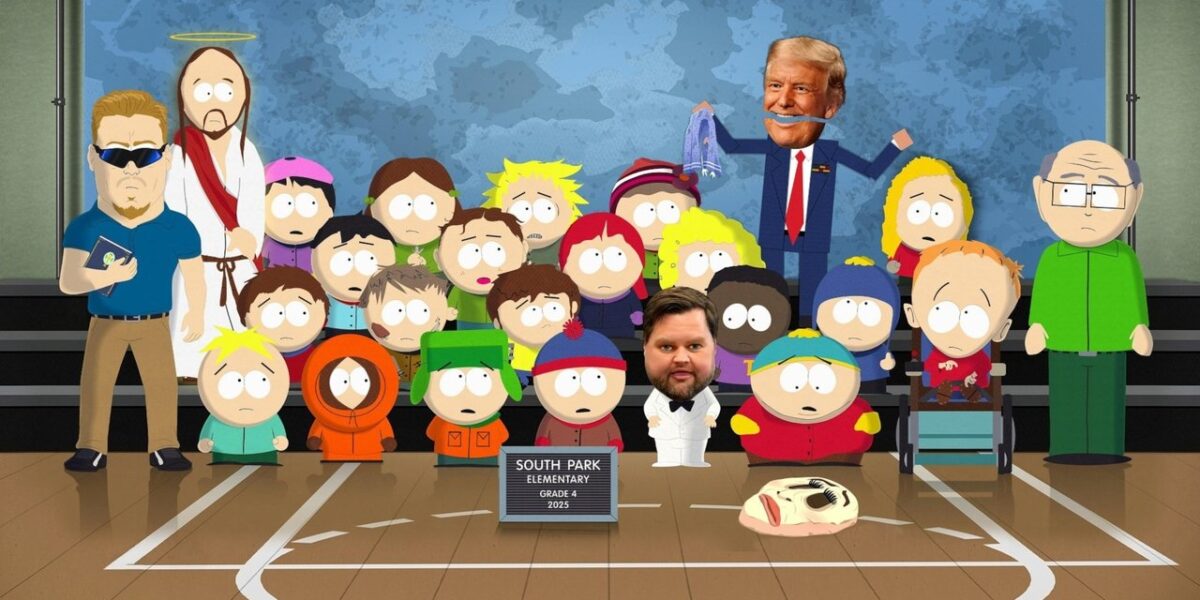
South Park: Ending Explained — Ultimate Breakdown
South Park, the legendary animated series created by Trey Parker and Matt Stone in 1997, has defied every expectation television ever held for itself. Now in its 29th season, this deceptively crude comedy about four grade-schoolers in a dysfunctional Colorado mountain town remains one of the most sophisticated pieces of satirical storytelling in modern media. What does its ongoing narrative arc truly mean? Let’s cut through the chaos and find the beating heart beneath the profanity.
South Park: What happens at the end
Across its most recent seasons, South Park has progressively dismantled the episodic reset button that once defined it. The town itself becomes a character in collapse — overrun by streaming wars, pandemic paranoia, and social media tribalism. Eric Cartman, Stan Marsh, Kyle Broflovski, and Kenny McCormick no longer simply witness the absurdity around them. They are consumed by it, shaped by it, and occasionally broken by it in ways that feel startlingly permanent for a show once famous for consequence-free chaos.
The Paramount+ specials — particularly Post COVID and its sequel — represent the show’s most audacious structural gambit. They project the boys into adulthood, depicting a future where Kenny has died permanently, Cartman has converted to Judaism and started a family, and the friendship at the core of the series has completely fractured. The ending of these specials resets the timeline, but the emotional damage lingers like a bruise you keep pressing. Parker and Stone dare you to feel something, then snatch it away — and that tension is the entire point.
The deeper meaning
At its philosophical core, South Park operates as a relentless satire of collective delusion — the shared fictions societies construct to avoid confronting uncomfortable truths. The town of South Park, Colorado functions as a microcosm of American culture in perpetual self-contradiction: simultaneously progressive and reactionary, compassionate and monstrous. The boys, particularly Stan, represent the ordinary citizen trapped between competing ideological extremes, desperately searching for a rational center that the show suggests may not exist at all.
Parker and Stone’s deepest intention has always been discomfort as enlightenment. By refusing to assign heroism to any political faction, the series forces its audience into an intellectually vulnerable position. The moral ambiguity isn’t laziness — it’s architecture. Every episode that appears to mock the left pivots to expose the right’s equal absurdity, and vice versa. The result is a sustained argument that tribalism itself — not any particular tribe — is the true antagonist of democratic society. That argument grows more urgent, and more painful, with each passing season.
Hidden details & easter eggs
Devoted viewers have catalogued an extraordinary web of recurring visual motifs throughout the series. Kenny‘s hood, which muffles his speech into near-incomprehensibility, functions as a brilliant metaphor for the voicelessness of the working poor — a reading Parker and Stone have tacitly confirmed. Sharp-eyed viewers will note that background signage in South Park’s storefronts frequently foreshadows major satirical targets weeks before they become culturally relevant, suggesting the writers plant seeds with deliberate, almost editorial precision. The IMDB community has extensively documented these layered references across all 29 seasons.
Connections to the rest of the series
The genius of the series lies in its mastery of foreshadowing disguised as throwaway gags. Cartman‘s manipulative sociopathy, played for pure comedy in early seasons, evolves into something genuinely disturbing — a portrait of unchecked narcissism with real consequences. The infamous “Scott Tenorman Must Die” episode retroactively transforms every earlier Cartman moment into evidence of a darkness always present but never fully visible. Parker and Stone understood their character’s trajectory long before the audience did, building a psychological consistency beneath the anarchic surface that rewards patient, attentive viewing.
Fan theories
The most compelling fan theory posits that Kenny McCormick‘s perpetual deaths and resurrections represent a metaphor for childhood’s relationship with mortality — the way young minds process death as abstract and reversible until experience teaches otherwise. Evidence includes the season 14 arc where Kenny’s curse is treated with genuine existential weight. A competing theory argues that Cartman is an unreliable narrator controlling the entire narrative. Against this: the show’s omniscient perspective consistently contradicts Cartman’s self-serving worldview. A third reading frames the entire series as Stan‘s dissociation — his cynicism a defense mechanism against a world too absurd to process directly.
FAQ
Does South Park have a definitive ending planned?
Parker and Stone have confirmed a long-term deal with Comedy Central and Paramount+, suggesting the series will continue evolving rather than concluding with a single definitive finale. The specials format allows them to experiment with closure without committing to it permanently.
Why did Kenny stop dying regularly in later seasons?
Kenny‘s deaths became less frequent as the writers felt the gag had exhausted its comedic and satirical potential. His permanent death in the Post COVID specials suggests the show is now treating his mortality as genuine dramatic weight rather than a recurring joke.
What does the town of South Park symbolize?
The town functions as a compressed symbol of American society — specifically its capacity for collective stupidity, moral panic, and self-defeating tribalism. Its geographic isolation in Colorado mirrors the insularity of any community convinced its local reality represents universal truth.
Is Cartman meant to be sympathetic or purely villainous?
Cartman is deliberately constructed to occupy an uncomfortable middle space. Parker and Stone give him moments of vulnerability and even genuine affection precisely to implicate the audience in his worldview before revealing its ugliness. He is a portrait of how charisma enables cruelty.
How has South Park’s satirical approach changed over 29 seasons?
Early seasons targeted specific cultural phenomena with surgical precision. Later seasons have shifted toward systemic critique — examining the media ecosystems, algorithmic culture, and political polarization that generate those phenomena, reflecting a maturation from symptom-mocking to cause-analysis.