Spider-Noir: Ending Explained — Ultimate Breakdown
Spider-Noir arrives as one of the most unexpected and thrilling reimaginings in superhero television, dropping Nicolas Cage‘s Ben Reilly into the rain-soaked shadows of 1930s New York with a question that cuts to the bone: what happens to a hero when the city stops needing him? This analysis dives deep into the finale’s layered conclusion, unpacking every symbol, every shadow, and every heartbreaking choice the story forces upon its aging, weary protagonist.
Spider-Noir: What happens at the end
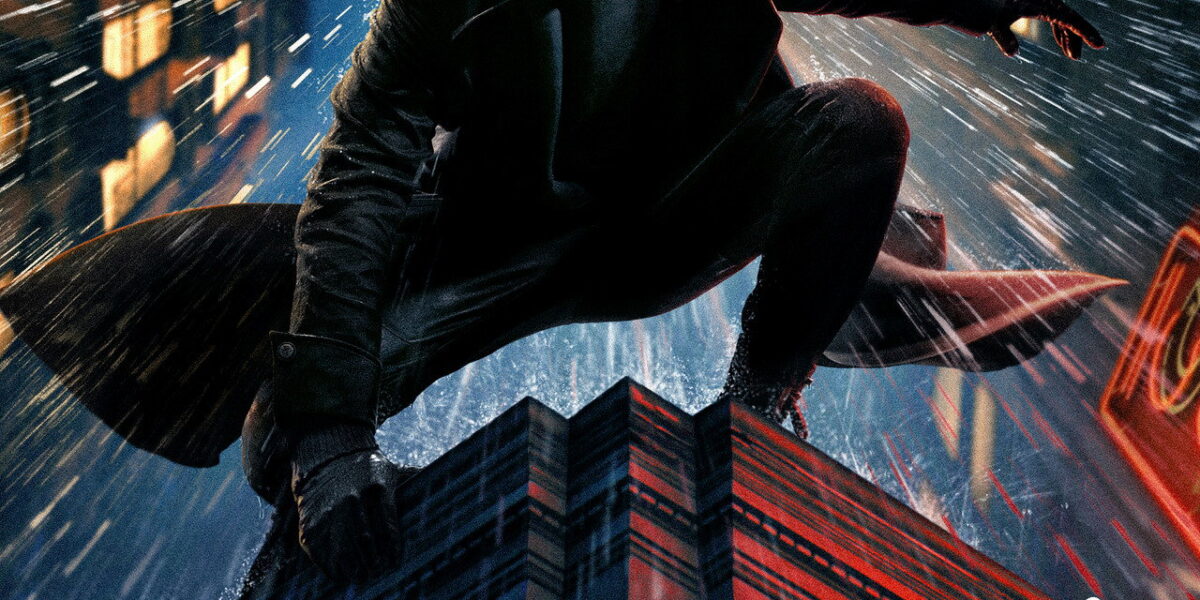
The finale of Spider-Noir brings Ben Reilly to the precipice of a decision he has spent the entire season desperately avoiding. After unraveling a criminal conspiracy that reaches into the highest corridors of New York’s corrupt political machine, Ben confronts the mastermind behind the city’s underworld in a rain-drenched rooftop sequence that deliberately echoes the heroic climaxes of his forgotten past. The choreography is restrained, brutal, and deeply unglamorous — exactly what Oren Uziel‘s vision demands from a broken man rediscovering purpose.
The true twist arrives not in a physical confrontation but in a moral one. Ben chooses to expose the conspiracy publicly rather than dispense the vigilante justice his instincts demand, surrendering evidence to Detective Roxy, played with magnetic authority by Li Jun Li. It is an act of radical restraint — a man who once wielded extraordinary power choosing the rule of law over the rule of the fist. The season closes on Ben alone in his office, the city humming outside, his mask folded quietly on the desk beside him.
The deeper meaning
The tagline — with no power comes no responsibility — is not merely a sardonic inversion of the famous Spider-Man axiom. It is the show’s central paradox: Ben Reilly believes his powerlessness has freed him from obligation, yet the entire narrative proves the opposite. The metaphor embedded in his detective work is devastating in its clarity — investigating crimes is simply heroism with a magnifying glass instead of a mask. The costume changes; the compulsion never does.
Uziel‘s creative intention appears rooted in a meditation on identity erosion and the American myth of reinvention. By placing a superhero in the Great Depression era, the series asks whether heroism is a product of circumstance or an irreducible quality of character. Ben‘s choice to trust institutions over personal power reads as a deeply optimistic conclusion disguised inside a noir’s pessimistic trappings — a genuinely subversive emotional gesture buried beneath shadow and cigarette smoke.
Hidden details & easter eggs
Attentive viewers will notice that Ben‘s office wall features a torn newspaper clipping referencing a “mysterious figure” who stopped a bank robbery in 1924 — precisely a decade before the series begins. This quiet piece of foreshadowing retroactively reframes every scene where Ben dismisses his heroic past as exaggeration. The spiderweb motif recurs obsessively in set design: window frames, fire escapes, even the pattern on Ben‘s worn suspenders subtly mirror web geometries, making his environment an unconscious extension of his suppressed identity.
Connections to the rest of the film
The finale achieves its emotional weight precisely because the series has planted its seeds with extraordinary patience. Ben‘s recurring nightmare — depicted in fragmented black-and-white sequences throughout earlier episodes — finally resolves in the finale’s closing moments, revealing itself not as a trauma but as a memory of choice: the last time he wore the mask willingly. This retrospective recontextualization is masterful foreshadowing, transforming what appeared to be psychological damage into something closer to suppressed longing. Every reluctant investigation was unconsciously rehearsing this final act of recommitment.
Fan theories
Several compelling theories have emerged around the finale. The most persuasive argues that Ben‘s partner Transistor, played with infectious energy by Lamorne Morris, represents a younger version of the heroic identity Ben has rejected — a living externalization of his discarded conscience. A second theory suggests the masked figure glimpsed briefly on a rooftop in the penultimate episode is deliberately ambiguous, potentially hinting at a broader superhero presence in this universe. A third, darker reading proposes that Ben‘s institutional trust is itself a form of self-destruction — surrendering agency dressed as wisdom. You can explore cast details further on IMDB.
FAQ
Does Ben Reilly return to being a superhero at the end of Spider-Noir?
Not explicitly. Ben chooses institutional justice over vigilantism, but the final image of the folded mask suggests the possibility remains open — a deliberate, hopeful ambiguity rather than a definitive closure.
What does the mask on the desk symbolize in the finale?
The mask represents Ben‘s unresolved relationship with his heroic identity — neither worn nor discarded, it signals that he has accepted his past without being imprisoned by it.
Who is the villain that Ben exposes?
The series builds toward a corrupt political figure deeply embedded in New York’s Depression-era power structure, whose identity is deliberately kept ambiguous enough to function as a systemic symbol rather than a singular antagonist.
What role does Detective Roxy play in the ending?
Detective Roxy, portrayed by Li Jun Li, becomes the moral counterweight to Ben‘s vigilante impulses — receiving his evidence represents his conscious choice to trust collective justice over solitary heroism.
Will there be a second season of Spider-Noir?
No official confirmation has been announced as of this writing, but the finale’s deliberately open ending and the series’ exceptional critical reception make renewal a credible and widely anticipated possibility.