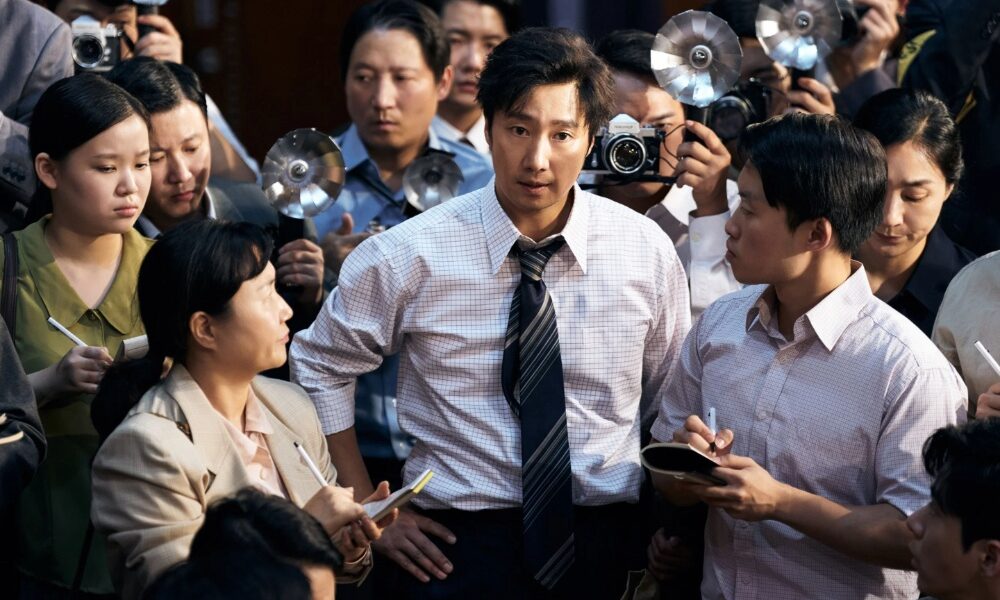
Directors Guild of Korea Defends ‘The Assassin(s)’ Against Political Firestorm and Conservative Criticism
The Assassin(s) political controversy — The Directors Guild of Korea has publicly rallied behind ‘The Assassin(s)’, Hur Jin-ho’s controversial thriller depicting the 1974 assassination of first lady Yuk Young-soo. The film, currently leading the Korean box office, has ignited fierce political debate as conservative politicians and online critics accuse the filmmakers of historical distortion.
The Assassin(s) political controversy: The Details
‘The Assassin(s)’ has become a cultural lightning rod in South Korea, with the Directors Guild of Korea issuing a formal statement supporting the creative team’s artistic freedom. The thriller explores the historical assassination attempt, a pivotal moment in Korean history. Conservative opposition has intensified, with political figures questioning the film’s narrative choices and historical accuracy.
The controversy surrounding ‘The Assassin(s)’ reflects deeper tensions in Korean society regarding how historical traumas should be depicted in cinema. The film’s commercial success—leading the box office—demonstrates significant public interest in revisiting this historical event through a fictional lens. However, this same success has drawn scrutiny from those who believe the portrayal misrepresents the assassination and its political context.
Director Hur Jin-ho has crafted a thriller that examines the personal and political dimensions of the 1974 incident. The Directors Guild’s intervention represents a significant moment for creative freedom in Korean cinema, as industry professionals defend artistic expression against political pressure. This solidarity signals that the film industry values storytelling autonomy despite external political pressures.
What This Means for Cinema
The industry’s defense of ‘The Assassin(s)’ establishes an important precedent for filmmakers tackling sensitive historical subjects. Korean cinema has long explored complex political narratives, and this moment reinforces the importance of artistic freedom in exploring controversial topics. The controversy demonstrates cinema’s power to provoke meaningful dialogue about historical interpretation.
The situation highlights the tension between commercial success and political acceptability in filmmaking. ‘The Assassin(s)’ achieving box office dominance while facing institutional criticism shows audiences are willing to engage with provocative historical narratives. This could embolden more filmmakers to tackle controversial subjects, knowing industry bodies may provide institutional support against political pressure.
What We Know So Far
- The Directors Guild of Korea has issued a public statement supporting the filmmaking team behind ‘The Assassin(s)’
- Conservative politicians and online critics have accused the film of historical distortion regarding the 1974 first lady assassination
- ‘The Assassin(s)’ is currently the leading film at the Korean box office despite ongoing political controversy
- Director Hur Jin-ho crafted the thriller as a dramatized exploration of the historical assassination attempt
- The film has generated significant public discourse about how historical traumas should be depicted in cinema
What’s Still Unknown
- Whether the political pressure will lead to formal censorship attempts or rating changes for ‘The Assassin(s)’
- How long the controversy will sustain interest in the film or impact its eventual box office performance
- Whether other industry organizations will issue statements supporting the film or filmmakers
For more information about the film, visit IMDb for cast and crew details.
Learn more about the broader story at Variety, the original reporting source.