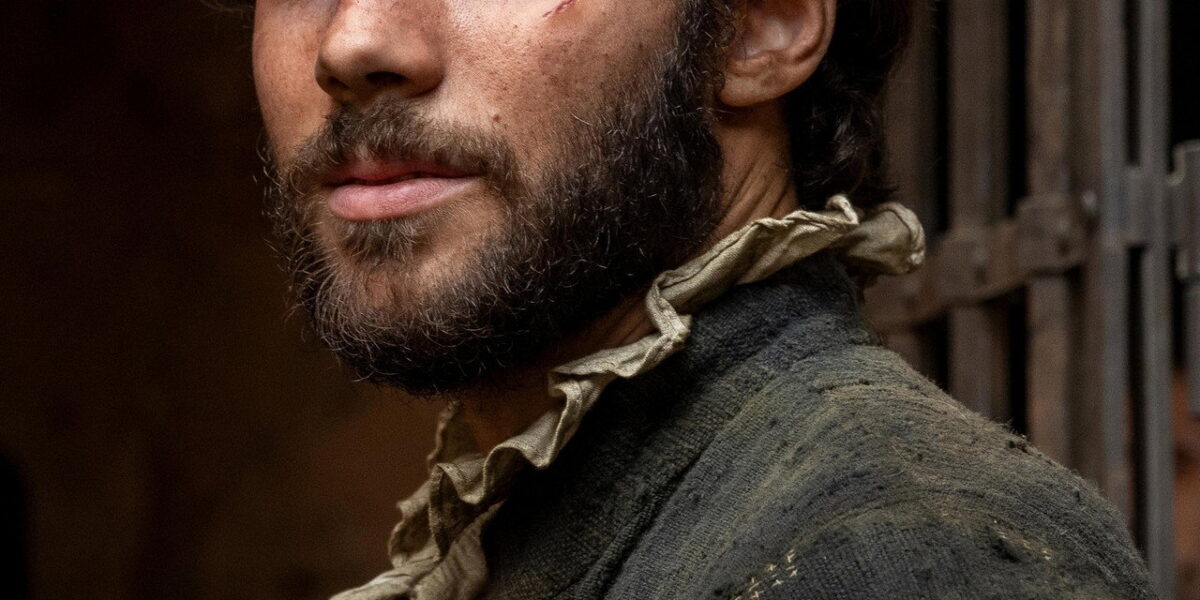
The Captive: Honest Review — Is It Worth Watching? | 6.6/10
The Captive is a visually ambitious historical drama that mistakes scale for substance, wrapping Cervantes’ Algerian captivity in the trappings of prestige cinema without quite capturing the psychological urgency that would make it sing. Amenábar swings for the fences here, but lands somewhere between respectable and frustrating—a film that feels obligated to impress rather than compelled to move you.
| Director | Alejandro Amenábar |
| Cast | Julio Peña, Alessandro Borghi, Miguel Rellán, Fernando Tejero, Luis Callejo |
| Runtime | 134 min |
| Genre | Drama, History |
| Year | 2025 |
The plot (no spoilers)
The Captive tracks the 1575 capture of young Miguel de Cervantes by Barbary pirates, whisking him away to Algiers as a ransom hostage awaiting either payment or death. The film positions his storytelling gift as both lifeline and weapon—a man trapped in literal chains discovering that imagination might be the only freedom left to him. It’s a premise thick with irony, given that Cervantes would later author Don Quixote, and Amenábar clearly sensed the thematic gold buried here.
The movie unfolds across 134 minutes of desert heat, palace intrigue, and internal monologue, with Cervantes caught between the pragmatism of survival and the dangerous luxury of dreaming in verse. You’re expecting something like a historical thriller with romantic undertones, maybe echoes of Amenábar’s earlier work—but this is slower, more meditative, occasionally glacial in its pacing.
Acting & direction
Julio Peña carries the film as Cervantes with a kind of wounded vulnerability that works better in close-ups than in the film’s wider strategic moments, while Alessandro Borghi as the Dey cuts a menacing silhouette without ever becoming truly three-dimensional. The supporting cast—Miguel Rellán, Fernando Tejero, Luis Callejo—blend into the backdrop of fellow prisoners and court officials, competent but unmemorable, like extras who learned their lines well enough to pass.
Amenábar’s direction favors golden-hour cinematography and architectural grandeur: whitewashed Algerian walls, sprawling palace courtyards, the suggestion of oppression through geography rather than action. The score pulses with strings and percussion, sometimes underselling tension, sometimes drowning out quieter moments that needed breathing room. The pacing stumbles frequently—certain exchanges stretch into scenes that outstay their emotional welcome, while others cut away just as they’re gaining traction.
The strengths
- The conceptual spine—a storyteller discovering his voice under duress—carries genuine thematic weight and echoes Cervantes’ actual historical arc in clever ways.
- The visual language is consistently handsome, with cinematography that treats Algiers as both prison and character, all golden stone and calculated shadows that reinforce psychological confinement.
- There’s a genuinely unsettling sequence involving ransom negotiations and cultural collision that hints at the morally complex film this could have been with sharper screenplay choices.
The weaknesses
- The narrative meanders without purpose for stretches; entire subplots involving fellow prisoners dissolve into sentimentality rather than earning their emotional beats, and the film never quite decides whether it’s a political thriller or an intimate character study.
- Peña’s performance, while committed, lacks the mercurial intelligence Cervantes himself possessed—there’s nobility here but little of the wit or cunning that would make his survival story crackle rather than plod.
Who should watch it
If you’re drawn to historical dramas that prioritize atmosphere over narrative propulsion—think The Last Temptation of Christ energy rather than standard biopic mechanics—and you have genuine affection for Cervantes or Spanish Golden Age literature, this film will find moments to reward patience. Fair warning though: it’s the kind of serious-minded drama that mistakes quietness for depth, and you’ll need to bring your own engagement to meet it halfway.
Final verdict
The Captive is a well-made film in service of middling intentions, the kind of prestige production that looks expensive without feeling essential. Amenábar hasn’t made a bad movie here, but he’s made a forgettable one—and for a story about a man whose words literally shaped Western literature, that’s a sin. It sits at 6.6/10 for good reason: technically proficient, thematically interesting on paper, emotionally remote in execution, and ultimately too sprawling to justify its two-hour-plus runtime. Worth watching only if you’re committed to seeing everything Amenábar touches, otherwise you’re better served revisiting his sharper, hungrier work.
FAQ
Is The Captive based on a true story?
Yes—Cervantes was actually captured by Barbary pirates in 1575 and held for ransom in Algiers for five years before escaping. This film dramatizes those years, though it takes creative liberties with dialogue, relationships, and specific events for narrative effect.
Do you need to know about Cervantes to enjoy this film?
Not required, but helpful. If you’ve read Don Quixote or know Cervantes’ biography, you’ll catch thematic echoes the film is reaching for; without that context, it’s simply a survival drama that happens to feature a historical figure.
How does The Captive compare to Amenábar’s other films?
It’s more restrained than The Others or Regression—less propulsive, more meditative—and noticeably less sharp than his best work. It’s respectful cinema that doesn’t quite justify its ambition.
Is there violence or graphic content?
Moderate—you see the reality of captivity and slavery with period-typical brutality, but it’s not gratuitous or exploitative. The threat of violence often matters more than its depiction.
What’s the runtime and is it worth sitting through?
134 minutes, and mostly no—it drags in the second hour, with scenes that could tighten considerably. Amenábar seems to love the landscape more than the narrative momentum.