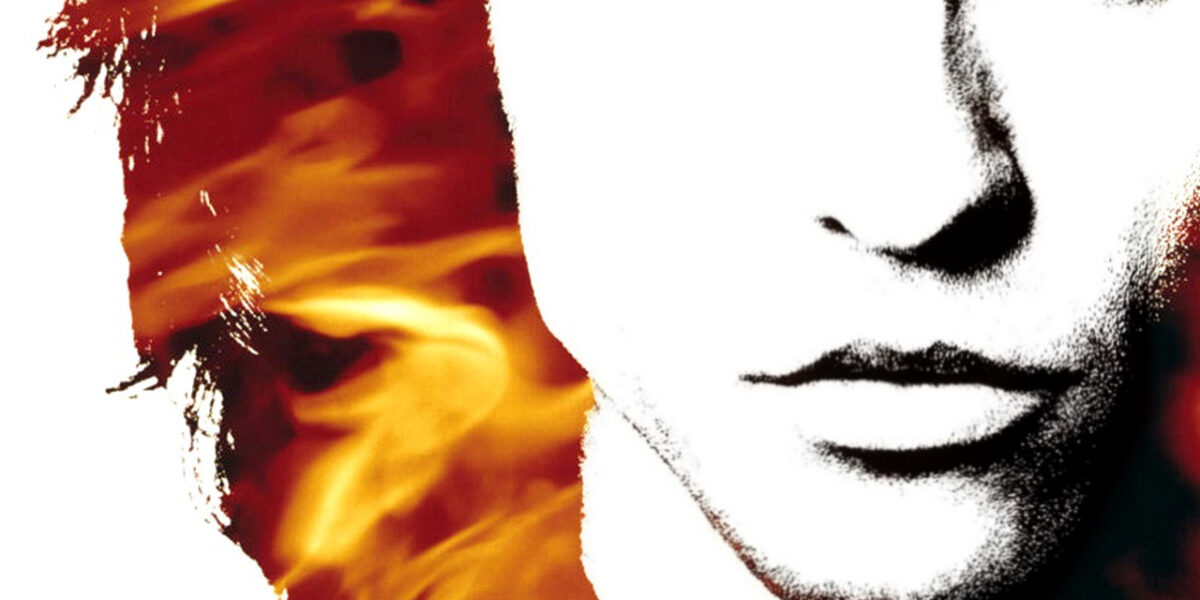
The Doors: Honest Review — Is It Worth Watching? | 7.1/10
The Doors is a restless, sexually charged fever dream that swallows Oliver Stone’s worst impulses whole and somehow comes out the other side as something genuinely mesmerizing. Val Kilmer’s performance is so hypnotic you’ll forgive Stone for treating Jim Morrison like a tragic god rather than a complicated person drowning in his own mythology.
| Director | Oliver Stone |
| Cast | Val Kilmer, Meg Ryan, Kyle MacLachlan, Frank Whaley, Kevin Dillon |
| Runtime | 140 min |
| Genre | Music, Drama, Biography |
| Year | 1991 |
The Doors: The plot (no spoilers)
The Doors tracks Jim Morrison from his Venice Beach shamanism days through the explosive rise of his band, the recording of their debut album, and his inevitable spiral into paranoia, excess, and self-destruction. Stone frames the narrative as a descent into darkness punctuated by moments of genuine artistic transcendence, treating Morrison less as a rock star and more as a doomed romantic figure courting oblivion.
The film moves like a drug trip, lurching between concert sequences that feel genuinely alive and introspective moments that veer into pretentiousness. You’re watching a biopic that refuses conventional structure, opting instead for Stone’s signature maximalist style where every frame feels drenched in shadow and meaning. Expect sensuality, danger, and a relentless focus on Morrison’s self-mythologizing impulses.
Acting & direction
Val Kilmer is absolutely possessed here—he doesn’t just play Morrison, he channels him so completely you forget you’re watching an actor perform. His voice work is impeccable, his body language captures that dangerous swagger, and his eyes convey both seduction and desperation with unsettling ease. Meg Ryan as Pamela Courson is underutilized but effective as the emotional anchor, while Kyle MacLachlan and Frank Whaley provide solid support as bandmates caught in Morrison’s gravitational pull.
Stone’s direction is pure visual intoxication—the cinematography bleeds blues and reds, the editing is deliberately fragmented, and he indulges in recreations of Morrison’s own experimental film work. The pacing is glacial at times, lingers on moments of erotic tension, and occasionally spins its wheels on philosophical voiceovers that feel self-important. Yet there’s undeniable craft here: Stone knows how to make rock and roll look dangerous and seductive, even when the narrative starts folding in on itself.
The strengths
- Val Kilmer’s performance is a career-defining turn that justifies the entire film’s existence through sheer commitment and magnetism.
- The concert sequences and band recordings capture genuine musical energy and the intoxicating appeal of The Doors’ sound without ever becoming mere nostalgia.
- Stone’s visual language—all moody lighting, sensual camera movement, and provocative framing—transforms Morrison’s mythology into something almost hypnotic to watch.
- The film refuses to sanitize Morrison or apologize for his narcissism, self-destruction, and artistic pretension, which gives it a refreshing edge.
The weaknesses
- Stone’s reverence for Morrison borders on hagiography, and the film struggles to interrogate whether Morrison was a visionary or just a self-destructive drunk with a good voice.
- The 140-minute runtime includes sprawling tangents and repetitive sequences that test your patience—the pacing suggests Stone couldn’t bear to cut anything down.
- The supporting band members feel like ghosts surrounding Kilmer’s towering performance, denied any real interiority or dramatic weight in the narrative.
- Stone’s philosophical pretensions sometimes undermine the story’s emotional core, as when Morrison’s breakdown becomes an excuse for abstract imagery rather than genuine drama.
Who should watch it
This is essential viewing for anyone who loves **music biopics** with visual ambition, Morrison devotees who can tolerate Stone’s mythmaking, and cinephiles hungry for 1990s excess in all its glory. If you adore **psychological dramas** that don’t shy away from excess and seduction, or if you appreciate actors disappearing entirely into iconic roles, Kilmer’s performance alone justifies the runtime. Avoid if you want factual rigor or restraint—Stone offers neither, and that’s exactly why the film works.
Final verdict
The Doors is bloated, sometimes absurd, and deeply flawed, yet it remains one of the most hypnotic rock and roll biopics ever made—a film that understands Morrison’s appeal even while documenting his self-annihilation. Kilmer’s channeling of the Lizard King is so magnetic that you surrender to Stone’s baroque visual language and let the mythology wash over you, doubts temporarily suspended. It’s a film that prioritizes sensation over truth, and while that’s a fundamental problem, it’s also precisely what makes the movie impossible to look away from. Worth watching for the performance alone, though the experience is exhausting in all the right ways. 7.1/10 is honest: the film is flawed but undeniably powerful, pretentious but utterly committed to its vision.
Scopri di più su IMDB.
FAQ
Is Val Kilmer really singing as Jim Morrison in The Doors?
Kilmer performed some vocals during production, but the final soundtrack primarily features Jim Morrison’s original recordings layered with Kilmer’s voice work. The blend is so seamless it’s hard to distinguish where one ends and the other begins, which is part of why his performance feels so authentic.
How accurate is Oliver Stone’s film to Jim Morrison’s actual life?
The Doors takes significant creative liberties and prioritizes myth-making over factual accuracy. Stone reconstructs scenes, alters timelines, and interprets Morrison’s motivations in ways that suit the narrative rather than documentary truth—it’s a character study filtered through Stone’s maximalist sensibility, not a biography.
What’s the connection between The Doors film and The Doors documentary?
Stone’s 1991 narrative film is separate from documentaries about The Doors. It’s a dramatized biopic with a fictional structure, while documentaries like “The Doors” (2013) or “Break On Through” use archival footage and interviews for a more direct historical approach.
Is The Doors suitable for rock music fans?
Absolutely—the film captures the band’s recordings, concert footage recreations, and the creative energy of their era. However, it focuses heavily on Morrison’s personal drama rather than the band’s musical innovation, so you’re getting personality cult rather than pure musical appreciation.
How does The Doors compare to other Oliver Stone films?
It shares Stone’s maximalist visual style and moral ambiguity with films like Natural Born Killers and JFK, though it’s more introspective than those works. If you loved Stone’s ambitious excess in the 1990s, you’ll likely gravitate toward The Doors, though some find his approach here even more indulgent than usual.