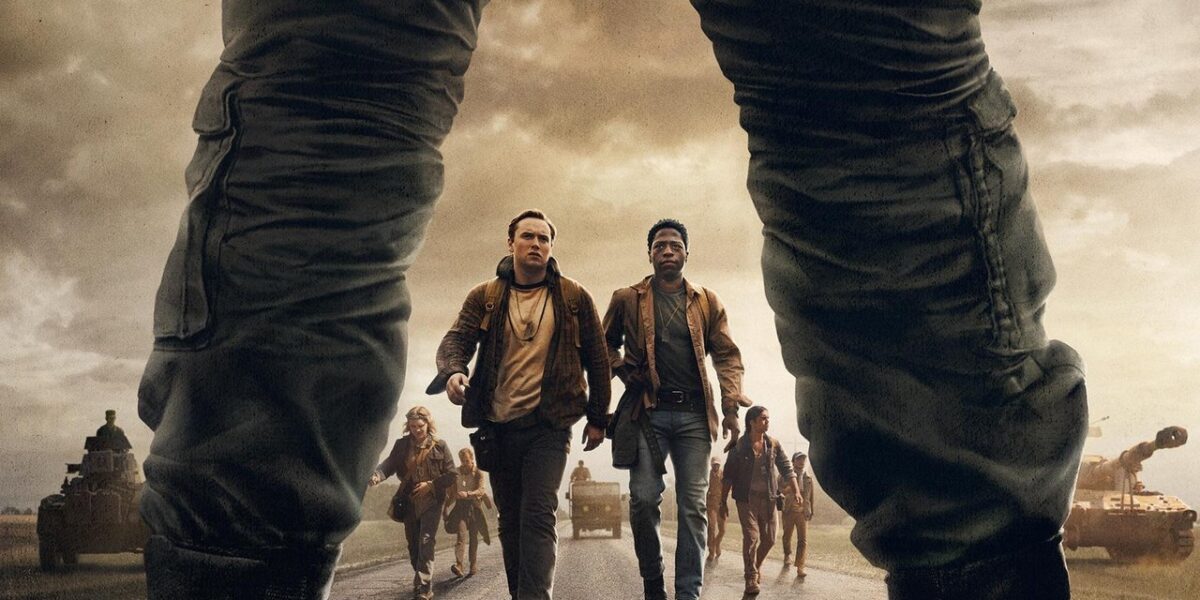
The Long Walk: Honest Review — Is It Worth Watching? | 6.9/10
The Long Walk is a genuinely unsettling adaptation that nails the suffocating dread of its premise in ways that’ll stick with you long after the credits roll. It’s not flawless, but it swings hard enough to deserve your attention if you’re into bleak, morally complicated genre fare.
| Director | Francis Lawrence |
| Cast | Cooper Hoffman, David Jonsson, Garrett Wareing, Tut Nyuot, Charlie Plummer |
| Runtime | 108 min |
| Genre | Science Fiction, Thriller, Horror |
| Year | 2025 |
The plot (no spoilers)
The Long Walk drops you into a twisted 1970s dystopia where the state rounds up fifty teenage boys for an annual execution-by-endurance spectacle. They must maintain a minimum walking pace or face instant elimination by armed soldiers trailing behind them, and only one can possibly survive. It’s a premise so brazenly cruel that you’re immediately unsettled by the sheer casual bleakness of it all.
The film commits to the suffocation of the concept without flinching, and that’s where its power lives. There’s no last-minute rescue fantasy or feel-good redemption arc waiting in the wings; this is a story about attrition, psychological collapse, and the way desperation strips away everything you thought mattered. The pacing mirrors the walk itself—grinding, relentless, and punctuated by moments of grotesque horror that refuse to look away.
Acting & direction
Cooper Hoffman carries the film with a quietly devastating presence, and his arc from cocky teenager to something hollowed out by exhaustion feels earned rather than performed. David Jonsson and Charlie Plummer create distinct personalities in a sea of desperation, and the ensemble work—especially among the younger cast members—avoids the trap of turning these boys into disposable extras. They feel like actual people being systematically broken down.
Francis Lawrence demonstrates real control here, orchestrating the visual monotony of the walk itself into something hypnotic and dreadful. The cinematography leans into desaturated landscapes and cramped framing that makes the open road feel like a prison. The score is appropriately spare, letting footsteps and breath become the real soundtrack, and the pacing never lets you settle into comfort—which is precisely the point he’s chasing.
The strengths
- The premise is executed with absolutely no mercy or softening, creating a psychological horror that feels genuinely transgressive.
- The film refuses easy answers about morality or heroism, forcing you to sit with the ugly reality of how spectacle and violence become normalized in authoritarian systems.
- The visual language consistently reinforces despair through color grading and spatial framing that feels authentically oppressive rather than aestheticized.
- Cooper Hoffman and the ensemble cast sell the gradual destruction of their characters with unsettling conviction and minimal melodrama.
The weaknesses
- The middle section sags slightly as the film settles into repetition, and while that’s partially intentional, it occasionally tips into a rhythm that tests patience rather than building momentum.
- Some secondary character arcs feel underdeveloped, leaving you wanting more specificity about individual psychological breaks rather than the collective experience.
- The film’s commentary on spectacle and state violence, while present, could have dug deeper into the mechanics of why citizens would accept such casual brutality as entertainment.
Who should watch it
If you’re hungry for dystopian science fiction that doesn’t pull punches—think Battle Royale meets A Clockwork Orange by way of Stephen King’s pulp nihilism—then this film is exactly your territory. You need to be comfortable with sustained discomfort and bleak endings that don’t offer catharsis as consolation. It’s not for people who need their thrillers to feel like they matter in some redemptive sense.
Final verdict
The Long Walk is a successfully executed provocation that respects its audience’s intelligence enough to let the premise speak for itself without editorial hand-holding. It’s not flawless—some tonal shifts feel slightly off, and the script could interrogate its own ideas more rigorously—but it’s the kind of film that risks something in a landscape of safe, marketable dystopias. If you want to feel genuinely rattled and you don’t mind the film refusing to make you feel better about it, this deserves a place on your watchlist, and a solid 7/10 reflects a film that executes its vision with conviction.
Scopri di più su IMDB.
FAQ
Is The Long Walk based on a Stephen King novel?
Yes, it’s adapted from Stephen King’s 1979 novel published under his Richard Bachman pseudonym. The film stays faithful to the core premise while streamlining some of King’s digressive character work.
How graphic is the violence in this film?
The violence is matter-of-fact rather than exploitative—deaths happen off-screen or at distance, but the psychological weight of the brutality is front and center. It’s unsettling more through implication than gore.
Does The Long Walk have a hopeful ending?
No. The film commits to a bleak, purposefully punishing conclusion that refuses the comfort of conventional narrative redemption. That’s the entire point.
How does Francis Lawrence’s direction compare to his previous work?
This is some of Lawrence’s most restrained, controlled filmmaking—less visually baroque than Constantine or the Hunger Games sequels, and far more deliberately austere in tone.
Is The Long Walk worth watching despite the 6.9 TMDB rating?
Absolutely. TMDB scores favor crowd-pleasing entertainment, and this film is deliberately uncomfortable and anti-heroic, which naturally alienates casual viewers. It’s a solid 7/10 that deserves more credit from genre enthusiasts.