The Matrix: Ending Explained — Ultimate Breakdown
Few films have detonated inside popular culture with the seismic force of The Matrix. Since its 1999 release, Lana Wachowski’s visionary work has generated endless debate about free will, reality, and what it truly means to wake up. The ending — bold, mythological, deliberately open — is not a conclusion so much as a declaration. Here, we dissect every layer of that final sequence and reveal what the Wachowskis were really saying about humanity’s future.
The Matrix: What happens at the end
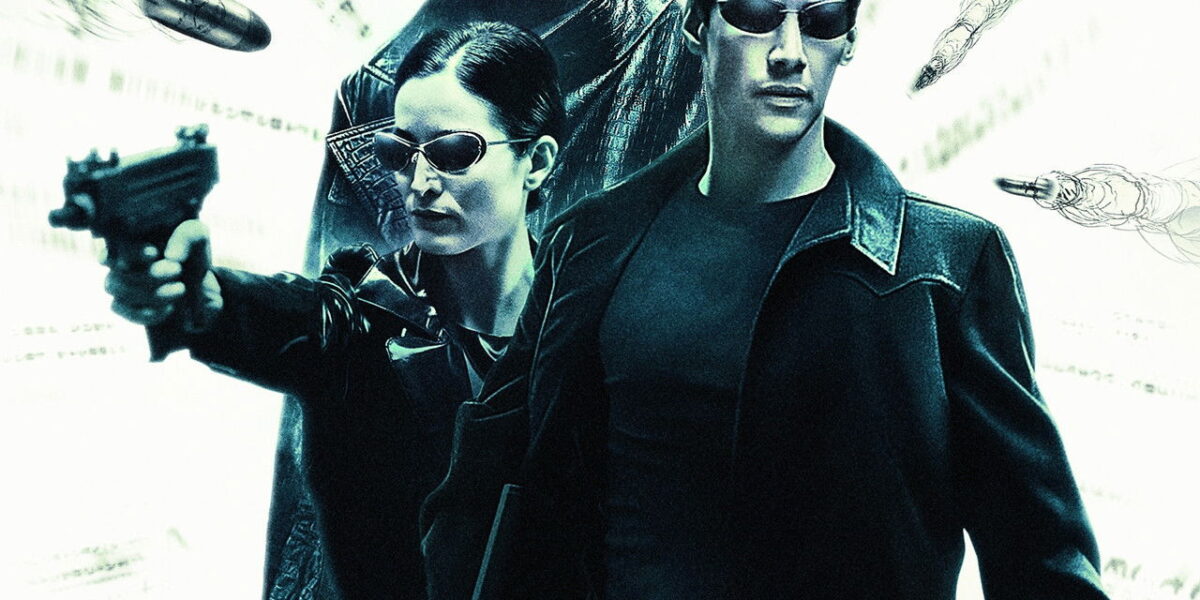
After being shot dead by Agent Smith inside the Matrix, Neo — believed by Morpheus and Trinity to be the prophesied One — is resurrected through an act of pure belief. Trinity whispers her love into his ear, and in that moment, something fundamental shifts. Neo rises, perceiving the simulation not as a world but as cascading streams of code, finally seeing the Matrix for what it truly is: a constructed prison of light and mathematics. The agents open fire and every bullet stops dead in the air before him.
Having effortlessly destroyed Agent Smith from the inside out, Neo returns to the real world — or rather, to the residual self-image of it. The film closes with him making a phone call, promising the machines that he will show humanity a world without boundaries. He then steps out of a phone booth and soars vertically into the sky, arms outstretched, ascending like a digital messiah while Rage Against the Machine‘s “Wake Up” tears through the soundtrack. It is one of cinema’s most electrically charged final images.
The deeper meaning
The ending is a masterclass in metaphor. Neo‘s resurrection is not merely a superhero moment — it is the completion of a Gnostic awakening. The Wachowskis embed an entire philosophical tradition into this sequence: the idea that the material world is a false construct, and that true liberation comes only through radical self-knowledge. When Neo stops the bullets, he is not bending the simulation’s rules — he has transcended the need to follow them at all. He no longer believes in the prison, and so the prison has no power over him.
Lana Wachowski has spoken publicly about the film as a trans allegory — a story about refusing the identity imposed upon you by a hostile system and discovering your authentic self. Neo‘s journey from Thomas Anderson, a name that means “son of man,” to Neo, an anagram of “One,” is a rebirth narrative about shedding a false self. The ending makes this explicit: he does not reform the Matrix, he rejects its authority entirely, declaring his intention to rewrite the terms of human existence on his own terms.
Hidden details & easter eggs
The phone booth Neo uses in the final scene is a deliberate visual callback to the method of entering and exiting the simulation throughout the film — telephones are the threshold between the real and the constructed. His final call echoes Morpheus‘s earlier monologue about showing people “a world without rules and controls, without borders or boundaries.” Remarkably, the room number where Neo is shot is 303 — a numeric echo of the sacred trinity, linking his death and resurrection directly to the film’s deepest theological scaffolding. Visit IMDB for full production details.
Connections to the rest of the film
The ending achieves its full resonance only when read against the film’s careful foreshadowing. From the very first scene, Neo is described by Trinity as “the one” in a wiretapped conversation — establishing his destiny before we even know who he is. The Oracle’s cryptic remark that he is “not the One” functions as a classic double foreshadowing: she tells him what he needs to hear to become what he must be. Every moment of Neo‘s doubt and failure across 136 minutes is the narrative engine that makes his final, unshakeable certainty feel genuinely earned.
Fan theories
One compelling theory argues that Neo was never truly the first “One” — that the machines have cycled through multiple iterations of this messiah figure to periodically reset human resistance. This reading reframes the ending not as liberation but as a new loop beginning, a theory later supported by the sequels. Against this, many viewers insist the ending’s tone — defiant, joyful, musically triumphant — is incompatible with a cynical reading. A third theory posits that Neo‘s flight is itself still within a simulation, suggesting that no escape is ever truly final, only deeper.
FAQ
Why does Neo come back to life at the end of The Matrix?
Neo is resurrected because Trinity‘s declaration of love causes him to finally believe — without doubt — that he is the One. Within the Matrix’s logic, belief rewrites reality, and his complete self-acceptance grants him absolute control over the simulation.
What does Neo’s final phone call mean?
The call is a direct challenge to the machines’ authority. Neo announces his intention to dismantle the system of control and offer humanity genuine freedom — signaling that the war between humans and machines has fundamentally changed in nature.
Why does Neo fly at the very end?
Flight is the purest visual symbol of transcendence. Having fully accepted his identity as the One, Neo no longer experiences any limitation inside the Matrix — his ascent into the sky literalizes his complete liberation from the simulation’s false physical laws.
Is the ending of The Matrix a happy ending?
It functions as a triumphant ending within the film’s own logic, but it is deliberately open-ended rather than conclusive. Neo has won a battle, not the war — his promise over the phone makes clear that the real struggle is only just beginning.
What does the room number 303 mean in The Matrix?
Room 303, where Neo dies and is resurrected, is widely read as a reference to the Holy Trinity — reinforcing the film’s Christ-parallel allegory and tying Neo‘s death directly to the character of Trinity, whose love triggers his rebirth.
“`