The Shawshank Redemption: Ending Explained — Ultimate Breakdown
Few endings in cinema history carry the emotional weight of The Shawshank Redemption. Frank Darabont’s 1994 masterpiece doesn’t simply conclude — it delivers a catharsis so precisely engineered that it feels like a personal liberation. In this analysis, we’ll dissect what truly happens in those final scenes, unpack the layered symbolism Darabont embedded into every frame, and reveal why this ending continues to resonate with audiences thirty years later.
The Shawshank Redemption: What happens at the end
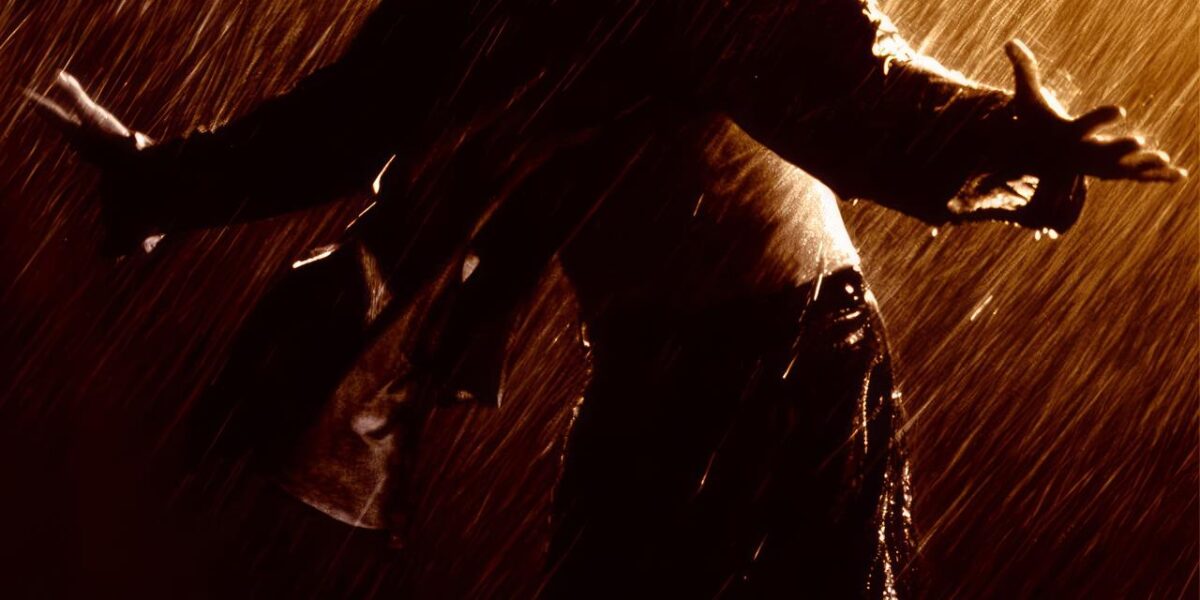
After decades of meticulous planning, Andy Dufresne escapes Shawshank prison by crawling through five hundred yards of sewage pipe — a tunnel he’d secretly carved over nineteen years. He emerges into a rainstorm, arms outstretched, reborn. He then exposes Warden Norton‘s corruption by mailing incriminating financial records to a local newspaper and the state police. Norton, cornered and humiliated, shoots himself before authorities arrive. Andy vanishes entirely, leaving behind only myth and a hollowed-out Bible containing a rock hammer.
The film’s final act belongs to Red, who is paroled after decades behind bars. Haunted by institutionalization — the psychological dependency on prison structure — he nearly succumbs to despair. But he finds a letter Andy buried beneath a volcanic rock in Buxton, along with money for a journey south. The closing scene shows Red crossing the border into Mexico, walking across a radiant beach toward Andy, who is restoring a boat. Two free men. The ocean stretches endlessly behind them. The image is almost unbearably beautiful.
The deeper meaning
The ending crystallizes the film’s central metaphor: hope is not passive — it is an act of radical, sustained will. Andy didn’t simply dream of freedom; he carved it, inch by inch, in absolute secrecy. The beach in Zihuatanejo represents a space outside institutional memory, a place where identity is self-authored. The ocean itself functions as a symbol of boundless possibility — the inverse of Shawshank’s concrete walls. Darabont frames it not as escapism, but as the legitimate destination of those who refuse to surrender their inner life to external imprisonment.
Darabont’s intention runs deeper than a simple triumph narrative. By filtering the entire story through Red‘s voiceover, the film argues that witnessing hope — even secondhand — can be redemptive. Red is the true protagonist of this closing movement. His transformation from a man who calls hope “a dangerous thing” to one who feels it “so strongly” in his chest is the film’s emotional thesis made flesh. Darabont trusts the audience enough to let the reunion speak without sentimentality, anchoring transcendence in two aging men simply standing together on sand.
Hidden details & easter eggs
The rock hammer hidden inside the Bible is a masterclass in foreshadowing and irony — the instrument of Andy’s escape concealed inside the book of spiritual liberation, specifically within the Book of Exodus. Darabont underlines this with quiet genius: Norton reads the inscription “salvation lies within” moments before Andy’s absence is discovered, never realizing he holds the literal evidence of his own undoing. Additionally, the poster of Raquel Welch covering Andy’s escape tunnel connects to a broader visual motif of women as silent witnesses to male resilience throughout the film.
Connections to the rest of the film
The entire narrative is constructed as an elaborate foreshadowing engine pointing toward that beach. Andy‘s first mention of Zihuatanejo to Red — dismissed as fantasy — is the film planting its emotional destination early. The recurring motif of rock polishing mirrors Andy’s imperceptibly slow tunnel work: patience as heroism. Red‘s three parole hearings form a structural rhythm that makes his final release feel earned rather than arbitrary. Even Brooks Hatlen‘s tragic post-prison suicide serves a devastating narrative purpose — it establishes the real stakes should Red fail to find his reason to live freely.
Fan theories
One persistent theory holds that Andy Dufresne actually committed the murders and that his entire moral positioning is a constructed self-mythology — evidence cited includes his cold emotional detachment and legal knowledge suggesting premeditation. A counter-theory insists the ending is entirely Red‘s dying fantasy, a final dream imagined in a cramped parole hostel room. Both theories are narratively seductive but ultimately collapse against Darabont’s source material and the film’s consistent internal logic. The most compelling reading remains the literal one: the ending earns its joy precisely because the film never cheats the audience about the cost of hope. You can find further cast and production details on IMDB.
FAQ
Does Andy Dufresne actually make it to Mexico at the end?
Yes, canonically he does. The final scene confirms Andy reached Zihuatanejo, where he is restoring a boat on the beach when Red arrives. The reunion is presented as literal, not symbolic or imagined.
Why does Red almost give up after leaving prison?
Red suffers from severe institutionalization — after decades inside, freedom feels paralyzing rather than liberating. He explicitly fears ending up like Brooks, who could not adapt to life outside Shawshank and took his own life.
What was hidden inside Andy’s Bible?
Andy concealed his rock hammer inside a hollowed-out Bible, specifically within the Book of Exodus. Warden Norton discovers this only after Andy has already escaped, too late to understand its significance.
Why does Warden Norton shoot himself?
Norton kills himself to avoid arrest and public disgrace after Andy mails evidence of his corruption and money laundering to the press and state authorities. Cornered with no escape, he chooses death over accountability.
What does the ocean symbolize in the final scene?
The ocean represents infinite freedom and the complete absence of boundaries — the direct opposite of Shawshank’s walls. It is the visual embodiment of the film’s core argument: that the human spirit, when nurtured by hope, cannot ultimately be contained.