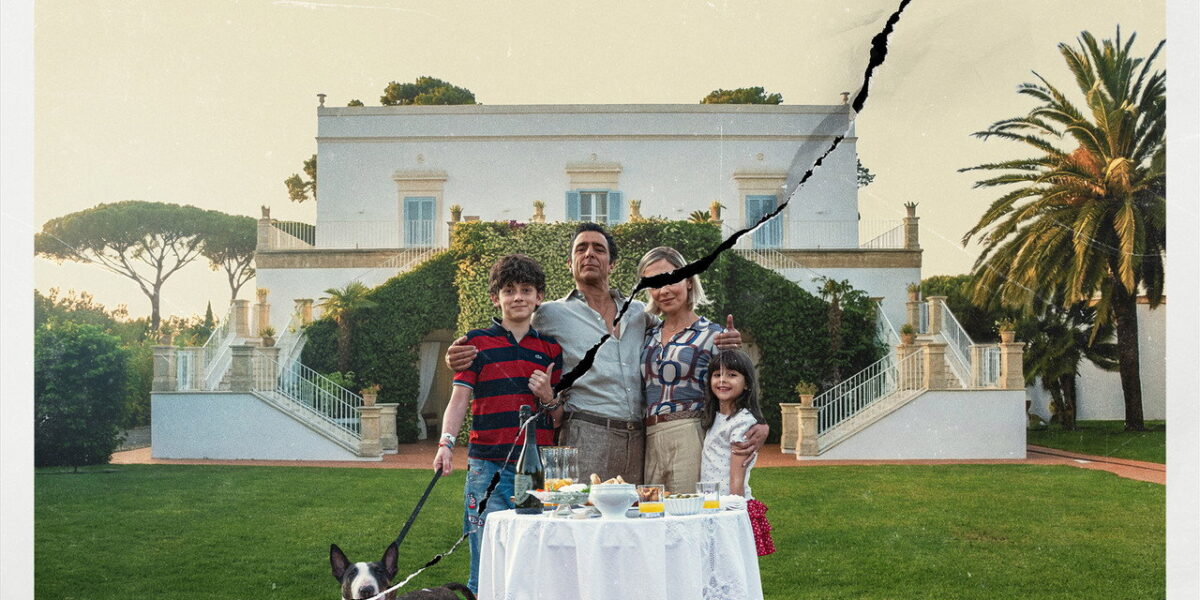
The Spiral: Honest Review — Is It Worth Watching? | 7.3/10
The Spiral is a genuinely unsettling Italian thriller that earns its dread through atmosphere and Jasmine Trinca‘s raw vulnerability, but it fumbles the ending like a magician who reveals the trick too early and gets the mechanics wrong. It’s worth watching if you’re hungry for European **psychological drama** that takes itself seriously, though fair warning: the payoff doesn’t quite stick the landing.
| Director | Paolo Strippoli |
| Cast | Jasmine Trinca, Romana Maggiora Vergano, Adriano Giannini, Valeria Bruni Tedeschi, Gabriella Telegrafo |
| Runtime | 115 min |
| Genre | Drama, Thriller |
| Year | 2026 |
The Spiral: The plot (no spoilers)
The Spiral kicks off with a woman arriving at her daughter’s door in Rome with a confession that rewires everything we thought we knew about their shared history, and Strippoli’s setup is genuinely disquieting because it refuses to spoonfeed you whether we’re dealing with genuine supernatural horror or psychological delusion masquerading as metaphysical debt. The central conceit—a mother’s desperate pact made twenty years earlier to save her daughter’s life—feels less like a gimmick and more like a genuine moral quandary wrapped in atmospheric dread that permeates every scene.
The film establishes itself as a **psychological thriller** with gothic undertones, all Roman apartments and rain-slicked streets that feel less like location shooting and more like a character unto themselves, and what makes it work initially is Strippoli’s refusal to clarify whether we’re watching a woman unraveling under the weight of guilt or witnessing something genuinely cursed unfolding across generations with ruthless inevitability.
Acting & direction
Jasmine Trinca carries this thing on her shoulders like an actress who understands that a character’s desperation reads better as physical exhaustion than vocal histrionics, and she gives Anna a weariness that suggests someone whose guilt has metastasized into every cell of her body, while Romana Maggiora Vergano as Alice walks a tightrope between skepticism and creeping horror that could’ve easily tipped into melodrama in less capable hands.
Strippoli orchestrates the visual language with real precision—the cinematography leans into shadow and reflection, making Rome itself feel claustrophobic rather than romantic—but his pacing in the second act slackens considerably as exposition piles up and the mystery that initially captivated us starts to calcify into plot mechanics that feel increasingly convoluted and unconvincing.
The strengths
- Trinca’s performance is the real deal, a masterclass in communicating internal collapse through understated physicality that makes you lean forward to catch every breath she takes.
- The film’s opening act is genuinely unsettling, built on the kind of atmospheric dread that makes you uncomfortable without relying on jump scares or gore, just the slow-burn realization that something has fundamentally broken in the fabric of this family’s reality.
- Strippoli commits fully to ambiguity in ways that most thriller directors simply don’t have the patience for, and for a solid hour you’re genuinely uncertain whether this is a ghost story, a psychological break, or a meditation on maternal guilt.
The weaknesses
- The third act devolves into baroque plotting that actively works against the atmospheric restraint that made the first half so compelling, and once the film starts explaining itself it loses all its power.
- The “Stranger” concept—which should be the thematic and narrative anchor—gets increasingly muddled as an antagonistic force, eventually feeling more like a plot device than a genuine existential threat with internal consistency.
Who should watch it
If you’re the kind of viewer who gravitates toward **European psychological thrillers** like A Tale of Two Sisters or Let the Right One In, and you’re willing to forgive narrative messiness in exchange for atmosphere and committed performances, then absolutely give this your time. Skip it if you need your mysteries wrapped up with logical precision or you’re looking for traditional genre thrills, because this film’s commitment to ambiguity eventually becomes its Achilles heel rather than its strength.
Final verdict
The Spiral starts as a genuinely unsettling descent into maternal guilt and generational curse mythology, anchored by Trinca‘s gutting performance and Strippoli’s visual precision, but it collapses under the weight of its own narrative ambitions when it pivots from mystery to explanation, revealing plotting that doesn’t hold together under scrutiny. It’s the kind of film that’s worth experiencing for its best moments even if the whole doesn’t cohere, and while 7.3 might seem harsh for something this atmospheric and earnest, it’s an accurate reflection of a movie that’s genuinely good for ninety minutes and then actively works against itself for the final stretch.
FAQ
Is The Spiral a horror film or a psychological thriller?
It’s primarily a **psychological thriller** with horror and supernatural elements, but the ambiguity between real curse and internal psychological break is intentional—the film never fully commits to either interpretation.
Does The Spiral have a satisfying ending?
No, the ending retreats from the atmospheric mystery into convoluted plotting that doesn’t satisfy logically or emotionally, which is the film’s biggest stumble.
How does Jasmine Trinca perform in the lead role?
Trinca is excellent, delivering a nuanced portrayal of maternal guilt and desperation that elevates material that might’ve felt melodramatic in other hands.
Who directed The Spiral and what’s his style?
Paolo Strippoli directs with visual restraint and atmospheric precision, leaning into shadow and ambiguity rather than explicit scares, though his narrative control weakens as the film progresses.
Should I watch The Spiral or skip it?
Watch it if you love moody European thrillers and strong performances—just manage expectations that the payoff doesn’t match the promise of the setup.
Find The Spiral on IMDb or explore more Italian cinema to discover what Strippoli might do better with a more disciplined script next time.