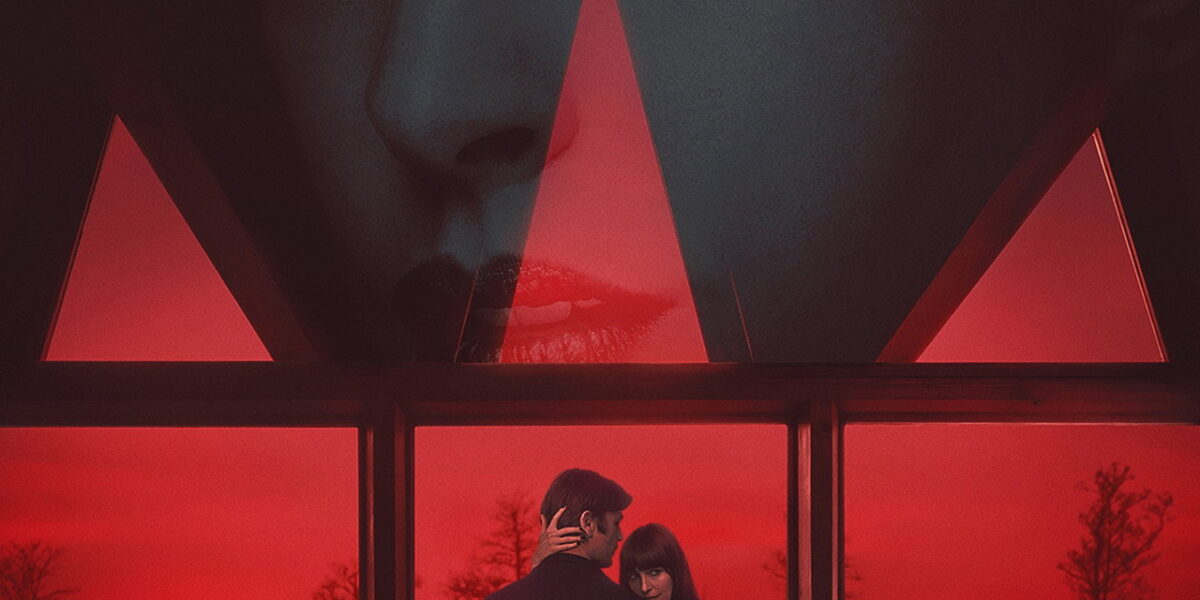
Verity: Honest Review — Is It Worth Watching? | 6.8/10
Verity is a slick adaptation of Colleen Hoover’s bestseller that finds genuine unease in its central mystery but squanders it with clumsy pacing and a third act that collapses under its own manufactured weight.
Michael Showalter’s film is competent enough to keep you watching, yet frustrating enough to make you wish someone had cut twenty minutes and trusted the audience to sit with ambiguity instead of spelling everything out.
| Director | Michael Showalter |
| Cast | Dakota Johnson, Anne Hathaway, Josh Hartnett, Brady Wagner, Ismael Cruz Cordova |
| Runtime | 117 min |
| Genre | Mystery, Thriller |
| Year | 2026 |
The plot (no spoilers)
Verity hires ghostwriter Lowen Ashleigh to finish the novels of bestselling author Verity Crawford after a mysterious accident leaves her incapacitated, and nothing—absolutely nothing—about this arrangement is what it seems from frame one.
The film moves between present-day tension at the Crawford mansion and chapters from Verity’s unpublished manuscript, creating a dual-narrative structure that promises to unravel something genuinely disturbing.
Showalter’s work establishes an oppressive atmosphere early on: the house feels wrong, the wife’s condition feels wrong, the husband’s eagerness feels wrong, and you’re left perpetually off-balance wondering which truth is actually the lie.
Acting & direction
Dakota Johnson brings a nervous, calculating energy to Lowen that works wonderfully—she plays someone slowly realizing she’s in a room with predators without tipping her hand too early. Anne Hathaway is the film’s wildest card, delivering a performance that alternates between sympathetic victim and something far more sinister, and Hathaway commits fully to the ambiguity in ways that occasionally feel chilling.
Josh Hartnett underplays Jeremy Crawford with unsettling reserve, and you can never quite tell if he’s a desperate man protecting his wife or something considerably darker. Showalter frames scenes with deliberate shadows and maintains a suffocating intimacy between characters, though the score occasionally oversells moments that would land harder with restraint.
The strengths
- The first eighty minutes genuinely crackle with tension and the kind of paranoia that makes you distrust every character simultaneously.
- Anne Hathaway‘s performance operates on multiple frequencies at once, making her impossible to read and infinitely watchable.
- The film’s exploration of unreliable narration and the weaponization of storytelling itself is its most intellectually interesting element, asking who controls the narrative and therefore who controls truth.
- The cinematography uses negative space effectively, letting emptiness become as menacing as what’s actually on screen.
The weaknesses
- The final thirty minutes abandon subtlety entirely, spelling out revelations that worked perfectly well as implications and draining the film of its most potent power.
- A crucial twist arrives so late in the runtime that the film has to cram explanation over visual storytelling, resorting to exposition dialogue that feels desperately rushed.
- The narrative structure, which should create a fascinating conversation between present and past, instead feels mechanically applied, with manuscript chapters interrupting momentum rather than deepening it.
- Certain character motivations strain credibility in the final act, asking you to accept contrivances that feel engineered for plot rather than emerging from genuine psychology.
Who should watch it
If you’re into psychological thrillers like Gone Girl or Sharp Objects, this scratches a similar itch for twisted domestic secrets and unreliable perspectives, though it lands with considerably less finesse than those works. Fans of Colleen Hoover adaptations will find the familiar beats here, and if you’re drawn to performances from Anne Hathaway specifically, her work is worth the price of admission alone. Skip it if you demand coherent logic from your mysteries or if you’re exhausted by Hoover-adapted media.
Final verdict
Verity is a film that nearly works, which is far more frustrating than one that simply fails because you can feel the good movie trapped inside the mediocre one. The performances are committed, the concept is nasty and smart, but Showalter and his writers lose faith in what made the material compelling and resort to over-explanation in the home stretch. It’s worth watching for the tension of the first act and the sheer commitment of its cast, but don’t expect it to stick with you the way it should, and definitely don’t expect it to justify its runtime once the twists start tumbling out.
Scopri di più su IMDB.
FAQ
Is Verity based on a book?
Yes, it’s adapted from Colleen Hoover’s 2018 novel of the same name, which became a massive bestseller and launched the author into mainstream cultural consciousness.
Do I need to read the book before watching the film?
No, the film stands alone entirely, though readers may find the ending considerably less shocking since the book’s twist is fairly well-known in literary circles.
Is Verity worth watching if I hate Colleen Hoover adaptations?
Possibly, if you’re willing to give Showalter’s visual approach a chance—the film’s atmosphere and performances sometimes transcend the material in ways the source material doesn’t always achieve.
How does the ending compare to the book?
The film largely honors the book’s final twist but arrives there through slightly different narrative choices, making it feel simultaneously familiar and refreshingly different.
What’s the biggest problem with Verity?
It doesn’t trust its audience with ambiguity and spells out nearly everything in the third act when subtlety would have made it exponentially more disturbing and memorable.