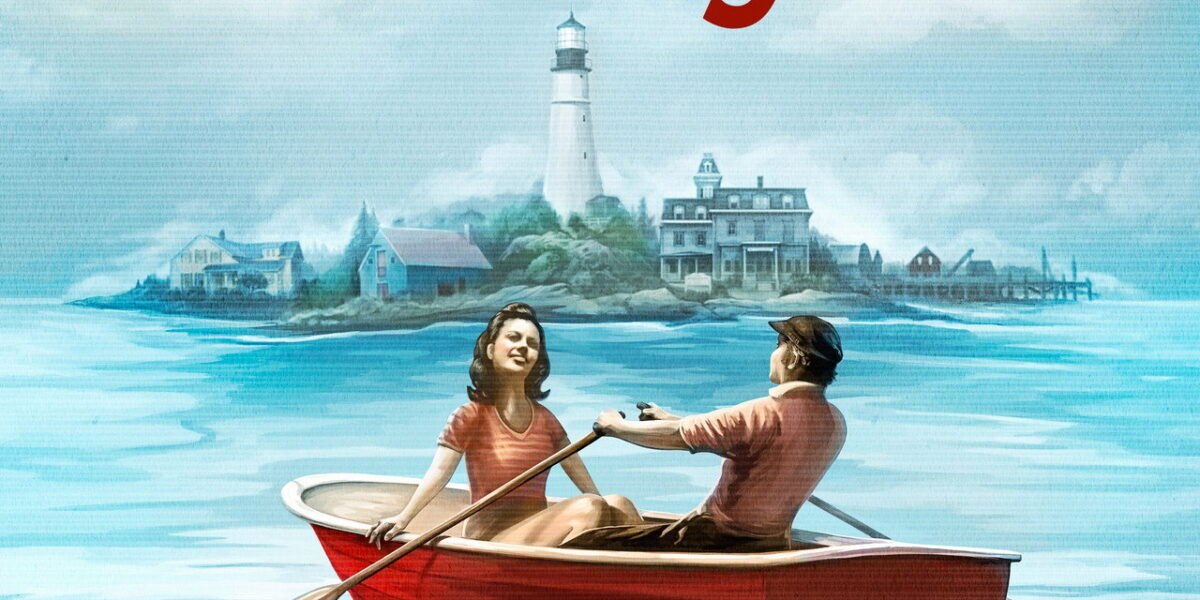
Widow’s Bay: Ending Explained — Ultimate Breakdown
Widow’s Bay arrives in 2026 as one of the most cunningly layered genre hybrids of recent television — a show that wraps genuine dread inside deadpan comedy and refuses to let you feel entirely safe in either register. Created by Katie Dippold, the series uses its cursed New England island as a pressure cooker for ambition, denial, and communal self-deception. What does its ending truly reveal? Let’s pull back the fog and look closely.
Widow’s Bay: What happens at the end
The season two finale of Widow’s Bay reaches its crescendo when Mayor Colin Marsh (played with exhausted idealism by Matthew Rhys) finally completes his grand tourism infrastructure — the ribbon is cut, the ferry arrives packed with visitors, and the island glows with an almost theatrical optimism. Then, with devastating precision, the curse reasserts itself. The carefully engineered spectacle collapses not with supernatural fury, but with a series of absurd, cascading disasters that feel both hilarious and genuinely tragic.
The final twist arrives when local historian Ruth (the magnificent Dale Dickey) reveals she has known the precise mechanics of the curse all along and chose silence — not out of malice, but because she believed the town needed to learn through failure. Colin‘s closest ally, Dara (Kate O’Flynn), makes the quietly shattering decision to stay on the island rather than flee with the tourists, signaling her transformation from skeptic to reluctant believer and protector of the community.
The deeper meaning
The curse in Widow’s Bay functions as a metaphor for what happens when external economic ambition is imposed upon communities with deep, unresolved wounds. The island does not punish outsiders arbitrarily — it punishes the erasure of memory. Every tourist attraction Colin builds sits atop a story the town has deliberately buried, and the finale makes clear that progress built on suppression is structurally unsound. Katie Dippold transforms genre convention into a precise diagnosis of how small communities are consumed by the tourism economy.
Dippold‘s intention is unmistakably satirical but never cynical. The comedy is a delivery mechanism for genuine grief. The show argues that a community’s identity — its curses included — cannot simply be rebranded. Colin‘s arc ends not in defeat but in a kind of humbled awakening: he finally listens. The finale’s emotional power comes from understanding that the mayor’s journey was never about tourism at all — it was about a man learning that some places resist being made into products, and rightfully so.
Hidden details & easter eggs
Sharp-eyed viewers will notice that every building Colin renovates bears a date plaque corresponding to a historically documented local tragedy — a detail visible in background shots throughout both seasons but never verbally acknowledged until the finale. The color red appears exclusively in scenes involving the curse’s direct manifestation, while Colin‘s office remains conspicuously beige throughout — sterile, unmarked, immune to local color until the final scene, when a single red curtain appears in the window behind him, suggesting the island has finally claimed him too.
Connections to the rest of the film
The finale pays off a masterclass in foreshadowing laid across two seasons. In the very first episode, Ruth tells Colin that the bay “keeps what it takes” — a line played for dark comedy but revealed in the finale to be literal, structural truth. Every character who dismissed the curse performs an identical gesture: they look out to sea and then quickly look away. By the finale, only Dara holds that gaze without flinching, marking her as the series’ true moral compass and the island’s chosen steward.
Fan theories
The most compelling fan theory argues that Colin has been dead since the end of season one — that the island claimed him during the storm sequence and the entire second season represents his purgatorial attempt to fulfill his ambitions before accepting his fate. Evidence includes the inexplicable way certain characters never directly address him in crowd scenes. Against this reading, Matthew Rhys‘s performance contains too many physically grounded moments of genuine vulnerability for the ghost interpretation to hold without significant narrative gymnastics on the audience’s part.
FAQ
Is the curse in Widow’s Bay real or metaphorical?
The show deliberately maintains productive ambiguity, but the finale’s events — including Ruth’s confession — strongly suggest the curse operates as a genuine force with discoverable mechanics, not purely as collective psychology or superstition.
Why does Dara choose to stay on the island at the end?
Dara stays because she recognizes that someone with full knowledge of the curse must remain as a guardian. Her choice reframes her entire arc: she was never the skeptic — she was the one paying closest attention all along.
What does the red curtain in the final scene mean?
The red curtain appearing in Colin‘s previously beige office signals that the island has finally incorporated him into its history — he is no longer an outsider imposing change, but a figure the curse has acknowledged and absorbed.
Does Widow’s Bay end on a hopeful note?
The ending is deliberately bittersweet: the tourism plan fails, but Colin achieves genuine understanding, and the community survives intact. Dippold frames this as a quiet victory — survival with identity preserved is its own form of triumph.
Where can I learn more about the cast and production?
Full cast details, episode listings, and production information are available on IMDB, where the series has already attracted significant critical attention ahead of its 2026 release.