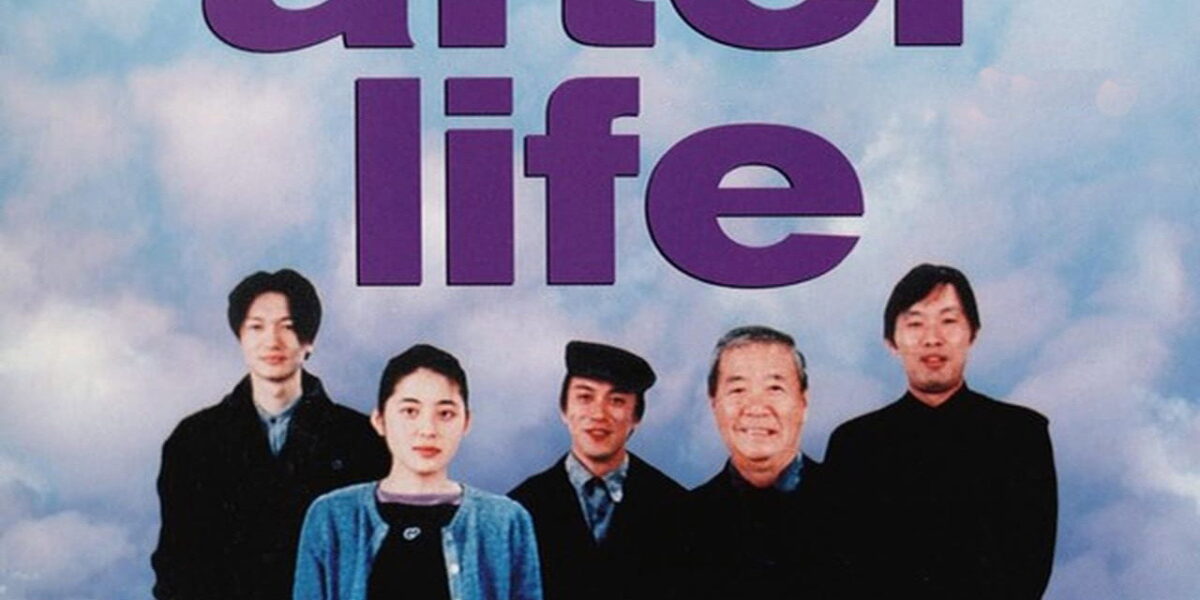
After Life: Honest Review — Is It Worth Watching? | 7.2/10
After Life is the kind of film that quietly demolishes you, leaving you sitting in the dark long after the credits roll. Kore-eda’s 1999 masterpiece isn’t interested in easy answers or sentiment—it’s a profound interrogation of what memory means when everything else is gone.
| Director | Hirokazu Kore-eda |
| Cast | Arata Iura, Erika Oda, Susumu Terajima, Takashi Naito, Kei Tani |
| Runtime | 118 min |
| Genre | Fantasy, Drama |
| Year | 1999 |
The plot (no spoilers)
After Life operates on a deceptively simple premise: the recently deceased arrive at a way-station office where counselors help them select one memory to carry into eternity, which then gets filmed and preserved forever. It sounds like a concept that could veer into whimsy or maudlin territory, but Kore-eda’s touch is surgical, never sentimental, always searching for the truth beneath the surface of human experience.
The film moves through vignettes—each arrival brings a different story, a different life, a different calculus of what makes existence worth remembering. The movie unfolds with the pace of a patient therapist’s notebook, building something genuinely transcendent through its refusal to rush or manipulate emotion. You’re watching people grapple with finality in real time, and it’s absolutely mesmerizing.
Acting & direction
The ensemble work here is subdued but piercing—Arata Iura as the lead counselor carries the film with a quiet exhaustion that speaks volumes, while Erika Oda brings vulnerable specificity to her role as a younger staffer wrestling with her own unresolved grief. Nobody overplays here; everyone understands they’re working in a register of profound restraint where a glance means more than a monologue.
Kore-eda’s direction is almost documentary in its clarity—he shoots the shabby office building with a kind of non-judgmental affection, letting fluorescent light and institutional beige become almost poetic through sheer commitment to authenticity. The cinematography never calls attention to itself, which is precisely the point; the film trusts that your attention will be captured by human stories, not technical flourish. The score is minimal, mostly silence, which amplifies every confession and hesitation.
The strengths
- The conceptual framework is bulletproof: asking people which memory defines their entire existence forces both characters and audience to interrogate what actually matters in a life.
- Each interview sequence functions as a complete emotional arc—some arrive as ten-minute stories that feel like entire films, each one specific and unrepeatable.
- The film’s refusal to judge what people choose is radical; a memory of eating noodles with someone you loved can be just as valid as a memory of achievement or romance.
- Kore-eda builds a cumulative effect where by the final third you’re experiencing something close to spiritual vertigo, caught between laughter and tears.
The weaknesses
- At two hours, the episodic structure occasionally feels repetitive—the formula of interview-selection-recreation can wear on patience if you’re not fully invested in the philosophical project.
- Some of the reconstructed memory sequences, while touching, veer into a slightly artificial quality that undercuts the film’s documentary-like naturalism elsewhere.
Who should watch it
This is essential viewing for devotees of contemplative cinema and anyone who’s ever felt the weight of mortality in an interesting way. If you’ve appreciated slow cinema, character-driven drama, or the philosophical depth of something like Ozu or late-career Bresson, After Life is non-negotiable. Skip it if you need plot momentum or conventional catharsis, but if you’re willing to sit with discomfort and ambiguity, you’ll find something genuinely transcendent.
Final verdict
After Life is one of the greatest films about what it means to be human ever made, arriving at its wisdom not through grand gestures but through the accumulation of small, true moments. It’s a film that respects both death and memory, treating them not as tragic abstractions but as the actual substance of lived experience. Two decades later, the film has only deepened—it’s patient, occasionally austere, sometimes devastating, and absolutely necessary cinema. Watch it. 8.5/10, absolutely earned.
Scopri di più su IMDB.
FAQ
Is After Life a horror film or something dark?
No—it’s a meditative fantasy-drama about the afterlife, but approached with poetic realism rather than supernatural dread or gothic imagery. The tone is contemplative and occasionally funny, never frightening.
Do you need to understand Japanese culture to appreciate it?
Not at all. The film operates on universal truths about memory, mortality, and meaning-making that transcend cultural specifics. The setting and characters are Japanese, but the themes are completely human.
How does After Life compare to other Kore-eda films?
It’s his most purely philosophical work—while his later films like Shoplifters focus on family structures, After Life is his grandest meditation on existence itself, less narrative-driven and more spiritually ambitious.
Is the pacing slow? Will I be bored?
Yes, it’s deliberately slow, but “slow” doesn’t mean boring if you surrender to it. The pacing is intentional—it mirrors the rhythm of grief and introspection. If you need constant movement, skip it.
What’s the ending like? Is it satisfying?
The ending is ambiguous and quietly devastating in the best way—it doesn’t resolve neatly, but it does provide profound emotional closure. It’s the kind of ending that haunts you afterward.