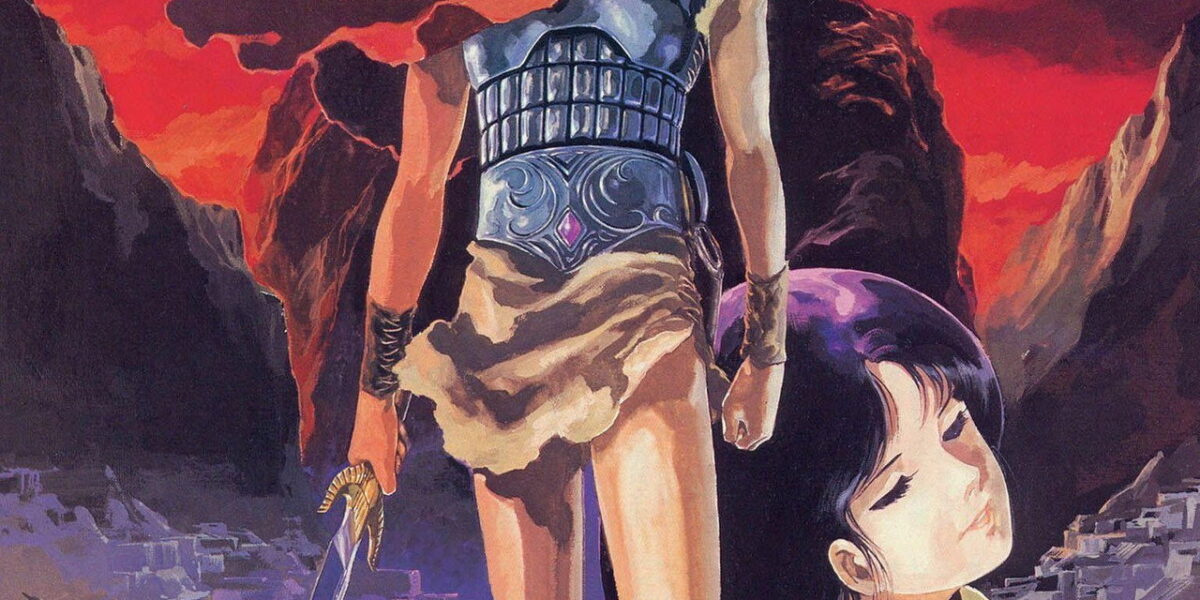
Arion: Honest Review — Is It Worth Watching? | 6.2/10
Arion is a gloriously deranged 1986 anime that takes Greek mythology and feeds it through a psychedelic blender, resulting in something that’s never boring but often incoherent. If you’re craving a genuinely weird hero’s journey that rejects convention at every turn, this film scratches that itch—though it’ll leave you frustrated by its own lack of discipline.
| Director | Yoshikazu Yasuhiko |
| Cast | Shigeru Nakahara, Miki Takahashi, Mayumi Tanaka, Hirotaka Suzuoki, Bin Shimada |
| Runtime | 119 minutes |
| Genre | Adventure, Action, Animation, Fantasy |
| Year | 1986 |
Arion: The plot (no spoilers)
Arion yanks the Greek pantheon into a dystopian fever dream where Hades raises a young warrior to believe Zeus blinded his mother and destroyed everything he loves. The revenge quest is the skeleton, but Yasuhiko uses it as an excuse to throw mythology’s rulebook into a incinerator and paint with the ashes. This isn’t Joseph Campbell—it’s Joseph Campbell after a three-day bender with a DJ turntable and a stack of occult manga.
The film moves through a landscape of grotesque beauty where gods are petty, technology contradicts mythology, and nobody seems sure what century they’re living in. Tone-whiplash is the entire aesthetic here—one scene drips with operatic tragedy, the next cuts to something that feels like a 1980s rock video. You’ll spend two hours either entranced by the weirdness or checking your watch, possibly both simultaneously.
Acting & direction
Shigeru Nakahara voices Arion with a brittle intensity that mirrors the character’s psychological fracture, while Miki Takahashi brings warmth to moments of emotional fragility that the script barely earns. The supporting cast lands their moments without fanfare—Hirotaka Suzuoki and Bin Shimada give the antagonists enough complexity to avoid cartoon villainy. Voice work is committed across the board, even when the dialogue feels clunky.
Yoshikazu Yasuhiko’s direction is restless, almost manic—he can’t sit still visually, which creates tremendous energy but also occasional incoherence. The animation veers between stunning and budget-conscious within the same sequence, though the experimental character design and backgrounds compensate with sheer visual personality. The score pulses with synth and orchestral arrangements that feel deliberately at odds with the imagery, which is either genius or irritating depending on your tolerance for deliberate tonal friction.
The strengths
- The visual design is genuinely singular—character silhouettes, color palettes, and architectural choices feel pulled from nowhere else in 1986 anime, making the film visually unmistakable.
- The premise itself subverts mythological expectation by making the hero’s entire motivation a psychological con job, which is a genuinely bold narrative move that most filmmakers wouldn’t dare attempt.
- At its best, the film creates sequences of real emotional devastation—there’s a moment involving Arion’s mother that lands with unexpected force precisely because it contradicts the movie’s cartoonish surrounding elements.
- The action choreography, when it appears, has weight and consequence; this isn’t flashy ballet but brutal, exhausting combat that reads as meaningful.
The weaknesses
- The 119-minute runtime contains at least 30 minutes of pure narrative filler—montages, side quests, and world-building that don’t accumulate into anything substantial by the finale.
- The tonal instability, while often exciting, devolves into outright confusion by the third act, where you’re genuinely unsure what kind of story you’re watching or what it’s trying to say about faith, destiny, or family.
- Character development feels arbitrary because motivation is deliberately obscured, which works philosophically but fails dramatically—you don’t invest in Arion’s journey because you’re never entirely sure what he wants.
- The ending is a philosophical cop-out that suggests the entire film was thematic posturing rather than emotional catharsis, leaving you exhausted rather than satisfied.
Who should watch it
You’re the target audience if you worship experimental animation, respect filmmakers who swing for artistic ambition over accessibility, and have patience for mythological retellings that treat source material as a jumping-off point rather than gospel. Fans of director Yasuhiko’s other work, readers of challenging manga adaptations, and anyone who thinks mainstream anime plays it too safe should absolutely devote two hours here. This isn’t a film for comfort viewing—it’s for the cinephile who wants to be challenged, provoked, or at minimum genuinely surprised by what they’re watching.
Final verdict
Arion is a swinging-for-the-fences misfire that respects your intelligence even when it loses the plot entirely. The film has moments of genuine artistic ambition—visual sequences and character revelations that justify the entire experiment—but they’re padded with self-indulgent detours that test patience. If you want a 1980s anime that refuses mainstream compromise and wears its weirdness as a badge of honor, this delivers; if you want narrative coherence or emotional payoff, you’ll leave frustrated. It’s a 6 because it’s fascinating enough to finish but flawed enough to regret the investment.
FAQ
Is Arion based on Greek mythology?
Loosely. The film uses Greek gods and the hero-versus-gods framework as a skeleton, then strips the meat off and reconstructs something entirely new—Hades as a father figure, Zeus as a distant tyrant, and the entire cosmology reframed as psychological warfare rather than divine order.
Who directed Arion?
Yoshikazu Yasuhiko, a legendary anime director known for experimental visual storytelling and willingness to sacrifice accessibility for artistic vision. His direction here is deliberately fractured to match the protagonist’s fractured worldview.
How long is the film?
Two hours and nineteen minutes—longer than necessary, and the pacing issues become impossible to ignore in the third act when repetitive sequences feel like padding.
What language is Arion in?
Japanese with original voice acting. No English dub exists in standard distribution, so you’re committed to subtitles or the Japanese audio if you have any familiarity with the language.
Should I watch Arion if I like Neon Genesis Evangelion?
Yes, with caveats. Both feature deliberately ambiguous morality, fractured protagonists, and visual experimentation, but Arion lacks Evangelion’s emotional scaffolding—you’ll admire it more than connect with it.