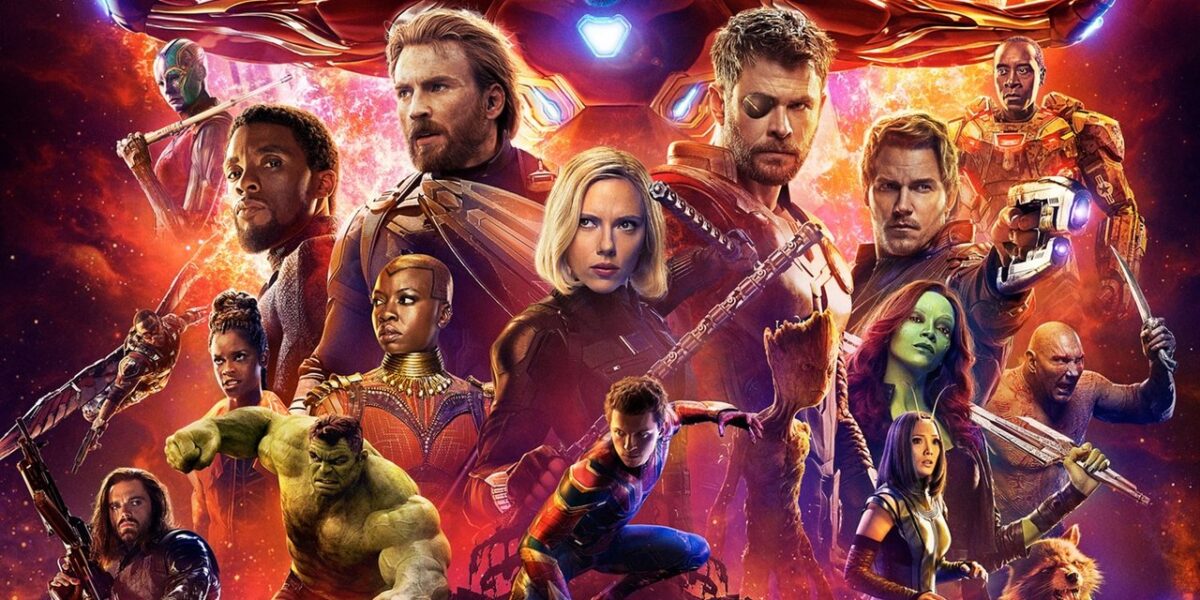
Avengers: Infinity War: Ending Explained — Ultimate Breakdown
Few cinematic endings have detonated across popular culture with the seismic force of Avengers: Infinity War. Anthony Russo and his brother Joe orchestrated something genuinely audacious: a superhero epic that ends in total, devastating defeat. But what appears on the surface as a villain’s triumph is, under closer scrutiny, one of the most layered and philosophically charged finales in blockbuster history. This analysis tears apart every thread of that shattering conclusion.
Avengers: Infinity War: What happens at the end
After assembling all six Infinity Stones into the Infinity Gauntlet, Thanos — portrayed with terrifying gravitas by Josh Brolin — snaps his fingers on the planet Wakanda. The gesture is almost casual, which makes it all the more horrifying. Heroes and civilians across the universe begin dissolving into ash, disintegrating mid-sentence, mid-breath. Black Panther, Spider-Man, Doctor Strange, Bucky Barnes — one by one, the people the Avengers swore to protect simply cease to exist.
The survivors are left standing in devastated silence: Tony Stark, Steve Rogers, Thor, Hulk, Black Widow, among a handful of others. Meanwhile, Thanos retreats to a peaceful, sun-drenched alien planet, sitting alone on the steps of a hut, watching a golden sunrise with quiet satisfaction. The film’s final image is not fire and chaos — it is serenity. That deliberate, maddening tranquility is the ending’s most provocative and meaningful choice.
The deeper meaning
The ending forces us to confront an uncomfortable idea: that Thanos believes he is the hero of this story, and the film — crucially — never fully dismantles that belief within its own runtime. His snap is framed as a sacrifice narrative, complete with the murder of Gamora, the one being he claims to love. The metaphor of balance-through-erasure mirrors real-world ideological extremism dressed in utilitarian logic, making the film a surprisingly sharp parable about fanaticism and the seduction of absolute conviction.
Anthony Russo’s directorial intention was to subvert the grammar of the superhero genre entirely. Every structural expectation — that heroes regroup, rally, and prevail — is systematically dismantled. By handing the narrative architecture to Thanos rather than the Avengers, the Russo brothers reframe the entire MCU as seen from the villain’s perspective. The result is a film about the terrifying coherence of a broken worldview, and how easily righteousness can dress up as mercy.
Hidden details & easter eggs
One of the most haunting hidden details involves Doctor Strange, played by Benedict Cumberbatch. Earlier in the film, he uses the Time Stone to view over fourteen million possible futures, declaring that the Avengers win in only one. When he willingly surrenders the Stone to save Tony Stark‘s life, his parting words — “It was the only way” — retroactively transform his apparent defeat into a calculated move, a single thread of foreshadowing woven with extraordinary precision into what looks like total collapse. You can find more details about the film on IMDB.
Connections to the rest of the film
The ending pays off a remarkable structure of foreshadowing seeded throughout the film’s entire runtime. Tony Stark‘s recurring anxiety dreams about global catastrophe, established years earlier in Iron Man 3, finally find their dark fulfillment here. The red herring of Wakanda as an unassailable fortress, the apparent invincibility of Vision‘s Mind Stone, even Thor‘s near-fatal blow to Thanos — every moment of near-victory is structurally engineered to amplify the weight of the eventual, total defeat.
Fan theories
The most compelling fan theory argues that Doctor Strange orchestrated the entire sequence of events — that every hero’s failure was intentional, a necessary step in the one winning future he foresaw. Evidence strongly supports this: his inexplicable decision to save Stark despite earlier vowing to protect the Stone above all else. A counterargument holds that Strange simply recognized Tony as irreplaceable to the eventual solution, rather than controlling every outcome. A third theory suggests the souls of the disintegrated are trapped inside the Soul Stone, a reading supported by a brief orange-tinted dimension glimpsed after the snap.
FAQ
Why did Doctor Strange give Thanos the Time Stone?
Doctor Strange surrendered the Time Stone because saving Tony Stark‘s life was the necessary condition for the single future in which Thanos is ultimately defeated. It was a deliberate strategic sacrifice, not a surrender.
Are the characters who dissolved actually dead?
The disintegrated characters are not permanently dead in a conventional sense. Evidence — including the brief glimpse of a soul realm — suggests they exist in a suspended state, eventually reversed in Avengers: Endgame through the Gauntlet’s power.
Why does Thanos look peaceful at the end of the film?
Thanos achieved his singular, lifelong mission and paid what he considered the ultimate personal price by killing Gamora. His tranquility reflects a warped but internally consistent sense of completion and self-righteous relief.
What is the significance of the sunrise in the final shot?
The sunrise is a deliberate visual irony — it symbolizes new beginnings and hope, yet follows the greatest act of mass destruction in the universe. It underscores Thanos‘s delusional belief that he has given existence a merciful fresh start.
Why did the Russo brothers end the film on a villain’s victory?
The Russo brothers chose defeat to structurally honor the film’s premise as the first half of a two-part story, and to challenge audience expectations so fundamentally that the emotional stakes of Endgame would carry genuine, unprecedented weight.