Batman: Knightfall Part 1: Knightfall: Ending Explained — Ultimate Breakdown
Batman: Knightfall Part 1: Knightfall arrives in 2026 as one of the most anticipated animated features in DC’s recent history, and its ending demands serious critical attention. Directed by Jeff Wamester, this 79-minute film compresses one of comics’ most legendary arcs into a relentless, punishing portrait of a hero stretched beyond all human endurance. What unfolds in its final act is not merely a fight — it is a philosophical reckoning with the very idea of what Batman means.
Batman: Knightfall Part 1: Knightfall: What happens at the end
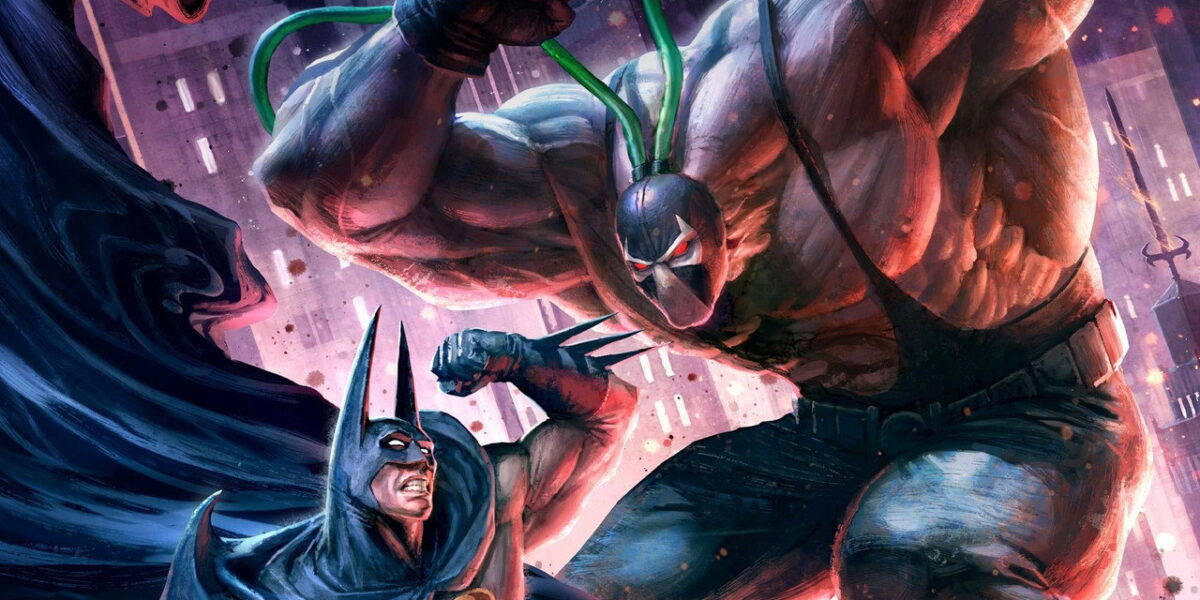
The film’s climax erupts after Batman has spent days — perhaps weeks — relentlessly hunting down escaped Arkham inmates across a brutalized Gotham City. Each confrontation costs him dearly: fractured bones, internal damage, psychological erosion. By the time he faces Bane, voiced with terrifying physicality by Pablo Schreiber, the Dark Knight is already a broken instrument. The final battle is not dramatic in the traditional sense — it is devastatingly one-sided from the very first blow.
Bane does not simply defeat Batman — he dissects him. He has studied every patrol route, every combat pattern, every psychological tell. He infiltrates Wayne Manor itself, violating the one sanctuary Bruce Wayne, voiced with wounded gravity by Anson Mount, believed inviolable. In the film’s most shattering moment, Bane raises Batman’s broken body and snaps his spine across his knee — a sequence rendered here with unflinching, operatic brutality that earns every second of its horror.
The deeper meaning
The broken spine is not merely physical destruction — it is a metaphor for the collapse of an ideology. Batman has always operated on the belief that willpower alone can overcome any obstacle. Bane systematically dismantles that belief, not through chaos but through cold, surgical intelligence. The ending forces us to confront an uncomfortable truth: obsession, even noble obsession, creates exploitable blind spots. Wamester‘s film argues that the myth of the invincible protector is itself a dangerous fiction that Gotham desperately needs to believe.
Jeff Wamester frames the final confrontation inside Wayne Manor with devastating intentionality. The home represents inherited identity — the burden and armor of the Wayne legacy. By violating this space, Bane symbolically destroys the origin story that created Batman, the childhood grief that became a crusade. The director’s choice to keep the lighting cold and institutional during the breaking sequence strips away all heroic romance, leaving only flesh, failure, and the unbearable silence of a city that does not yet know its guardian has fallen.
Hidden details & easter eggs
Sharp-eyed viewers will notice that throughout the film, Batman’s suit accumulates visible damage that is never repaired — each crack in the cowl and tear in the cape functions as a visual countdown, a quiet foreshadowing of the inevitable. The Arkham breakout sequence contains brief silhouettes of villains clearly belonging to future installments, suggesting a carefully architected universe. Jeff Bennett’s vocal performance as Alfred includes a heartbreaking line early in the film — “You cannot carry Gotham forever, sir” — that retroactively becomes the film’s thesis statement.
Connections to the rest of the film
The ending’s power is inseparable from the film’s meticulous structure of cumulative exhaustion. Every encounter — Scarecrow, Riddler, Poison Ivy, and others voiced across the cast — is engineered as a deliberate act of attrition. Wamester employs foreshadowing through repeated close-ups of Batman’s hands trembling after combat, a detail so subtle it registers subconsciously. By the time Bane, voiced with predatory patience by Michael Mando, finally moves against Batman, the audience has been conditioned to feel the hero’s physical limits as viscerally as he does.
Fan theories
One compelling theory suggests that Bane deliberately orchestrated the Arkham breakout not merely as distraction but as a psychological experiment — testing which enemies could actually wound Batman emotionally versus physically, gathering data. Evidence includes Bane’s eerily specific knowledge of each battle’s aftermath. A contrasting theory proposes that Bruce Wayne subconsciously allowed himself to be broken, his death wish finally finding an acceptable vessel. Both readings are supported by Anson Mount’s performance, which carries a haunting undercurrent of surrender beneath its fierce determination. You can explore further context on IMDB.
FAQ
Does Batman actually die at the end of Knightfall Part 1?
No — Batman survives but is catastrophically injured when Bane breaks his spine. The film ends with Bruce Wayne incapacitated, setting up the question of who will protect Gotham in his absence.
Why does Bane break Batman’s back inside Wayne Manor?
Bane chooses Wayne Manor deliberately to maximize psychological devastation — violating Batman’s most private sanctuary proves that no fortress, physical or symbolic, can protect him.
Who voices Bane in Batman: Knightfall Part 1?
Pablo Schreiber voices Bane, delivering a performance of controlled, intellectual menace that distinguishes this incarnation from more physically brutish interpretations of the character.
Is the Arkham breakout connected to Bane’s plan from the beginning?
The film strongly implies — though never explicitly confirms — that Bane engineered or exploited the Arkham breakout as a calculated strategy to physically and mentally exhaust Batman before their confrontation.
What does the ending set up for Part 2?
With Batman broken and Gotham unprotected, the ending creates a power vacuum. The central question of any continuation will be who assumes the mantle — and whether Bruce Wayne can reclaim what Bane has destroyed.