Blue: Honest Review — Is It Worth Watching? | 0.0/10
Blue is a suffocating night-trap that swings between unflinching social realism and self-indulgent melodrama, never quite deciding what it wants to say about complicity and survival.
Eleonora Puglia’s feature debut has ambition and teeth, but it mistakes grimness for depth and watches its protagonist’s descent without offering much light—or truth—in return.
| Director | Eleonora Puglia |
| Cast | Alexia Cozzi, Shaen Barletta, Aurora Moroni, Rocco Siffredi, Pierangelo Menci |
| Runtime | 83 min |
| Genre | Drama |
| Year | 2026 |
Blue: The plot (no spoilers)
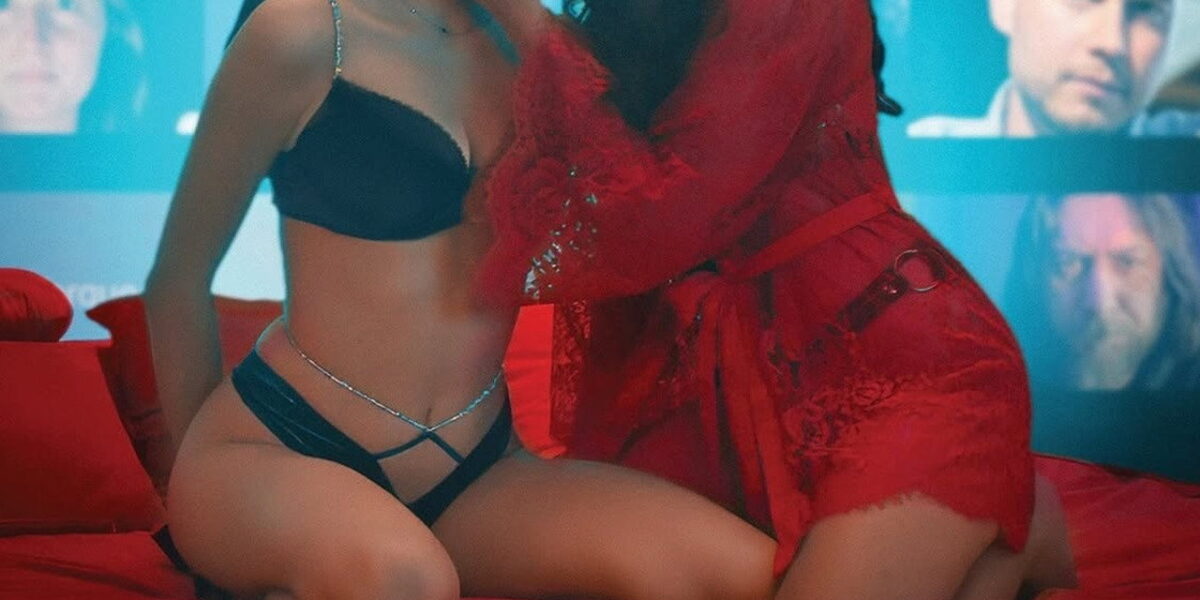
Blue trades comfort for claustrophobia—Luce is a decent kid from a decent family who falls for Loris, a walking red flag drowning in debt, and because love makes us stupid, she agrees to descend into the sex-work underworld to fix his problems instead of, you know, leaving him at the train station. The film traps you in one room for most of its runtime, watching her choices calcify from desperation into something darker.
Puglia stages this as a psychological descent, all tight framing and suffocating dialogue, with the tagline “One Room. One Night. A Thousand Pieces” promising real trauma and moral reckoning. What you actually get is a 83-minute guilt trip that mistakes punishment for character development and seems genuinely angry at its protagonist for being desperate enough to take terrible options.
Acting & direction
Alexia Cozzi carries the film on her back with a performance that starts fragile and ends numb—she’s excellent at conveying the moment your brain stops protecting you from what you’re doing. Aurora Moroni as Vittoria, the friend-turned-manipulator, has real menace in her voice, though the script doesn’t give her enough complexity to be truly frightening. Rocco Siffredi appears briefly and mostly confirms why he’s better known for other work.
Puglia shoots like someone who learned cinema from midnight internet rabbit holes—there’s aggressive close-ups, ugly lighting that looks intentional but feels cheap, and a score that swells at moments meant to feel quiet. The pacing is relentless in a way that feels punitive rather than urgent, like she’s testing how much discomfort you can take before you check your phone.
The strengths
- Cozzi’s performance genuinely breaks your heart because she refuses to make Luce sympathetic in the expected way—there’s selfishness, cowardice, and complicity all living in her eyes at once.
- The film understands that debt and desperation don’t ask permission before they destroy you, and it refuses to soften that reality with third-act redemption.
- Puglia commits fully to the suffocation of the setting, never cutting away when every instinct tells you to look elsewhere.
The weaknesses
- The script confuses moral ambiguity with actual complexity—every character outside the room exists only as a function of Luce’s guilt, not as a human being with their own weight to carry.
- By hour two, the film has said everything it has to say, but it keeps hammering the same note until you’ve gone numb, which might be intentional but feels more like a lack of discipline.
Who should watch it
This is for people who survived Lars von Trier’s Antichrist and wanted the experience to be even more punishing, or viewers interested in Italian social realism that refuses optimism. It’s not a date night, a feel-good gateway, or a comfort viewing. It’s for folks who believe cinema should make you feel worse before (maybe) it makes you feel anything at all.
Final verdict
Blue is competent and committed but ultimately hollow—it has the shape of a tragedy without the architecture to make one land emotionally. Puglia has a voice, certainly, but here it’s one that mistakes cruelty for honesty and endurance for meaning. The film works hardest when it’s smallest, just Cozzi and Moroni talking in the dark, but even then you’re watching something designed to hurt rather than illuminate. It’s not bad, exactly, but it’s also not essential.
FAQ
Is Blue appropriate for sensitive viewers?
No—the film contains explicit content, discussions of sex work, and deliberately depressing scenarios played without irony or comic relief. Fair warning.
How does Blue compare to other Italian dramas?
It’s harsher than Sorrentino, more focused than Linklater, but lacks the philosophical depth that makes bleak cinema worth rewatching. Think somewhere between transgressive and tedious.
Does the one-room setting work dramatically?
It works as a visual choice, but it also becomes a cage that suffocates narrative momentum by the third act—effective, not necessarily wise.
What’s the runtime and is it worth committing to?
83 minutes, but it moves like 120—not because it’s slow, but because the cumulative weight becomes exhausting without the intellectual payoff to justify it.
Will there be a wider release for Blue?
Check IMDB for festival screening dates and distribution news, but expect limited theatrical run rather than multiplex saturation.
Tags: Blue film review, Italian drama 2026, Eleonora Puglia, Alexia Cozzi, independent cinema