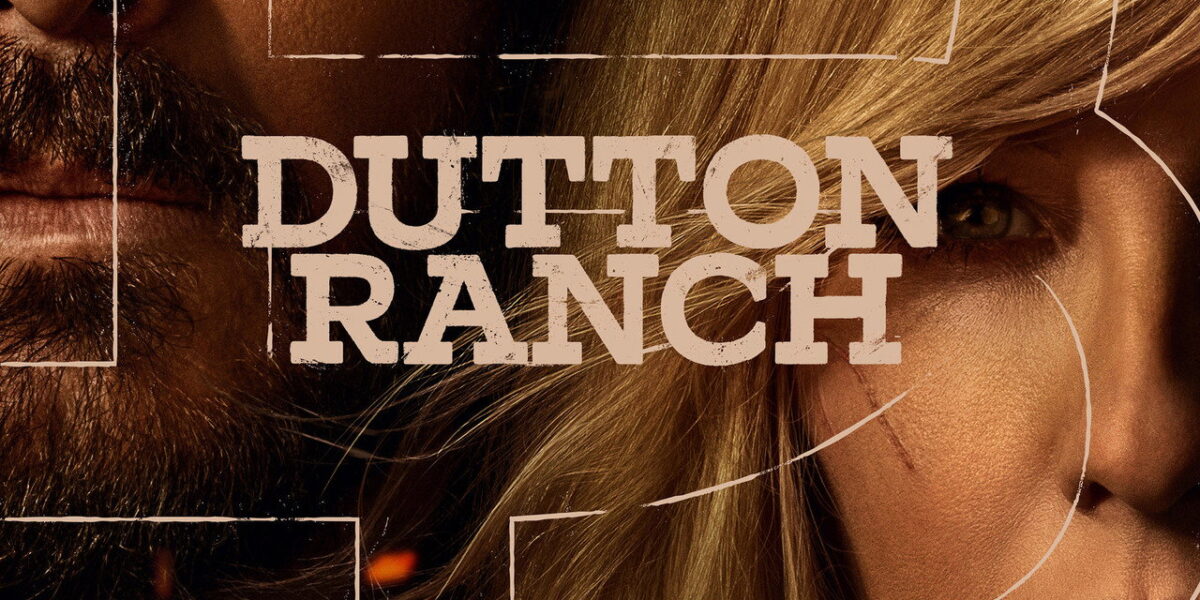
Dutton Ranch: Ending Explained — Ultimate Breakdown
Dutton Ranch arrives in 2026 as one of the most anticipated spinoffs in modern television, transplanting two of the Yellowstone universe’s most magnetic souls — Beth Dutton and Rip Wheeler — into the unforgiving sun-scorched terrain of South Texas. Created by Chad Feehan, the series asks a deceptively simple question: can people forged in violence ever truly escape it? The ending delivers an answer that is equal parts devastating and luminous, demanding careful unpacking. Find the series listed on IMDB.
Dutton Ranch: What happens at the end
The finale of the series brings the conflict with the rival ranch to a violent and irreversible head. Rip Wheeler, played with coiled ferocity by Cole Hauser, confronts the patriarch of the opposing empire in a confrontation that strips both men down to raw instinct. The land dispute, which has been escalating across the entire season, finally collapses into bloodshed, forcing Beth and Rip to make a choice that cannot be undone and that will define every day that follows.
What makes the ending genuinely surprising is the pivot toward restraint at the exact moment the audience expects maximum explosion. Beth Dutton, portrayed with ferocious intelligence by Kelly Reilly, chooses negotiation over annihilation — not out of weakness, but out of a hard-won understanding that some wars consume the winner entirely. Young Carter, played by Finn Little, witnesses this decision, making him the moral witness whose gaze reframes the entire sequence as something closer to a lesson than a victory.
The deeper meaning
At its symbolic core, the ending is about the weight of inheritance — what we carry from the places and people that shaped us, and whether that weight can ever be set down. South Texas is not a fresh start; it is a mirror. The rival ranch, controlled by the ruthless empire built by the character portrayed by Juan Pablo Raba, functions as a metaphor for the Dutton legacy itself: powerful, territorial, and ultimately self-destructive if left unchecked.
Chad Feehan‘s intention appears rooted in a fundamental reexamination of the Western genre’s romance with dominance. Where classic Westerns reward conquest, Feehan’s work rewards survival through adaptation. Beth‘s choice to preserve rather than destroy is coded as the more radical act — one that requires burying a version of herself that the Yellowstone universe spent years celebrating. The director frames this not as surrender but as the most dangerous gamble two people can make: choosing a future over a mythology.
Hidden details & easter eggs
Sharp viewers will notice that the final scene is visually composed as a near-exact inversion of the series premiere’s opening shot. Where the first episode placed Rip alone against a vast sky, the finale frames both Beth and Rip against the same expanse but grounded, low, and together. The color palette shifts from the cold steel blues of Montana-adjacent memory into warm amber, a deliberate chromatic declaration of arrival. The boots Carter wears in the closing minutes are a quiet nod to a specific Yellowstone moment that long-term fans will recognize immediately and emotionally.
Connections to the rest of the film
The series plants its foreshadowing with remarkable precision. In the third episode, Beth tells Rip that “every place we’ve loved has tried to kill us,” a line that reads as dark humor in the moment but functions as a structural prophecy for the finale’s central crisis. The antagonist played by Jai Courtney is introduced through a land-registry dispute that seems procedural but is actually the narrative’s load-bearing wall — every act of violence in the final episodes flows directly from that seemingly bureaucratic scene.
Fan theories
One compelling theory argues that Carter‘s arc is secretly the spine of the entire series, and that the ending — read correctly — belongs to him rather than to Beth or Rip. Evidence includes the deliberate framing choices that place Finn Little‘s character in the foreground of the finale’s most consequential moments. A second theory suggests the rival ranch patriarch survives off-screen, setting up a second season confrontation. Against this reading, the narrative closure Feehan constructs feels genuinely terminal, not strategically ambiguous. A third interpretation holds that Beth‘s restraint is a trauma response rather than growth — a darker reading the text does not entirely discourage.
FAQ
Does Rip Wheeler survive the ending of Dutton Ranch?
Rip Wheeler survives the finale. His survival is not incidental but thematic — the series deliberately refuses to martyrize him, insisting instead on the harder story of a violent man learning to live.
What does Beth’s final decision mean for her character?
Beth Dutton‘s choice to negotiate rather than destroy signals a genuine psychological evolution, representing the first time in the Yellowstone universe she prioritizes a future over a fight.
Who is the main villain in Dutton Ranch?
The primary antagonist is the rival ranch empire controlled by the character played by Juan Pablo Raba, whose ruthless defense of his territory serves as the season’s central dramatic engine.
Is Dutton Ranch connected to Yellowstone’s original timeline?
The series functions as a direct spinoff, carrying forward the characters of Beth and Rip after the events of Yellowstone, though it establishes its own self-contained narrative world in South Texas.
Will there be a second season of Dutton Ranch?
As of the time of writing, a second season has not been officially confirmed, though the series’ exceptional TMDB rating of 9.4 and its open-ended character trajectories make renewal a strong narrative and commercial possibility.