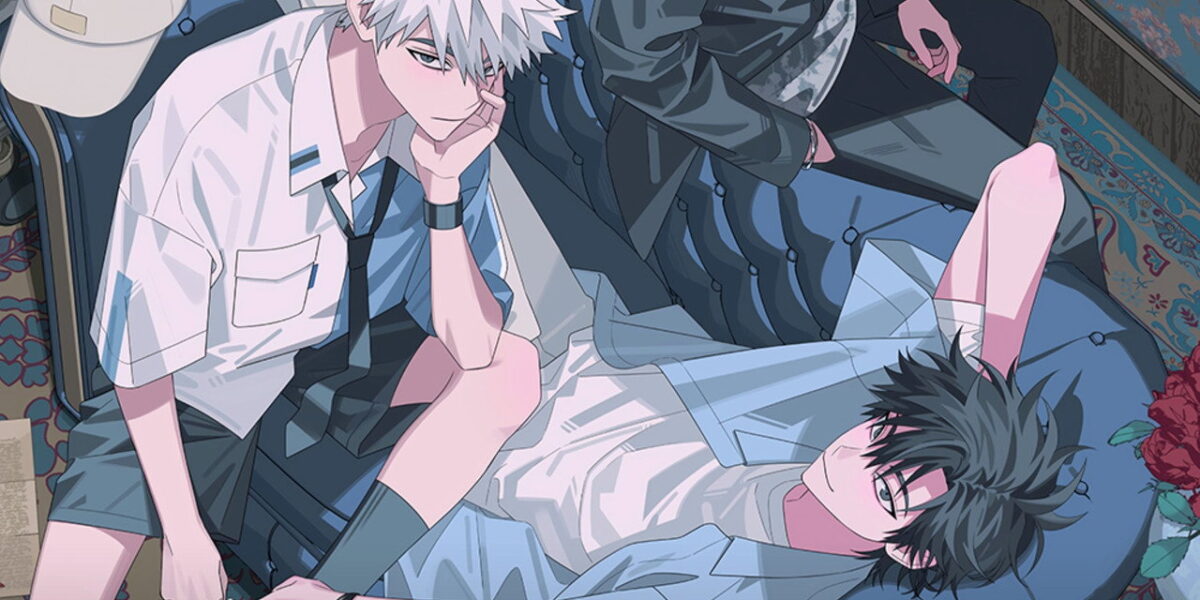
LINK CLICK: Ending Explained — Ultimate Breakdown
Link Click is one of the most emotionally devastating animated series to emerge from Chinese studios in years. Built on a deceptively simple premise — two young men with supernatural abilities who dive into photographs to fulfill client wishes — Li Haoling’s creation spirals into something far darker and more philosophically urgent than its charming surface suggests. What the ending ultimately reveals is not just a plot resolution, but a meditation on fate, grief, and the terrible cost of trying to rewrite what has already been lost.
Link Click: What happens at the end
As the series builds toward its climax, Cheng Xiaoshi and Lu Guang‘s partnership fractures under the weight of secrets and impossible choices. The central mystery surrounding Emma and the serial killer case converges violently, forcing both protagonists into decisions that cannot be undone. Cheng Xiaoshi, driven by raw emotional impulse, breaks the cardinal rule of their power — changing the past — with consequences that ripple catastrophically into the present. The final scenes are not triumphant; they are haunted, suspended between resolution and irreversible loss.
The most shattering twist arrives when Lu Guang‘s true vulnerability is exposed — not merely physical but existential. His ability to foresee outcomes has always carried a hidden burden: he has seen exactly how things end, and has been steering events accordingly, protecting Cheng Xiaoshi at enormous personal cost. The ending crystallizes around this sacrifice, revealing that Lu Guang‘s cold, calculated demeanor was never detachment — it was anguish contained with extraordinary discipline. The final image leaves their fate deliberately unresolved, demanding the audience sit inside the uncertainty.
The deeper meaning
At its core, the ending of Link Click is a profound metaphor for the human inability to accept loss. Every client who visits the Time Photo Studio does so because they cannot let go — of a loved one, a moment, a version of themselves. Cheng Xiaoshi and Lu Guang become mirrors of this universal wound. The photograph, as an object, freezes time; their power literalizes what every grieving person secretly wishes for — the ability to step back inside what is gone. The ending forces both characters, and the audience, to confront why that wish is ultimately destructive.
Li Haoling seems to be arguing something radical: that remembrance must remain remembrance, untouched by revision. The tagline — “Past or future, just let them be” — is not passive resignation but an act of profound courage. To let the past exist as it was, without interference, is the hardest form of acceptance. The director constructs the ending as a kind of moral reckoning, where the very superpower that made our heroes feel godlike becomes the instrument of their undoing, because no one — not even someone who can see the future — should play at being fate.
Hidden details & easter eggs
Attentive viewers will notice that photographs throughout the series are framed with subtle compositional asymmetry — one side always slightly darker, one figure always slightly off-center. This is not aesthetic accident. Li Haoling uses visual imbalance as a persistent foreshadowing device: the world of memory is never whole, always tilted toward absence. Additionally, the color palette of scenes set inside photographs leans warmer, almost sepia-saturated, while the present-day sequences use cooler, more clinical tones — a chromatic argument that the past feels more emotionally alive precisely because it is unreachable. Find the series on IMDB for further production details.
Connections to the rest of the film
The ending’s emotional power is inseparable from the series’ earliest episodes, which establish Cheng Xiaoshi‘s impulsiveness and Lu Guang‘s restraint as apparent opposites. What the finale reveals is that this dynamic was always a single organism — each compensating for the other’s blind spot. The foreshadowing embedded in episode two, where Lu Guang warns that “some outcomes cannot be undone no matter how clearly you see them,” reads entirely differently on a second viewing. It is not a general rule about their power; it is a personal confession about something he has already foreseen and accepted about his own fate.
Fan theories
One prominent fan theory argues that Lu Guang has known since the series’ first episode exactly when and how he would be gravely harmed, and that every cold, strategic decision he makes is an attempt to ensure Cheng Xiaoshi survives beyond that point — essentially, that the entire series is Lu Guang‘s extended farewell. The evidence is compelling: his emotional withdrawal, his insistence on rules, his habit of positioning himself between Cheng Xiaoshi and danger. Against this theory, some argue that his foreknowledge has documented limits, making such long-range planning implausible within the established logic of his abilities.
FAQ
Does Lu Guang die at the end of Link Click?
Lu Guang is left in a critically ambiguous state by the season’s end — gravely wounded and unresponsive. The series deliberately withholds a definitive answer, using his fate as the primary narrative hook driving audience anticipation for the next season.
Why did Cheng Xiaoshi break the rules and change the past?
Cheng Xiaoshi breaks the cardinal rule of their power out of emotional desperation — he cannot accept a loss he believes is preventable. His impulsiveness, coded throughout the series as both his greatest strength and his fatal flaw, finally overcomes the restraint Lu Guang has worked to instill in him.
What is the significance of the tagline “Past or future, just let them be”?
The tagline functions as the series’ central moral thesis: that intervention in fixed time — however well-intentioned — causes more harm than the original wound. It reframes acceptance not as weakness but as the most difficult and courageous act a person can perform.
Who is the true villain in Link Click?
The serial killer arc introduces a conventional antagonist, but the series frames grief itself as the deeper, more insidious villain — the force that drives clients, and ultimately the protagonists, into choices that unravel lives. External evil and internal human longing are presented as deeply intertwined.
Will there be a continuation explaining the ending?
Yes — Link Click has continued across multiple seasons, with subsequent installments directly addressing the cliffhanger. The creators structured the ending as an intentional narrative pause rather than a conclusion, embedding unresolved threads designed to be excavated in future episodes.
“`