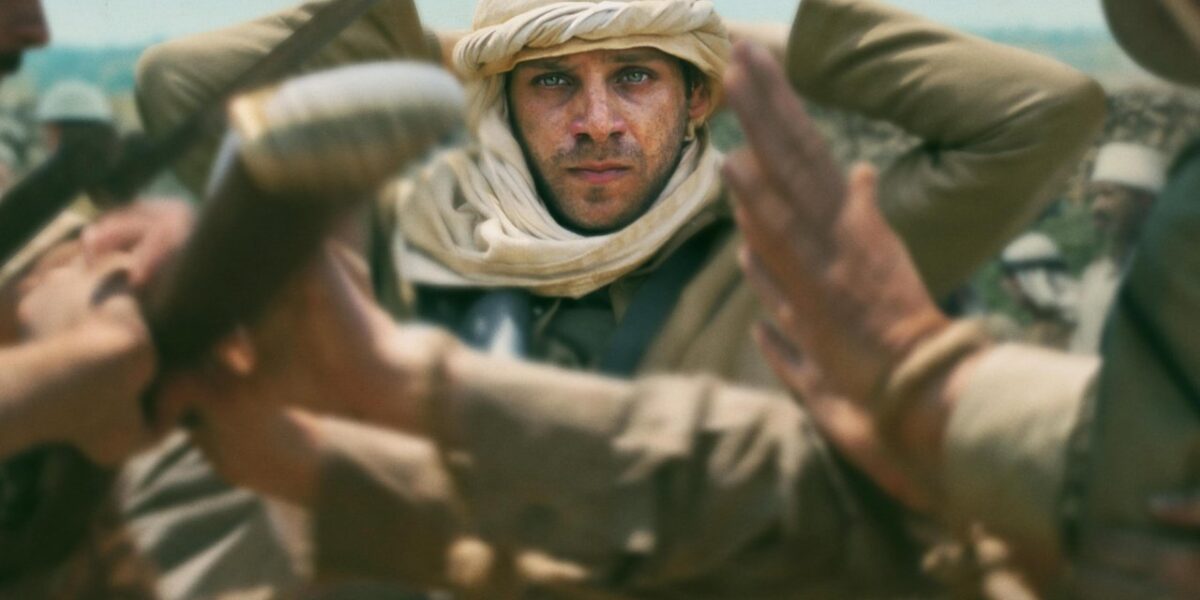
Palestine 36: Honest Review — Is It Worth Watching? | 7.8/10
Palestine 36 is a furious, sweeping chronicle of the 1936 Arab Revolt that demands your attention with its refusal to sentimentalize history or reduce colonial violence to footnotes. Annemarie Jacir’s film isn’t comfortable cinema, but it’s the kind of unflinching historical drama that sticks in your chest long after the credits roll.
| Director | Annemarie Jacir |
| Cast | Karim Daoud Anaya, Hiam Abbass, Robert Aramayo, Billy Howle, Dhafer L’Abidine |
| Runtime | 120 min |
| Genre | Drama, History, War |
| Year | 2025 |
Palestine 36: The plot (no spoilers)
Palestine 36 follows Yusuf, a young man caught between the quiet rhythms of rural Palestinian life and the gathering storm of organized resistance in Jerusalem as Britain tightens its imperial grip and Jewish immigration accelerates. The film doesn’t treat 1936 as ancient history—it feels urgent, immediate, like watching a pressure cooker seconds before it explodes. You’re watching real people make impossible choices under occupation.
This is anchored history, not Hollywood spectacle. The movie privileges intimate moments alongside mass upheaval, so you get the texture of daily life under colonial rule alongside the fever pitch of the streets. Jacir builds tension through accumulation rather than melodrama, which means the pacing demands patience but also earns its emotional weight in ways generic war films never could.
Acting & direction
Karim Daoud Anaya carries the film with a quiet intensity that’s almost painful to watch—his Yusuf embodies the paralysis of a generation watching history accelerate beyond their control. Hiam Abbass is magnificent as always, grounding every scene she inhabits with moral clarity and weariness. Robert Aramayo and Billy Howle bring unsettling complexity to their British colonial roles, refusing to play them as cardboard villains, which somehow makes the violence more horrifying.
Jacir’s direction is all controlled precision and restrained fury—she shoots colonial spaces with a cold eye that exposes their ugly machinery without needing to shout about it. The cinematography captures both the suffocating intimacy of occupied villages and the sprawl of Jerusalem’s fractured streets. The score knows when to disappear entirely, letting violence and silence do the psychological work, which is far more effective than melodic manipulation.
The strengths
- The film refuses the comfort of moral simplicity, letting British soldiers be human while never excusing their occupation, a balance most historical dramas completely botch.
- The ensemble cast delivers performances so naturalistic you forget you’re watching actors—there’s no grandstanding, just flesh and blood under pressure.
- Jacir captures the texture of 1936 Palestine with archaeological precision, from the fabric of daily life to the shattering speed with which politics consume everything.
- The pacing, while demanding, creates genuine dread—you feel the uprising building like a storm system, and the tension is earned rather than manufactured.
The weaknesses
- At two hours, the film occasionally sags between its most potent scenes, and some supporting characters dissolve into the background without registering as fully formed presences.
- The screenplay sometimes relies on exposition dialogue that flattens the subtlety Jacir achieves through her visual language, pulling you out of immersion.
- The second act meanders when it could cut deeper, giving you moments of narrative treading water that frustrate rather than deepen the portrait.
Who should watch it
If you live for historical dramas that dare to complicate their subjects—think closer to The Battle of Algiers than typical prestige cinema—Palestine 36 is essential. You need patience for slow-burn storytelling, genuine interest in colonial history, and the stomach for depicting occupation without sanitizing it. This isn’t comfort viewing; it’s confrontational cinema that respects your intelligence.
Final verdict
Palestine 36 is a vital, brutal portrait of a moment when an entire population decided they’d had enough of empire, told with the moral seriousness it deserves. Jacir doesn’t give you easy answers or Hollywood catharsis—she gives you history as it actually felt to live it, which is far more valuable. The film stumbles occasionally in execution, but its commitment to refusing simplification and its willingness to sit in moral ambiguity make it unmissable for serious cinephiles and anyone hungry for cinema that takes its political responsibility seriously. A strong 7.8/10.
FAQ
Is Palestine 36 based on a true story?
Yes, it’s set during the 1936–1939 Arab Revolt against British colonial rule in Palestine, one of the largest uprisings against British imperial dominion. While the main character Yusuf is fictional, the historical events and political pressures are meticulously researched.
Who directed Palestine 36?
Annemarie Jacir directed the film. She’s a Palestinian filmmaker known for her unflinching approach to political cinema and her ability to balance intimate character work with sweeping historical scope.
How long is Palestine 36?
The film runs 120 minutes, which is substantial but justified by its deliberate pacing and refusal to rush through the psychological weight of occupation and uprising.
What is the TMDB rating for Palestine 36?
Palestine 36 holds a 7.8/10 on TMDB, reflecting strong appreciation for its historical authenticity and performances, though some critics note the uneven pacing in the second act.
Does Palestine 36 have graphic violence?
Yes, the film depicts colonial violence and uprising brutality without sanitizing it. It’s not exploitative, but it’s unflinching—not suitable for viewers sensitive to realistic depictions of conflict.