Spider-Man: Into the Spider-Verse: Ending Explained — Ultimate Breakdown
Spider-Man: Into the Spider-Verse is not simply a superhero film — it is a love letter to identity, legacy, and the terrifying freedom of becoming yourself. Directed by Bob Persichetti alongside Phil Lord and Rodney Rothman, this 2018 animated landmark builds toward a finale so emotionally precise and visually radical that it demands to be decoded, not merely watched. This article dives deep into what that ending truly means.
Spider-Man: Into the Spider-Verse: What happens at the end
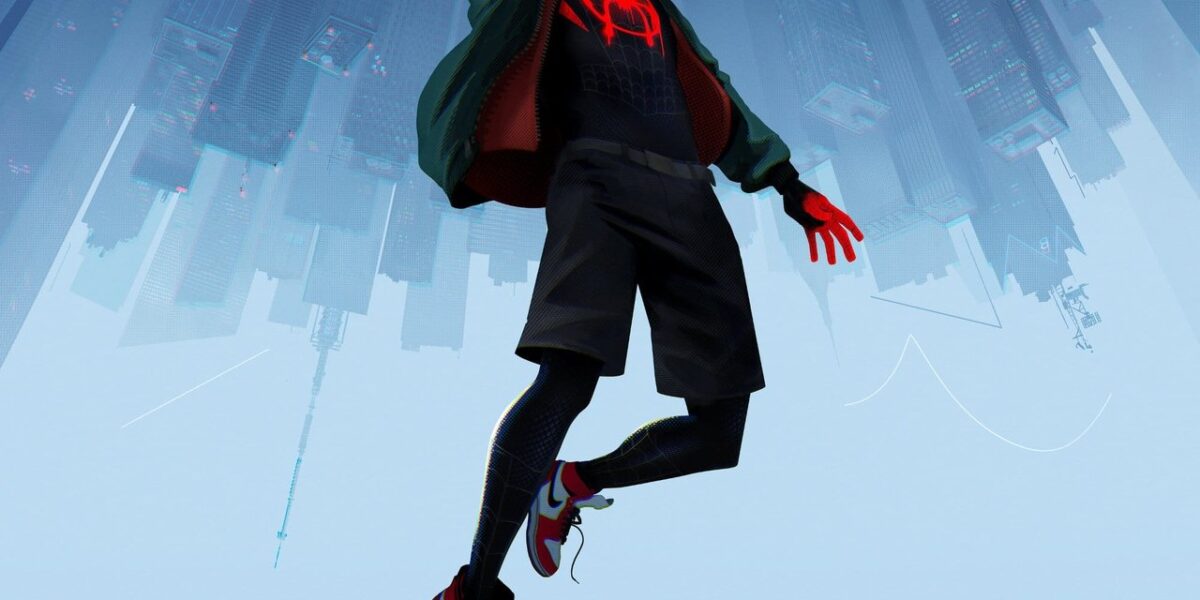
In the film’s climax, Miles Morales — having been locked away by his alternate-universe mentor Peter B. Parker to protect him — breaks free by fully embracing his powers for the first time. He leaps from his dorm window into freefall, finally achieving the invisible leap of faith that Peter B. described earlier. Miles arrives at Kingpin‘s collider facility wearing a newly customized Spider-Man suit, ready to fight alongside his interdimensional allies and send them home before the machine tears reality apart.
Each Spider-person — Spider-Gwen, Spider-Man Noir, Peni Parker, and Spider-Ham — fights their way to the collider while Miles confronts Kingpin directly. In a brutal, emotionally charged battle, Miles defeats Kingpin and destroys the collider, sending the others home safely. His father Jefferson Davis, unaware of his son’s identity, broadcasts a touching radio message praising Spider-Man — unknowingly praising Miles himself. The final image pulls back to reveal Spider-Gwen opening a portal to reconnect with Miles across dimensions.
The deeper meaning
The ending is a masterclass in the metaphor of inheritance versus originality. Miles does not simply become Spider-Man — he becomes his Spider-Man, repainting the suit in black and red, asserting ownership over a symbol that once felt foreign. The leap of faith is not about physical courage; it is about accepting uncertainty as the prerequisite for identity. You cannot know who you are until you stop waiting for permission to find out. That is the film’s most radical and generous gift to its audience.
Bob Persichetti and his co-directors embed a quietly revolutionary message: heroism is not genetic or exclusive — it is a choice available to anyone willing to fall before they fly. The film’s entire multiverse structure exists to prove this point. Every Spider-person, regardless of dimension, gender, or species, arrived at the mask through loss and resilience. By populating the screen with radically different Spider-people, the movie dismantles the myth that there is only one correct version of a hero, or of a person.
Hidden details & easter eggs
The final battle is packed with visual rewards for attentive viewers. Miles‘s upgraded suit subtly incorporates spray-paint textures — a nod to his graffiti artistry and his late uncle Aaron Davis, who first encouraged that passion. The collider’s destruction is rendered in a stunning chromatic explosion that mimics the aesthetic of classic comic book printing errors, known as Ben-Day dots, visually literalizing the idea of dimensions colliding. Additionally, sharp eyes will catch a tribute Stan Lee cameo in a photo on Miles‘s dorm wall during the closing scenes.
Connections to the rest of the film
The ending pays off an extraordinary web of foreshadowing established from the film’s opening minutes. Peter B. Parker‘s very first lesson — “at some point you have to take a leap of faith” — returns as the literal turning point of Miles‘s arc. Earlier, Miles accidentally sticks to Peter B.‘s hand, symbolizing his inability to let go and trust himself. His father’s radio message mirrors a earlier scene where Jefferson speaks through a closed door — the physical barrier between them dissolves by the finale, replaced by open, if indirect, connection.
Fan theories
One compelling theory argues that Miles‘s spider was not accidental — that Kingpin‘s collider had already begun destabilizing dimensional barriers before the film starts, allowing the spider from another universe to cross over and bite Miles. Evidence supports this: the spider carries a different universe marker. A second theory suggests Spider-Gwen had already visited Miles‘s dimension before the film begins, explaining her inexplicable familiarity with him at school. Both readings reward repeat viewings, though neither is explicitly confirmed — which is precisely the kind of elegant ambiguity great storytelling earns. You can explore cast and production details on IMDB.
FAQ
Does Miles Morales fully become Spider-Man by the end of the film?
Yes — but more importantly, he becomes his own Spider-Man. The ending marks not just a transfer of the mantle but Miles‘s assertion of a unique identity within it, symbolized by his redesigned black-and-red suit.
What is the leap of faith and why does it matter?
The leap of faith is the film’s central metaphor for self-acceptance. Miles must fall — literally and emotionally — before his powers fully activate, representing the necessity of vulnerability in discovering who you truly are.
Will Spider-Gwen and Miles ever meet again after the ending?
The final scene shows Spider-Gwen opening a dimensional portal directly to Miles, strongly implying their story continues — a promise fulfilled in the 2023 sequel Across the Spider-Verse.
Why does Jefferson not realize Miles is Spider-Man?
Jefferson Davis addresses Spider-Man through his police radio without seeing his son’s face. The scene is deliberately bittersweet — a father finally expressing pride in his son without knowing it, adding layers of emotional complexity to their relationship.
What happens to the other Spider-people after the collider is destroyed?
Each alternate Spider-person is safely returned to their home dimension the moment the collider is shut down. Peter B. Parker, the last to leave, shares a meaningful farewell with Miles that closes their mentor-student arc with warmth and earned emotion.