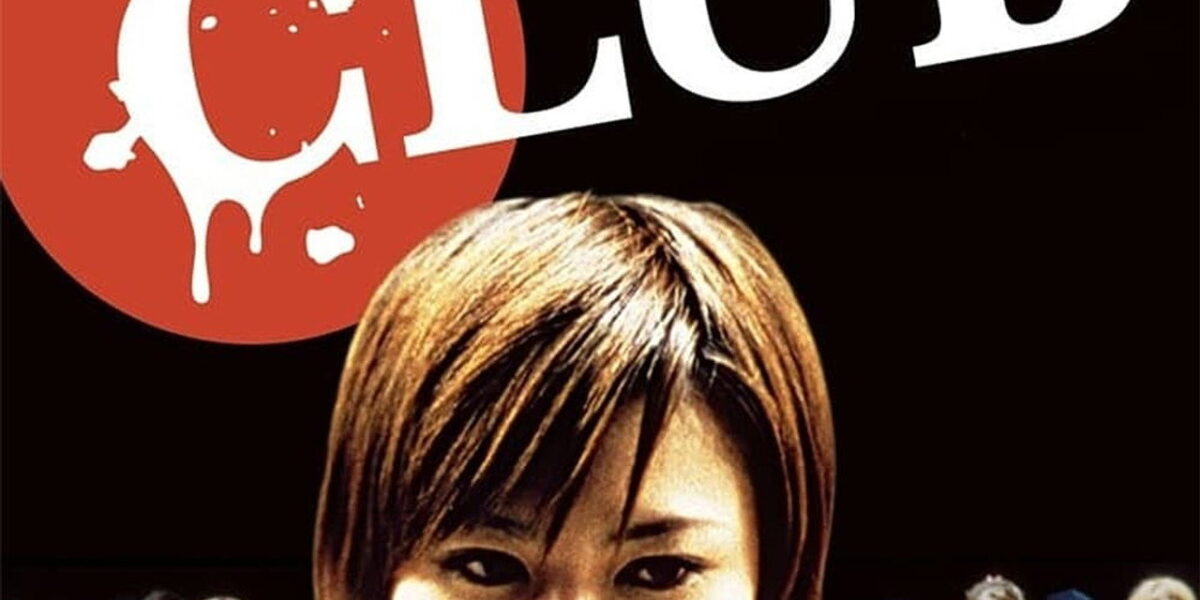
Suicide Club: Honest Review — Is It Worth Watching? | 6.4/10
Suicide Club is a deliberately abrasive, visually striking provocation that swings wildly between brilliant social commentary and self-indulgent shock value, landing more often on the former than the latter. If you’re looking for comfortable horror, this Japanese nightmare will violently reject you—but if you can stomach Sion Sono’s uncompromising vision, you’ll find something genuinely unsettling lurking beneath the carnage.
| Director | Sion Sono |
| Cast | Ryo Ishibashi, Masatoshi Nagase, Mai Hosho, Tamao Sato, Takashi Nomura |
| Runtime | 99 min |
| Genre | Drama, Horror, Thriller |
| Year | 2001 |
Suicide Club: The plot (no spoilers)
When fifty-four schoolgirls throw themselves in front of a subway train in perfect unison, detective Kuroda assumes it’s an isolated tragedy—a dark singular moment in Tokyo’s underbelly. Instead, the film presents a cascading wave of copycat suicides rippling across Japan, each one more inexplicable than the last, suggesting something systemic rather than spontaneous is eating away at the nation’s youth from within.
The film operates in a register somewhere between psychological thriller and fever-dream social horror, trading linear narrative for a suffocating atmosphere of dread and complicity. Sono refuses to offer easy answers or moral hand-holding, instead dragging you through Tokyo’s indifference with a cold, unflinching camera that treats human suffering as spectacle worthy of examination.
Acting & direction
Ryo Ishibashi delivers a performance that feels increasingly hollowed out as the investigation spirals—his detective begins the film confident and ends it spiritually decimated, which is exactly the point. Masatoshi Nagase carries the weight of complicity with unsettling ease, and the younger cast members move through scenes with an eerie detachment that suggests they’ve already checked out of the world before their bodies follow suit.
Sono’s direction is relentlessly kinetic, employing split screens, rapid cuts, and grotesque camera angles that refuse to let you settle into passive viewing, making formal choices that mirror the mental fragmentation at the film’s core. The score punctuates rather than underscore, and the editing rhythm feels deliberately jagged, creating an experience that’s exhausting by design rather than accident.
The strengths
- The opening subway sequence is genuinely terrifying in its matter-of-fact brutality, and nothing the film does afterward quite reaches that level of pure visceral impact.
- Sono captures something real about Japan’s alienation and social pressure that transcends shock value—the transgression serves the theme rather than replacing it.
- The film refuses resolution or catharsis, leaving you in the same state of confused dread as the detective, which is the only honest ending possible.
- Visual invention never stops; even when the narrative gets murky, you’re watching a director absolutely committed to pushing formal boundaries.
The weaknesses
- The third act loses narrative coherence in a way that feels less like artistic ambiguity and more like the script gave up trying to explain itself, leaving frustration rather than mystery.
- Some shock moments exist purely for shock’s sake and feel disconnected from the film’s broader argument about social contagion and media saturation.
Who should watch it
This is exclusively for viewers hungry for transgressive cinema willing to sit with profound discomfort—think fans of Gaspar Noé or Lars von Trier’s crueler impulses. You need to be the kind of cinephile who sees provocation as potentially meaningful rather than merely offensive, and you absolutely cannot be looking for catharsis, redemption, or even a coherent plot arc that doesn’t double back on itself.
Final verdict
Suicide Club refuses to be digested easily, which is precisely why it deserves serious consideration from adventurous viewers willing to interrogate their own discomfort. Sono’s film asks whether society itself is the contagion, using shocking imagery not as an end but as a means to inoculate you against passive consumption of human tragedy in real life. It’s flawed, sometimes overwrought, occasionally indefensible—but it’s alive in ways most horror films never achieve, demanding you think rather than merely experience fear.
FAQ
Is Suicide Club based on a true story?
No, the film is entirely fictional, though it was inspired by documented clusters of copycat suicides in Japan and explores real social anxieties about contagion and collective behavior.
How graphic is the violence in this film?
The opening sequence is brutally explicit, but the film restrains itself afterward; most violence occurs off-screen or suggested rather than shown in graphic detail.
Does Suicide Club have a satisfying ending?
No—Sono deliberately withholds resolution and closure, which frustrates many viewers but aligns perfectly with the film’s thesis about society’s inability to understand or prevent the crisis.
What is Suicide Club trying to say?
The film examines how media saturation, social pressure, and collective numbness can create psychological contagion, turning suicide into a perverse form of communication.
Is Suicide Club worth watching in 2024?
Absolutely, if you’re interested in provocative cinema that refuses easy answers—the film’s themes about social alienation and information overload feel more relevant now than in 2001.