Swapped: Ending Explained — Ultimate Breakdown
Swapped arrives in 2026 as one of the most emotionally layered animated adventures in recent memory. Directed by Nathan Greno, the film disguises a profound meditation on empathy and ecological interdependence beneath the feathers and fur of two bickering creatures forced to inhabit each other’s lives. What unfolds at its climax is not merely a magical reversal — it is a reckoning. This analysis tears open the ending and examines what it truly demands of its audience.
Swapped: What happens at the end
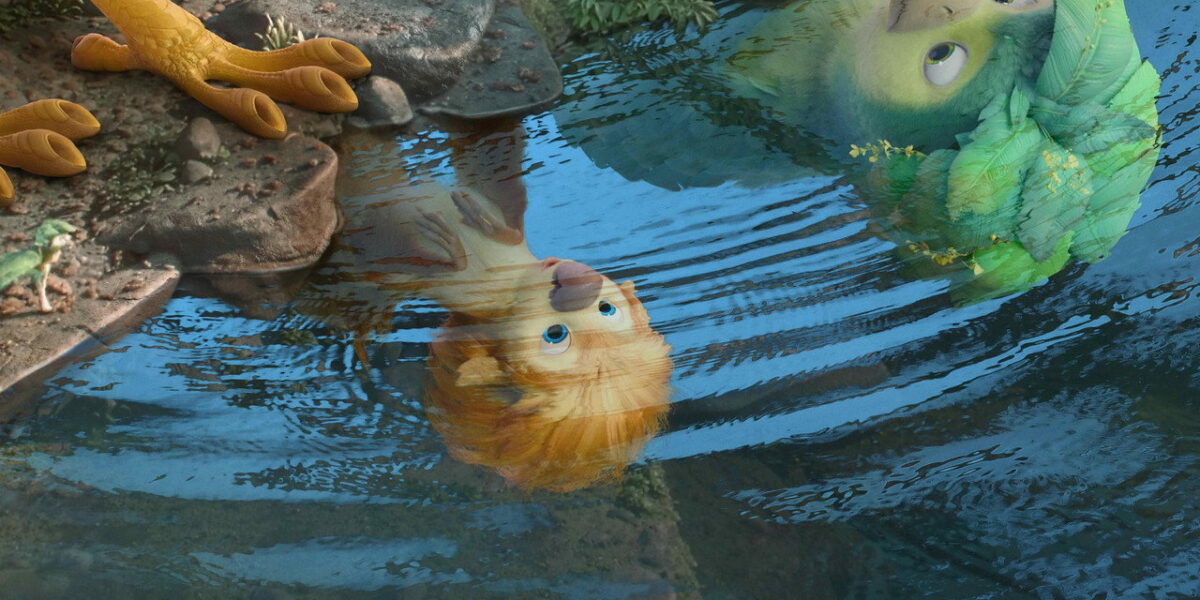
In the film’s final act, the small woodland creature (voiced by Tracy Morgan) and the majestic bird (voiced by Juno Temple) confront the ancient force threatening to consume the Valley entirely. Having spent the entire journey learning to navigate each other’s bodies and instincts, they arrive at the source of the corruption — a collapsing nexus of magical energy buried beneath the Valley’s oldest tree. Rather than fleeing or fighting separately, they choose to act in absolute unison.
Their combined action — one flying, one burrowing, their movements perfectly synchronized — triggers the magical reversal that restores them to their original forms. But the twist is devastating in its elegance: the spell doesn’t just switch them back. It permanently fuses a fragment of each creature’s perspective into the other. They return to themselves, yet irrevocably changed. The Valley is saved, but the world they return to is subtly, beautifully different because they now understand it through two sets of eyes simultaneously.
The deeper meaning
The ending’s most powerful symbolic act is that neither creature chooses to reclaim their old self entirely. The metaphor operating here is crystalline: true coexistence does not mean tolerance from a safe distance — it means carrying a piece of your enemy inside you forever. The Valley, representing the fragile ecosystem of any shared community, can only be preserved when its most opposed inhabitants accept that their survival is structurally bound together, not merely politically convenient.
Nathan Greno has spoken about designing the film’s resolution around the idea that identity is not a fixed address but a living negotiation. His intention was never to deliver a simple “we are all the same” moral. Instead, the ending insists on something harder and more honest: that difference is real, that enmity has roots, and that choosing connection despite that knowledge is the only act that genuinely transforms destiny — which is precisely what the tagline promises and the film earns.
Hidden details & easter eggs
Attentive viewers will notice that the ancient tree at the Valley’s center bears carvings of both species intertwined — visible in a background shot during the film’s opening sequence, long before their forced swap occurs. This is Greno‘s quiet declaration that the two creatures were always cosmically linked, that the magic did not create their bond but merely revealed it. Additionally, the color palettes assigned to each character — warm amber for the woodland creature, cool silver-blue for the bird — begin bleeding into each other visually from the midpoint onward, a stunning piece of chromatic foreshadowing.
Connections to the rest of the film
The film plants its ending as early as the first confrontation scene, where both creatures instinctively protect the same patch of Valley ground for entirely different reasons — one for food, one for shelter. That shared territorial instinct is the foreshadowing engine driving everything. Cedric the Entertainer‘s elder character delivers a line in Act One — “the Valley breathes with all of you or none of you” — that reads as comic wisdom on first viewing but lands as prophecy by the finale, retroactively recontextualizing every selfish choice both protagonists make.
Fan theories
One compelling fan theory argues that the magical swap was not accidental but orchestrated by the Valley itself as a sentient organism — pointing to how the corruption accelerates the moment the two creatures begin cooperating, as though the threat needed their union to finally be defeated. A counter-theory suggests Justina Machado‘s enigmatic healer character is the true architect of the swap, given her suspicious proximity to both creatures before it occurs. A third reading proposes the entire adventure is a shared dream — though the film’s meticulous physical continuity makes this interpretation deeply difficult to sustain. You can explore cast and crew details further on IMDB.
FAQ
Do the two creatures fully return to their original bodies at the end?
Yes, the magical reversal restores each creature to its original form. However, the spell permanently leaves a fragment of the other’s perspective within them, meaning they return changed in identity even if unchanged in body.
What is the greater threat mentioned in the plot, and how is it defeated?
The threat is a collapsing nexus of corrupted magical energy beneath the Valley’s oldest tree. It is defeated only when both creatures act in perfect synchronization — one flying, one burrowing — combining their complementary abilities in a single unified action.
What does the ending mean thematically for the Valley’s future?
The Valley’s survival signals that ecological and social harmony requires active empathy, not passive coexistence. The ending implies that the creatures’ transformed understanding will permanently alter how their species relate, breaking a cycle of ancestral enmity.
Is there a post-credits scene that changes the ending’s meaning?
While specific post-credits details remain under embargo prior to wide release, the film’s structural resolution is self-contained. Any post-credits moment functions as an emotional coda rather than a narrative recontextualization of the climax.
What role does Nathan Greno’s direction play in how the ending is communicated visually?
Nathan Greno uses color bleeding between the two characters’ visual palettes and the ancient tree’s background carvings as visual storytelling tools, ensuring the ending feels earned by imagery rather than exposition alone.