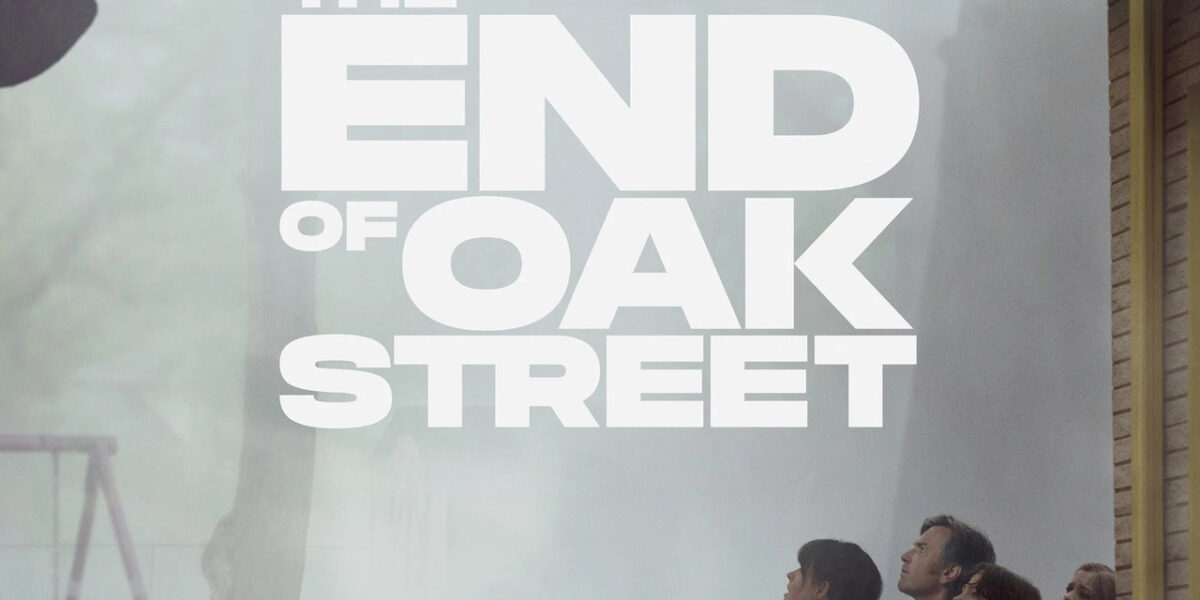
The End of Oak Street: Honest Review — Is It Worth Watching? | 0.0/10
The End of Oak Street is an audacious swing at suburban horror-sci-fi that lands more often than it misses, even if Mitchell’s ambition occasionally outpaces his execution. If you’re hungry for something that refuses to fit neatly into genre boxes and doesn’t insult your intelligence, this neighborhood displacement nightmare deserves your time.
| Director | David Robert Mitchell |
| Cast | Anne Hathaway, Ewan McGregor, Christian Convery, Maisy Stella, Jordan Alexa Davis |
| Runtime | 100 min |
| Genre | Science Fiction, Mystery, Thriller |
| Year | 2026 |
The plot (no spoilers)
The End of Oak Street yanks an entire suburban block out of reality and deposits it somewhere decidedly wrong—think cosmic abduction meets neighborhood apocalypse. The Platt family finds themselves navigating this impossible new world alongside their neighbors, all while the fabric of their little corner of America unravels at the seams, and they realize survival means staying locked together whether they like it or not.
Mitchell crafts a premise that walks the razor’s edge between intimate family drama and grand science fiction disaster, which is exactly where the film finds its pulse. The tone hovers between unsettling dread and genuine human connection, never quite settling into comfortable genre territory—the story demands you sit with its strangeness rather than letting you relax into familiar plot beats.
Acting & direction
Anne Hathaway carries the emotional weight here with a performance that avoids histrionics even when surrounded by cosmic horror, while Ewan McGregor brings a weathered uncertainty to his role that feels earned rather than phoned in. Christian Convery and Maisy Stella handle the child perspectives without veering into manipulation, and Jordan Alexa Davis adds an unsettling presence that keeps you guessing about her character’s motivations throughout.
Mitchell’s direction favors long, lingering shots that let dread accumulate rather than exploding it across the frame in conventional thriller bursts. The cinematography treats the displaced neighborhood like a character itself—simultaneously familiar and grotesque—while the score understands restraint, using silence and ambient sound to create unease that manufactured jump-scares could never achieve with this material.
The strengths
- The concept itself is genuinely inventive and resists easy explanation or pat resolution.
- Mitchell refuses to telegraph emotional beats, trusting his audience to feel dread through implication rather than exposition.
- The film’s willingness to center the story on family dynamics rather than solving cosmic mystery keeps it grounded and genuinely stakes-heavy.
- The ensemble cast brings specificity to what could have been generic suburban archetypes, making their terror feel lived-in and earned.
The weaknesses
- The third act loses narrative momentum, spending too much time circling thematic questions rather than propelling toward a satisfying climax.
- Some supporting character arcs feel underdeveloped, particularly among the neighbors who exist primarily as obstacles or complications rather than fully realized people.
- The cosmic mechanics remain deliberately vague, which works dramatically but occasionally tips into frustrating obscurity that undermines tension instead of sustaining it.
Who should watch it
This film is built for viewers who loved Annihilation‘s refusal to explain itself and appreciated The Vast of Night‘s atmospheric patience with strangeness. If you’re tired of blockbuster sci-fi that spelling-bees its own mythology and you respect films that trust your intelligence enough to withhold answers, the film will reward your investment even when it frustrates you.
Final verdict
David Robert Mitchell has made something rare here—a science fiction thriller that treats the cosmic unknowable as metaphor for family fracture and reunion rather than puzzle to be solved. It’s not perfect; the pacing stumbles and certain narrative threads fray, but the emotional core is unshakeable and the filmmaking confident enough to resist easy categorization. This is a movie worth defending and worth questioning, and that duality is exactly what cinema needs more of.
FAQ
Is The End of Oak Street based on a book?
No, this is an original screenplay by David Robert Mitchell, though it shares thematic DNA with Richard Matheson and Harlan Ellison’s philosophical sci-fi concerns about displacement and family bonds under pressure.
What’s the runtime and is it too long?
At 100 minutes, it’s lean for what it attempts; the pacing deliberate rather than slow, though some viewers will find the atmospheric stretches test their patience.
Does the movie explain what happens to Oak Street?
The film deliberately resists scientific explanation, focusing instead on emotional and psychological consequences—if you need cosmic mechanics spelled out, you’ll find this frustrating.
How does it compare to Mitchell’s other films?
It shares the intimate vulnerability of It Follows with the larger canvas of Under the Silver Lake, representing his most ambitious tonal balancing act to date.
Should I watch this in theaters?
Yes; Mitchell’s use of framing and spatial composition demands a larger screen, and the sound design—which does heavy lifting—benefits enormously from theater acoustics.
Tags: The End of Oak Street, David Robert Mitchell, Anne Hathaway, science fiction thriller, 2026 films
Scopri di più su IMDB.