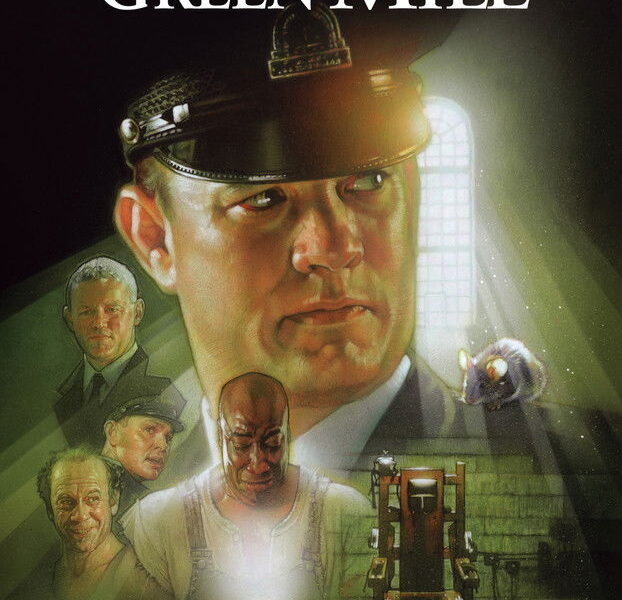
The Green Mile: Ending Explained — Ultimate Breakdown
Few films in modern cinema carry the emotional and spiritual weight that The Green Mile does. Frank Darabont’s 1999 adaptation of Stephen King’s serial novel is not merely a prison drama — it is a meditation on innocence, divine suffering, and the unbearable cost of bearing witness to injustice. What happens in its final act is not just a conclusion but a reckoning, one that forces every viewer to sit with the uncomfortable truth of what they have just watched.
The Green Mile: What happens at the end
In the film’s closing act, John Coffey — the enormous, gentle death row inmate played with devastating tenderness by Michael Clarke Duncan — is led to the electric chair. Despite Paul Edgecomb and his fellow guards now knowing with certainty that Coffey is innocent, the execution proceeds. Coffey himself refuses any chance of escape, confessing that he is tired of feeling all the world’s pain and cruelty flowing through him like an open wound he can never close.
After Coffey’s execution, the narrative jumps forward dramatically in time. We find an elderly Paul Edgecomb, now living in a nursing home, confiding in his friend Elaine. He reveals the film’s most haunting twist: because Coffey transferred a portion of his supernatural life force into him years ago, Paul has aged at an almost imperceptible rate. He is over 100 years old, and he will likely outlive everyone he has ever loved — a curse disguised as a miracle.
The deeper meaning
The ending reframes the entire film’s moral architecture. John Coffey is transparently a Christ figure — his initials are no accident — a being of pure, selfless healing power condemned by a system too blind and broken to recognize grace when it stands before them. His willing acceptance of death, his exhaustion with human suffering, and his ability to transfer life itself speak to a theology of sacrifice that transcends any single religious tradition and touches something universally human.
Darabont’s intention is to make the audience complicit. By showing Paul’s extraordinary longevity as a burden rather than a gift, the film argues that witnessing injustice without stopping it leaves permanent scars on the soul. Paul did not pull the switch, but he did not stop the execution either. His endless life becomes a form of penance — a living, breathing metaphor for survivor’s guilt stretched across decades of solitary grief.
Hidden details & easter eggs
One of the most quietly devastating details in the final sequence is the appearance of Mr. Jingles, the mouse that John Coffey healed earlier in the film. The tiny creature is still alive in Paul’s nursing home, defying all natural lifespan expectations — a silent, scurrying confirmation that Coffey’s supernatural touch permanently altered the rules of mortality for everything he blessed. The mouse also functions as a visual motif of innocence persisting in a corrupt world, a warm-blooded ghost of everything that was lost on that mile of green linoleum.
Connections to the rest of the film
The film deploys foreshadowing with remarkable patience. From the very first scene, set in that nursing home with an elderly Paul weeping while watching a Fred Astaire film, Darabont signals that this story is being told from a place of accumulated, unresolved grief. Every act of healing Coffey performs — curing Paul’s bladder infection, reviving Mr. Jingles, saving the warden’s wife — retroactively reads as a series of quiet warnings that this man’s power operates outside the boundaries of natural law, and therefore outside the protection of human justice.
Fan theories
One compelling theory holds that Paul Edgecomb‘s extended life is not punishment but purpose — that he is meant to carry Coffey’s story forward until the world is finally ready to hear it. Evidence supporting this includes Paul’s act of narrating the events to Elaine, suggesting his longevity has a testimonial function. Against this reading, the film’s tone is unambiguously mournful, framing his survival as isolation rather than mission. A second theory suggests Coffey deliberately chose Paul as a vessel for continued grace, knowing the guard’s conscience would never let the truth die alongside him.
FAQ
Why does John Coffey choose not to escape at the end of The Green Mile?
John Coffey refuses escape because he is spiritually exhausted by absorbing humanity’s cruelty and pain. He tells Paul he is ready to rest, framing his own execution as a merciful release from an unbearable empathic burden.
Why does Paul Edgecomb live so long after the film’s events?
When Coffey healed Paul’s urinary infection, he inadvertently transferred a fragment of his supernatural life force into him, drastically slowing Paul’s aging. Paul interprets this not as a gift but as a punishment for failing to prevent an innocent man’s death.
What does Mr. Jingles represent in the ending?
Mr. Jingles represents the lingering, unkillable trace of John Coffey‘s grace in the world. His impossible survival mirrors Paul’s own, confirming that everything Coffey touched was marked permanently by something beyond ordinary existence.
Is John Coffey meant to be a Jesus figure?
Intentionally so — his initials J.C., his healing powers, his innocent suffering, and his willing self-sacrifice all construct a clear Christ allegory. Darabont and King use this parallel to interrogate how society destroys the very goodness it most desperately needs. You can explore the film further on IMDB.
What is the overall message of the film’s ending?
The ending argues that injustice against the innocent does not simply end with a death — it echoes forward through everyone who witnessed it and did nothing. Paul’s eternal life is the film’s most powerful metaphor: the weight of moral failure is a sentence with no release date.